Wednesday, December 13, 2006

So long, and thanks for all the fish...

You and I will meet again,
When we're least expecting it.
One day, in some far off place,
I will recognize your face.
I won't say goodbye, my friend,
For you and I will meet again.

-- Tom Petty, "You and I Will Meet Again"


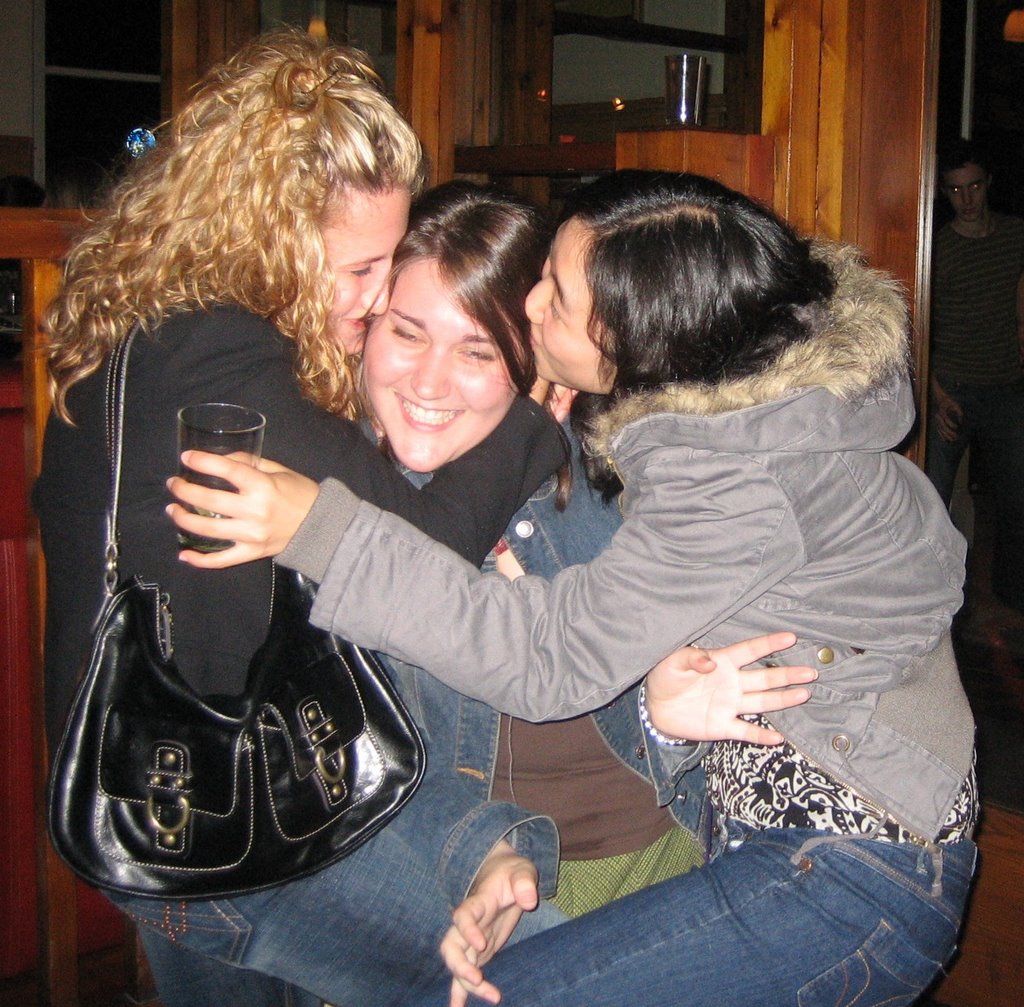
My girls left this morning; a heart-wrenching silence has since settled on the flat. Fortunately, we three ladies of Flat G have already started planning for road trips between Vandy, Bama, and Hotlanta, meeting somewhere in the middle.

However, the prospect of seeing them again does little to assuage the pain of their leaving. That's because their departure is a symptom of a larger hurt--my own imminent congé from Scotland. I'm not ready to leave, and with my flight out from Edinburgh looming on the horizon, I fear I'll come to resent the ties to Alabama that are ultimately responsible for my return.

Damn you, Alabama! Sure, you made the best experience of my life possible; but as with every deal made with the Devil, there has been a hell of a price to pay.

My other friends will continue to trickle back to the States over the course of the week, and I've started steeling my resolve for the farewells both to them and to the Scottish friends I've made, both student and non-student alike. I hope that this cloud will lift when I see my family at the gate in New Orleans, when I get back to T-town and settle into my old routine. I hope I'm wrong in feeling that coming home is a mistake.

Excuse me, Hume's metaphysics and moral philosophy require my attention and my face seems to have sprung yet another leak.

Wednesday, December 06, 2006

The Highlands, Part Five: Glen Coe

[Note: If you're not up-to-date on your Jacobite history, now might be a good time to review the Culloden post a few entries back, else you might get lost. Given time constraints, I'll not be able to recap.]

Glen Coe, a narrow, steep-sided valley near Rannoch Moor, is often referred to as the "glen of weeping" for two reasons: 1) during the rainy months and first spring thaws, runoff cascades down the mountains, creating the illusion of crying hills; and 2) it is home to the village of Glencoe, the site of the most infamous breach of Highland hospitality in Scottish history.


A view of the valley in late September (my first visit), before the fern and heather started to die back.

In 1691, following the unsuccessful Jacobite uprising of 1689-90, William of Orange offered pardons to all Highland clans who had participated in the botched rebellion, provided they swore allegiance to the newly instated monarchy by the first of January, 1692. Those who did not pay fealty to the king, however, would be treated as enemy combatants and suffer grave consequences.


View of a pass through the valley as the sun sets in the distance.

Many of the Highland clans chose to await word from their "true" king--James II, living in exile in France--before proclaiming loyalty to the appointed magistrate. James, upon realizing that the seeds for revolution and his campaign to regain the throne would not ripen before the deadline, granted the chiefs permission to take the oath in mid-December. For the clans who lived in remote areas, such as the MacDonalds of Glencoe, James' authorization came too late; delayed by topography, wintry weather, and misinformation, clan chief Alastair MacDonald arrived in Inverary five days after the deadline. As such, the MacDonalds of Glencoe were not included on the list of clans who had sworn allegiance to the crown.


A view of the same pass through the valley, taken in late October when the fern begins to turn red.

In one of the more vile acts of retribution committed in British history, William enlisted the help of the Campbells of Loch Awe, who had battled with the cattle-thieving MacDonalds for at least a century. As per William's orders, the Campbells and a contingent of crown troops visited the MacDonalds of Glencoe and sought refuge from the winter weather, knowing full well that the tradition of 'Highland hospitality' would ensure the rival clan's entrance into the MacDonald compound.


The Buttresses of Bidean nam Bian, complete with Scotland's trademark mist.


For three weeks, nearly 120 Campbells and government troops dined at MacDonald tables, danced with MacDonald women, and slept in MacDonald beds. Then, in the early morning hours of February 13, 1692, the Campbells awoke and slit the throats of the MacDonald men. The women and children were driven from their village into the snow-covered hills as their homes were set ablaze. All told, 38 men were murdered in Glencoe, and another 40 women and children perished in the cold.


In the grand scheme of Scottish clan rivalries, 78 deaths is not a staggering body count. To wit, cattle raids and various feuds resulted in far more bloodshed and often continued unabated for decades. However, it was not the blood of 78 innocents that has marked the Campbells since the Glencoe massacre; rather, it was the exploitation of the tradition of Highland hospitality. Even today, over 300 years later, Highland grannies caution their grandchildren not to marry into a Campbell family. According to a tour guide of ours, there is a hotel near the village of Glencoe whose front desk bears a sign reading: "No Solicitors, No Salesmen, No Campbells."

Monday, December 04, 2006

Sloth

Allow me to apologize for my absence these past couple of weeks. As finals week back home nears, I'm sure many of you can appreciate how the workload of the average university student increases exponentially come term's end. (Okay, so the workload isn't really any bigger, I've just been catching up on everything I didn't do while I was farting around the Scottish countryside these past few months. So sue me.)

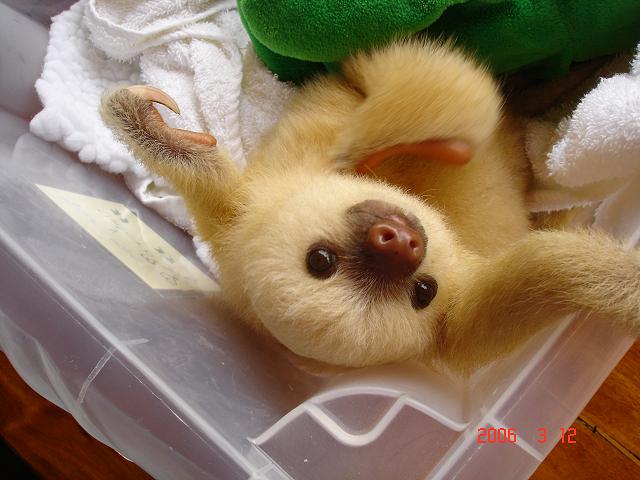
To make amends for my journalistic sloth, which was spawned by a brief bout of intellectual sloth, I give you:


A sloth. But not any ol' sloth, oh no. This may very well be the cutest damned sloth in the world. Aren't you a lucky bunch?

And one more time for good measure: sloth.

Wednesday, November 29, 2006

Fear not, adoring public...

...I'm not dead. Well, not yet, anyways.

I apologize for the thin blogging of late. I've been swamped with schoolwork, essays, and presentations out the whazoo, so the vast majority of my time is devoted to drooling drowsily on one of my suggested reading texts, doing pilates in effort to stay awake, jumping to the kitchen for my seventeenth cup of tea for the day, or crying in front of my computer. (That last bit's only a little true...)

Seriously, what idiot takes challenging classes when studying abroad? Oh yeah, that's right, ME. Stupid ambition.

Monday, November 20, 2006

The Highlands, Part Four: Loch Ness

No visit to Scotland would be complete without a visit to the most famous body of water in the world, Loch Ness. Located in the northeast of Scotland, it is one of many lochs that dot the Great Glen, a fault line that stretches from Fort William to Inverness.

Contrary to popular opinion, Loch Ness is not the largest loch in Scotland, nor is it the deepest. At 22 square miles and 740 feet deep, the loch lays claim to second prize in those competitions. However, the combined depth and surface area make Loch Ness Scotland's largest loch by volume; one of the tourist industry's favorite factoids is that Loch Ness contains more fresh water than the whole of England and Wales, combined.

Our trip along Loch Ness began in Inverness where we boarded a ferry that would take us down the Caledonian Canal, which links the east and west coasts of Scotland through a chain of lochs.


Sheep grazing in a pasture that overlooks the canal as we chugged toward Fort William. The weather was glorious, if a bit nippy.


One of the 29 locks (not loch) along the canal. This picture's for my dad, who's an engineer and, thus, the nerdiest man I know. Don't worry, old man, I've got more lock photos for you to look at when I get home; I'm sure you'll tell me all about the science behind them. (In all honesty, I miss my geek father and his long-winded explications of the finer points of concrete construction.)

Only a small fraction of the canal's length is man-made; nearly 70% of the journey is sailed through Loch Douchfour, Loch Ness, Loch Oich, and Loch Lochy.


The view as we entered Loch Ness. Though the sun was shining and there was minimal cloud cover, visibility was hampered by the ever-present Scottish haze.

Approaching Urquhart Castle, which sits on the bonny banks of Loch Ness. Urquhart has a long history stretching back to the sixth century when St. Columba, credited with bringing Christianity to Scotland, visited on a mission. Interestingly enough, the first recorded sighting of the Loch Ness monster was in 585, when one of St. Columba's followers was gobbled up by the beast before the missionary's very eyes. Clearly, Highland hospitality was but a fledgling notion at the time.

A quasi-aerial view of the ruins. Again with the blasted haze. Scotland, we've got to talk about this crap. It's ruining my scrapbooking prospects.

Looking over the castle grounds and the loch from the visitor's centre.

I know you're all itching to ask the $64,000 question: Did you see Nessie?

Coming to Loch Ness, I was convinced that the Nessie malarkey was just an ingenious ruse to get superstitious tourists to drop a fat wad of cash on "Nessie cruises" and cheaply made trinkets. After all, an undergraduate degree in both biology and philosophy would lead me to consider any and all accounts of a plesiosaurid creature existing in modern time with a healthy dose of scepticism.

However, after visiting the loch and reviewing my photographs from the trip, something turned in my heart. Two photos, taken but a scant few seconds apart, show something quite peculiar. Take a look and decide for yourselves.

Frame one: Taken from the top of the main tower at Urquhart, which is the site of most Nessie spottings

I'm sure you all can see rippling wakes across the water. Nothing out of the ordinary, as boats traverse the loch very regularly, right? The next photograph, however, shows something else may be responsible for the waves:

Whisky, Tango, Foxtrot?! It's a bloody plesiosaur! For the non-paleontologists and cryptozoologists in the audience, we can tell this creature is a plesiosaur from its long, peg-like teeth, adapted to catching and consuming slippery marine prey.

[Note: In case it wasn't already bleedingly obvious from my MS Paint shenanigans, I have two essays due in a week and I'm avoiding them like the plague. Procrastinators unite...tomorrow!]

BREAKING NEWS

Scotland is cold and rainy.


Also in today's news:
  • Water is wet.
  • Sky is up.
  • France surrenders.

These stories and more at 11.

Wednesday, November 15, 2006

The Highlands, Part Three: Culloden Battlefield

[In a departure from my usual silly, snarky style, this post will have a markedly more somber tone to it. Given both the date of publication (shortly following Armistice Day) and my own personal connections with the story of Culloden, a little gravity seemed warranted.]

Six miles outside of the Highland capital of Inverness sits a boggy plain called Drummossie Moor, located on which is the site of one of the most important battles fought on Scottish soil: the Battle of Culloden.

Even those possessing the most rudimentary knowledge of Scotland's bloody history could guess the outcome of the 1746 clash between a Highland Jacobite army and Government troops. However, it was not the spectacular defeat of the Jacobites that cemented Culloden's position in Scottish history and lore; it was manner in which the British government set out systematically to destroy the ancient Highland way of life--and the repercussions of the Crown's actions--that forever changed Scotland (and, it can be argued, the world).


The battlefield, as seen from the visitor's centre.

The Battle of Culloden holds a special place in my heart, despite my own lack of Scottish ancestry. My last two years of high school, I spent the better part of eighteen months researching, producing, and refining a thesis on the influence of eighteenth-, nineteenth-, and twentieth-century Jacobite literature on the formation of a Scottish national identity. My visit to the battlefield in October was an academic homecoming of sorts, the realization of an admittedly geeky dream five years in the making.

To the average American, the Jacobite Wars, fought intermittently between 1689 and 1746, are a relatively obscure bit of history, so allow me to give you a cursory overview:

In the Glorious Revolution of 1688, Catholic king James II was ousted by Parliament and replaced by William and Mary of Orange, who were Protestant. In the years that followed, supporters of the "papist" king, called Jacobites, led a series of unsuccessful rebellions to reclaim the throne for the Stewart dynasty. (Major rebellions: 1689-90, 1715, 1745-6; minor rebellions: 1705, 1708, 1719, 1744).

In 1745, the Jacobite banner was taken up by James II's grandson, Charles Edward Stewart, aka Bonnie Prince Charlie, the Young Pretender. In retrospect, it seems silly that a man born and raised in Italy, who spoke little English and no Gaelic, was able to cobble together support from several powerful Highland clans composed of farmers who spoke little English and certainly no Italian. Many scholars have attributed Bonnie Prince Charlie's success in drumming up support to his charisma and dashing good looks. However, it is my contention that the resurgence of Jacobite sympathies was the result of an ancient Highland tradition of loyalty to laird and king.

The beginning of the Forty-Five went splendidly for the Jacobites; the army stormed down through the Central Belt, reclaiming towns and cities, including Edinburgh, for the exiled king. As the majority of British forces were deployed to Flanders fighting the French, there was little resistance in Scotland, and in late 1745, the Jacobites invaded England. The Highland army made it as far as Derby, within easy striking distance of London, by December 1745, though they turned around after receiving false intelligence from a spy in the employ of the Crown.

Some historians claim that the Forty-Five was but a mere blip in history and that the Jacobites posed no threat to the firmly established Protestant monarchy. This is patently false. In fact, upon hearing of the Jacobites' advance on Derby, King George II began making arrangements to flee to the continent. To think that a ragtag force of "Banditti" (as described by Henry Fielding) could march through England and have the king shaking in his boots is impressive. It's even more so when you realize that the Highlanders managed to defeat their enemies not with the muskets and bayonets of the Royal Army, but the claymores, broadswords, and Lochaber axes of the Highlands.

After the Jacobites retreated to Scotland in late 1745, the Crown started calling home troops to deal with the local disturbance. Among these was William Augustus, Duke of Cumberland, the king's son, who would come to be known as "The Butcher" or "Butcher Cumberland" following his victory at Culloden. Cumberland led a force of Government troops, composed primarily of Lowland Scots, into the south of Scotland on the tails of the fleeing Jacobites, chasing them back to Inverness in April 1746.

On the early morning of April 16, 1746, the day following Cumberland's 21st birthday, the Jacobites set out to ambush the Government forces, whom they presumed would be sleeping off the previous night's festivities. After marching for several miles and getting lost in the mist, the Jacobites were forced to turn back two miles from Cumberland's campsite in Nairn as the sun began to rise over the hills. Exhausted and half-starved, the Jacobites dispersed and caught what little sleep they could. Cumberland's army, well-rested and well-fed, set out from Nairn later that morning, meeting the Jacobites on Culloden Battlefield.


The yellow flag in this picture marks the front line of the Government army, which stood at 9,000 men. The Jacobite force, 5,400 heads strong, stood nearly 300 meters away. Culloden's kiss of death was its topography; the Highlanders were able to defeat much larger armies thanks to the patented "Highland charge," in which the troops would barrel down a hill toward their enemies, swinging claymores and broadswords as they ran, lopping off heads and limbs left and right. Culloden offered no such advantage.


Approaching the memorial cairn. In a mere sixty-eight minutes, Cumberland's forces had laid waste the Highland regiments. The Crown suffered very light casualties, with 52 killed and 260 wounded, as compared to the Jacobites' 1,300 dead, 1,000 wounded, and 600 captured.


One of the headstones marking where whole clans fell, cut down by musketfire and grapeshot. This one reads "Mixed Clans." Other stones around the battlefield read like a Who's Who of Highland clans: Fraser, Stewart, MacKenzie, MacIntosh.


The stone marker identifying the Well of the Dead (top), and the well (bottom). According to folklore, for three days following the battle the well ran red with the blood of the slaughtered Jacobites.

Following the battle, Cumberland ordered all wounded or captured Jacobites to be killed immediately; those held prisoner or remaining on the field were dispatched by musket or bayonet. Cumberland, however, was not convinced that the Jacobites had learned their lesson; to send a message to the unruly brutes of the Highlands, he and his troops murdered Highland women and children and set villages alight. Clan leaders who had sympathized with the Jacobite cause were arrested, tried, and either executed or sent to prison ships in London.


Memorial cairn, complete with shadow of a valiant Highland soldier. (Actually, that's Dave, our guide, who really is a Highland soldier serving in the Atholl Highlanders, the only legal private army in Europe. And before you ask, yes, I'm a little in love with Dave.)

The destruction of the Highland way of life started by Cumberland after Culloden persisted throughout the eighteenth century, starting with the 1746 Acts of Proscription, which outlawed the playing of the bagpipes, the wearing of the kilt, and the bearing of arms, and culminating with the Highland Clearances of the late eighteenth and early nineteeth centuries. Thousands of Highland crofters were evicted from their farms and forced to emigrate to the British colonies in North America and Australia.

"So what about Bonnie Prince Charlie?" you ask. Well, first, take a gander at this last photo:


The Prince's battlefield position can be seen toward the back of the Jacobite army. Upon seeing that his cause was doomed, the cowardly Italian fled the field before the battle ended. He spent the next several months island-hopping in the Hebrides until he was able to escape to the continent. In 1788, the exiled Young Pretender--who forever blamed the loyal Highlanders for his defeat at Culloden--died an overweight, alcoholic wife-batterer who had sired numerous illegitimate children.

Seriously, couldn't have happened to a nicer guy. What a bastard.