Monday, October 16, 2006

Erin go Braugh, Part Two: Dublin

Our three-day tour of Ireland began and ended in Dublin, the capital of the Republic of Ireland, which sits on the eastern coast. An ancient city dating back to the first century BCE, Dublin has succeeded in building a modern, cosmopolitan city around a primarily medieval centre, much like Edinburgh here in Scotland. Below are a few of my favorite shots from our day-and-a-half visit.

The four of us were highly amused by the directions painted on the tarmac. Adjusting to the driving patterns in Scotland has proved a slow-going process, so it was nice to have a little help in Ireland. The chirping crosswalk signals were also a nice touch.
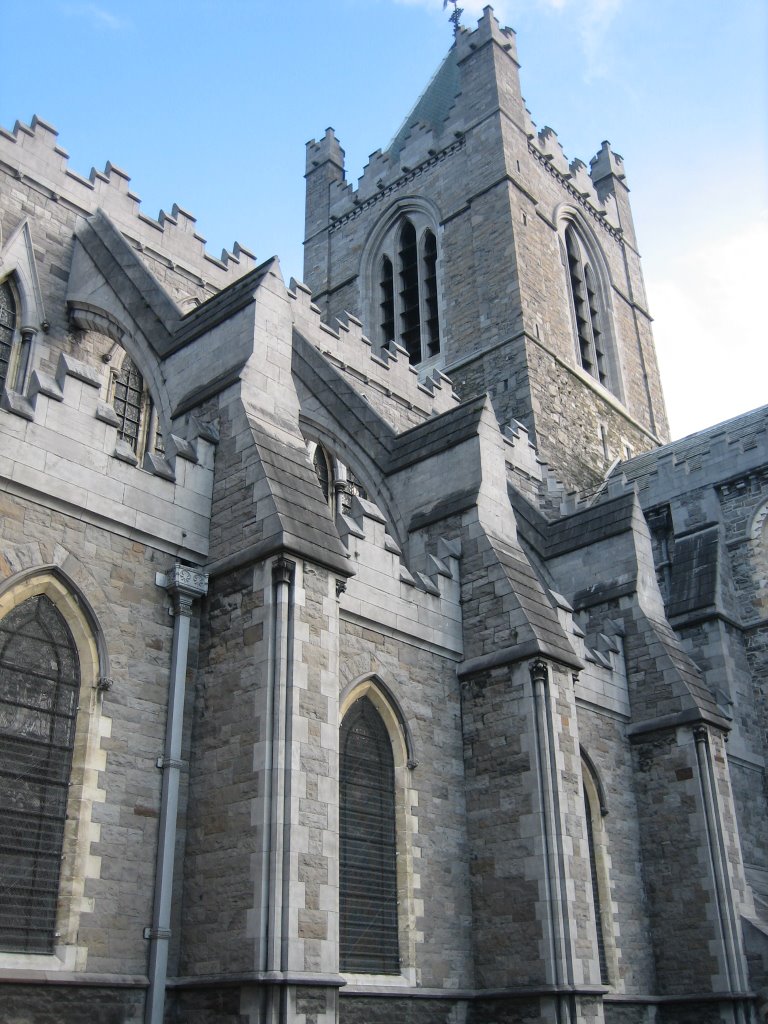
Our first stop--after purchasing toothpaste and deodorant, that is--was Christchurch Cathedral, the oldest building in Dublin. The ruins, outside of the restored nineteenth-century structure pictured above, date from the eleventh century CE.
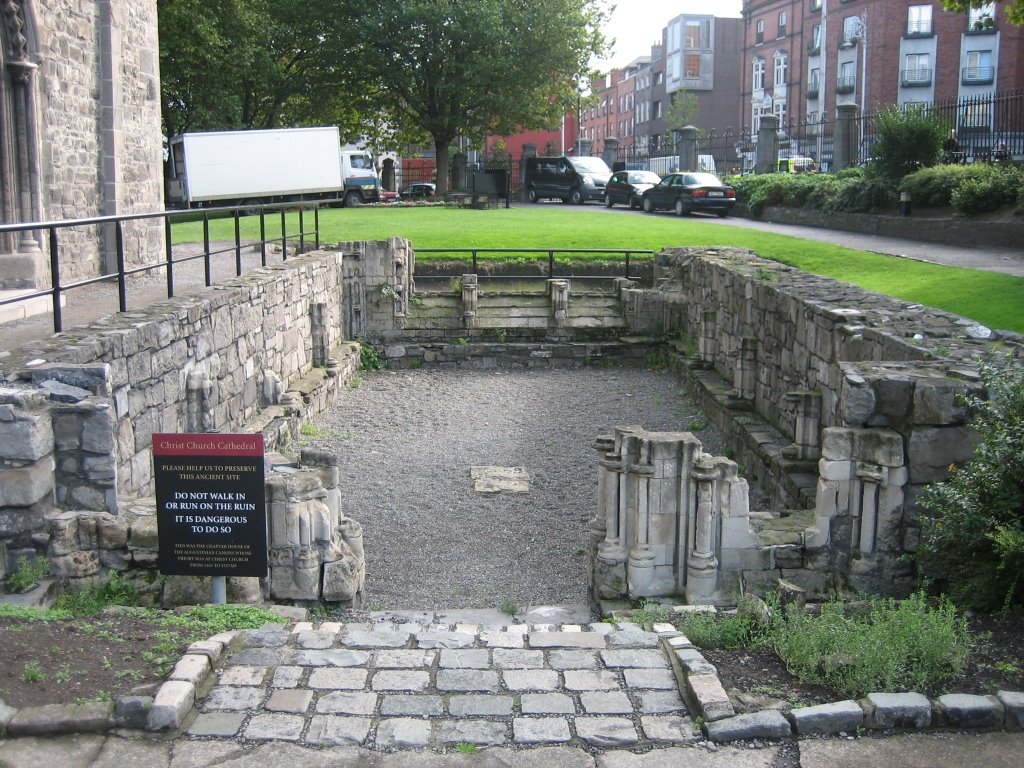
Here are the ruins of the original cathedral. The sign next to the entrance kindly asks you not to run on the ruins. It saddens me, but in no way surprises me, that the National Trust of Ireland feels the need to remind the average Joe not to horseplay on the remains of a ten-century-old religious structure.

After unanimously deciding we were all too cheap to pay the 5 Euro admission to Christchurch, we ambled along toward the city centre and dropped into City Hall, an imposing structure dating from the 1760s that formerly housed the Royal Exchange.

A view of the columns in the rotunda. The floor of the entrance hall was a gorgeous marble mosaic featuring the seal of the city.


The dome of the rotunda. (Why, yes, I did lie prostrate on the floor of City Hall to get this shot.) As I completely lack the mad photographic skillz of my paternal grandparents, my father, and my immensely talented sister, this photo is hardly symmetrical.

Our visit to City Hall was quite brief; we hadn't really planned on visiting, but it started to rain (Rain, in Ireland? Surely you jest!) and, wanting some shelter in which to ride out the storm, we ran to the first admission-free building we could find. Fortunately, the rain relented and we made our way to St. Patrick's Cathedral, the highlight of ancient Dublin (for me, at least).
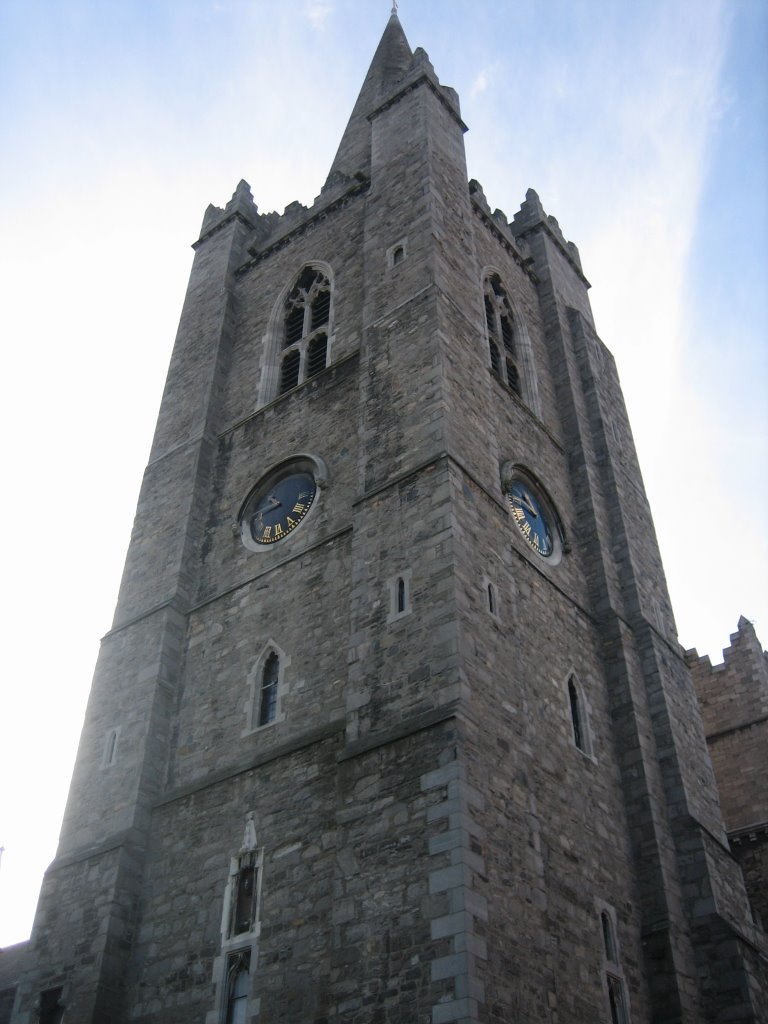

The bell tower of the cathedral. The original Celtic wooden church was raised to cathedral status in the twelfth century CE.

The nave of the cathedral, looking toward the altar. Arranged around the pews are several barrister bookcases housing relics and artifacts. My favorites included the belongings of Jonathan Swift, a priest-cum-essayist, one of Ireland's most beloved literary figures, and perhaps the foremost satirist in the English language. Included among his personal effects were first edition prints of Gulliver's Travels and A Modest Proposal, his death mask, and a bronze cast of his skull.
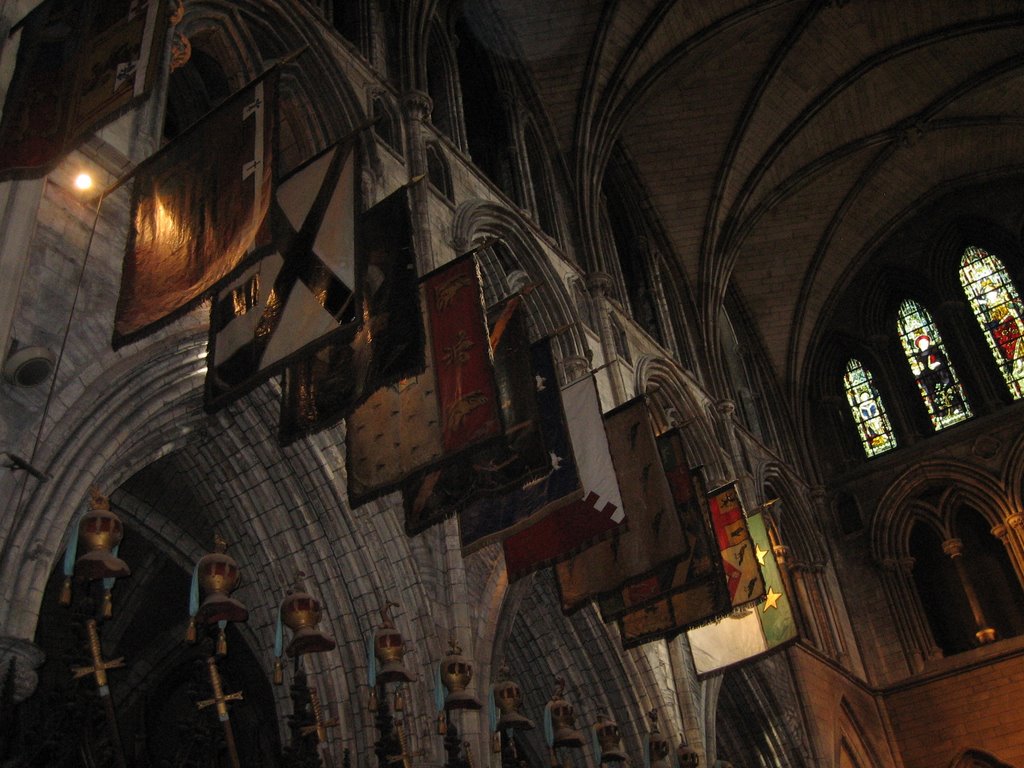
Flags hanging above the choir and a view of the vaulted ceiling.
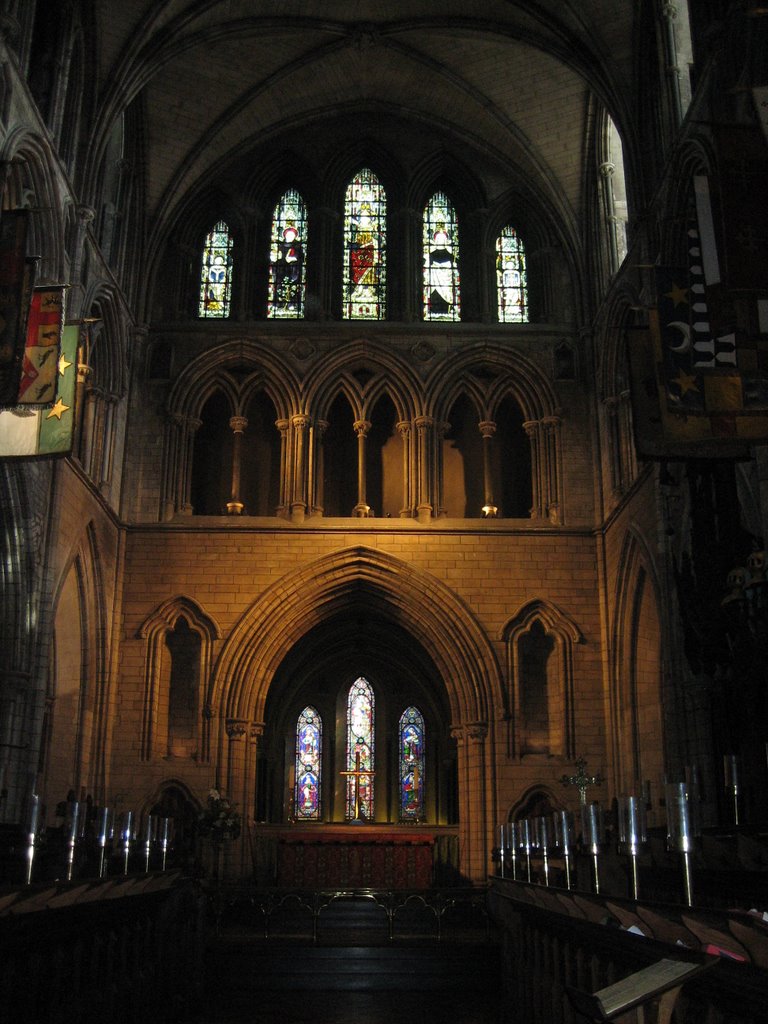
The cathedral's sanctuary.

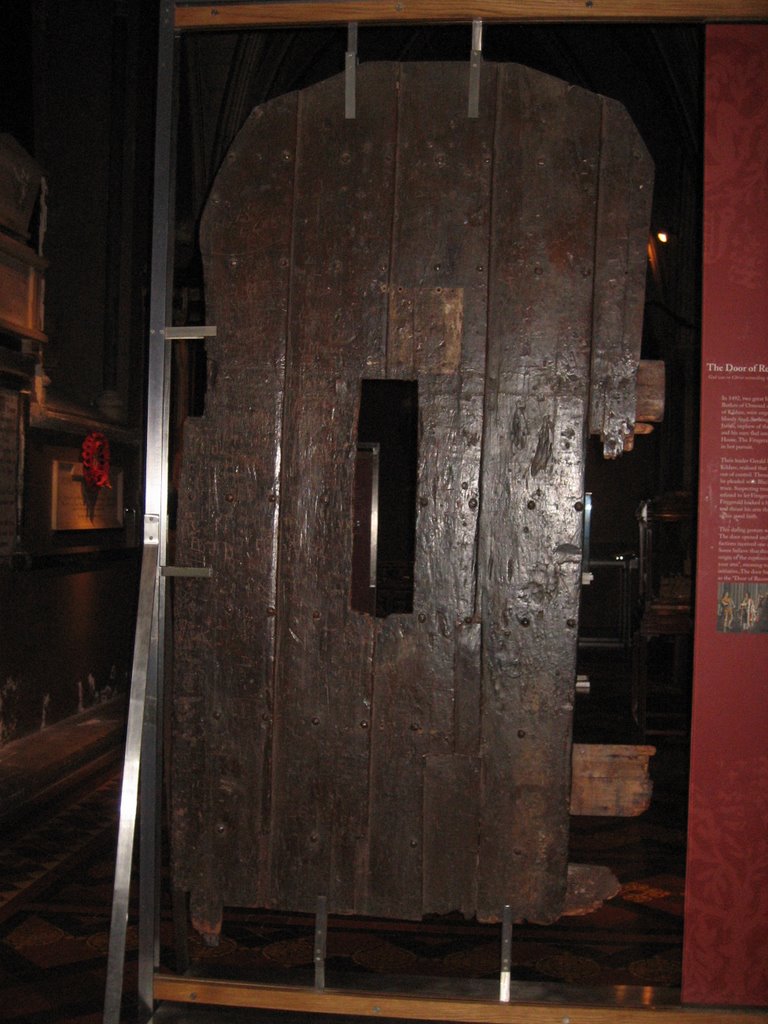
The Door of Reconciliation, located in one of the transepts of the cathedral. In 1492, two warring clans, the Butlers and the Fitzgeralds, struck a peace accord through this door. According to the story, Black James, a Butler on the run from Fitzgerald soldiers, sought sanctuary in St. Patrick's. Gearoid Ó“g Fitzgerald, the leader of the Fitzgerald troops, hoped to end the feud between the families, but each negotiation was refused by the Butler clan. Gearoid, in an act of profound bravery (or stupidity, however you see it) ordered his soldiers to cut a hole in the door, then thrust his arm through it, asking for a truce. Luckily, the Butlers did not slice off his vulnerable limb, instead agreeing to the accord. (This warm and fuzzy feeling of clan solidarity has been made possible by the National Trust of Ireland, Guinness Stout, and viewers like you.)

The River Liffey as seen from O'Connell Bridge, named for Daniel O'Connell, The Liberator. A political leader in the nineteenth century, O'Connell helped spawn a wave of non-violent Irish nationalism and pushed for a repeal of the act of union tying Ireland to Great Britain. He is also featured in a statue just off the bridge.

The front facade of Trinity College. We took a brief tour of the campus before entering the Book of Kells exhibit. Unfortunately, there was no photography allowed inside the exhibit, so I can show you neither the Book of Kells, nor the Long Room, the 65-meter long, barrel-vaulted library. I suppose you'll just have to go yourselves (which I fully recommend).

A street artist outside of Trinity College who paints scenes on black tarpaulin.

The Spire of Dublin, a sculpture erected in 2003. The Spire sits on the former site of the Nelson Pillar, which was blown up by the IRA in the late 1960s. Symbolizing progress or some such nonsense, the Spire, dubbed the 'Stiletto in the Ghetto' by the locals, was quite the controversial addition to the Dublin skyline. Honestly, I'm not sure how something that resembles a hypodermic needle is supposed to herald progress. Unless 'progress' is a new buzzword for 'heroin use.'

Dublin has always been a religious city, originally Catholic, then Protestant, then returning to Catholic again. However, it seems there's a new kid on the block in Dublin, so the Christians had better watch out:

I'd like to apologize to the young man outside the Church of Scientology who sneered as I poked fun at his 'religion.' I'm sorry that you're ignorant enough to fall for the science fiction-turned-gospel of one L. Ron Hubbard. I'm sorry you feel the only way to enlightenment requires plunking down gobs of money and avoiding body thetans. I'm sorry South Park belittled your nutty cult--er, religion. Bunch of crackpots.
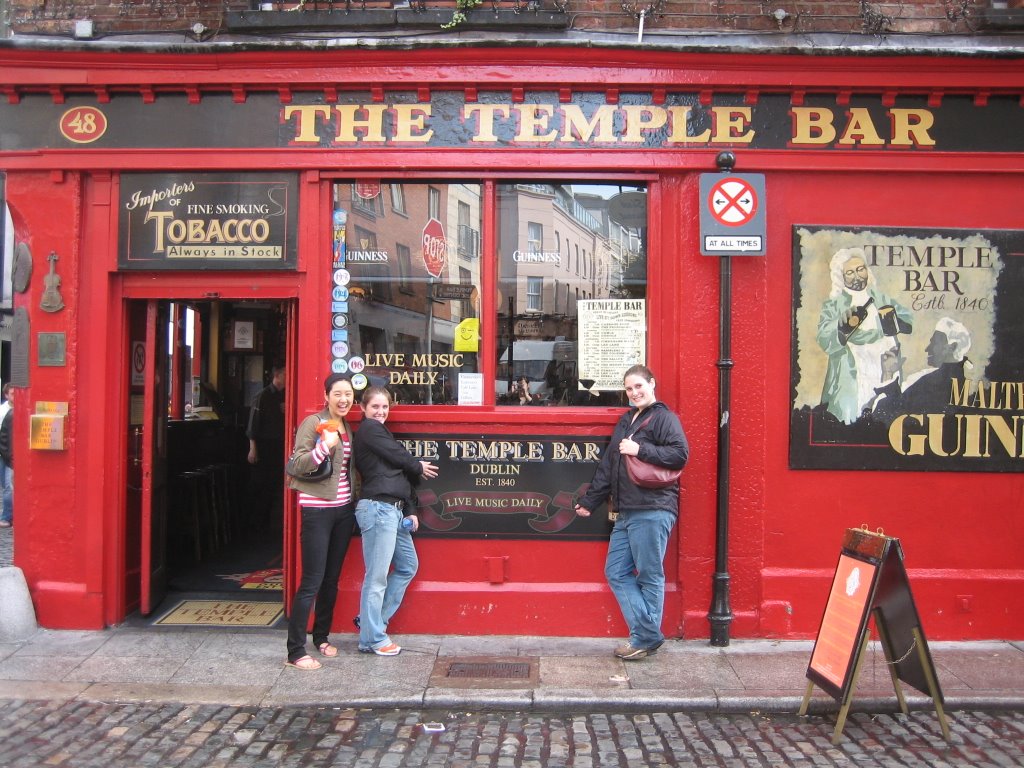
Having been inspired by our Xenu-loving friend earlier, we ladies decided to do a little worshipping ourselves at the Temple Bar. After receiving our communion from Sean the bartender (in the form of a Guinness Stout, no less), we celebrated Shae's 21st birthday, eventually making our way to a hotel bar that was featuring traditional Irish music and dancing. Below is a short clip of an a capella jig performed by the dance troupe.


We returned to Dublin Sunday afternoon and wandered around aimlessly, killing time until our flight back to Glasgow. Unfortunately, my camera decided it was in no mood to take any photos that day, so you have no lovely pictures of the National Museum of Ireland (complete with bog people!) or the woollen mill store where I spent the equivalent of a round-trip ticket from Glasgow to Athens on a wool blazer. In my defense, it's a gorgeous jacket (proof upon request).

Our final shot from Dublin was taken early Saturday morning as we walked to the city centre to catch our coach to Cork, near the southern coast. As sketchy as our hostel and its location had been, we were rewarded with this sunrise over St. Augustine Catholic Church. As I've said before, everything is prettier in a foreign country.

Tuesday, October 10, 2006

Erin go Braugh, Part One: Lessons from a Backpacker

A few weeks ago, I accompanied some friends from my exchange program on a three-day tour of central and southern Ireland, taking advantage of the long weekend that preceded the commencement of classes. As this was my first time creating and realizing an itinerary, I feel it's best to begin with a post about what I've learned about the finer points of student/budget travel.

1. Piss-poor planning prevents proper performance.

Now, I wouldn't call our planning of the Ireland trip a complete debacle, but we did make a few mistakes that any first-timer would. Our biggest blunder, perhaps, was booking our visit for the weekend of the Ryder Cup, the biennial American and European golf tournament, which was held in Dublin this year. Consequently, we had no accommodations in Dublin on Saturday evening, as everything had been reserved well in advance, forcing us to make the trip to Cork, which lies near the southern coast. (As luck would have it, this was a blessing in disguise).

It would seem that this is a rather common beginner's mistake, as another group from our exchange program booked flights to Germany for the same weekend of our Irish vacation. Munich happened to be celebrating Oktoberfest that weekend, as well.

In the end, however, everything worked out just fine. We managed to avoid the throngs of plaid-knickered, visor-wearing golf fans, and none of the members of Team Oktoberfest fell ill with alcohol poisoning. You really have to love a happy ending.

2. The day before security restrictions are loosened, the security guards at the gate will be supreme asshats.

As many of you know, following this summer's foiling of a terrorist plot to blow up planes by mixing volatile household chemicals, very stringent restrictions were placed on the size and contents of airplane carry-ons here in the UK. The restrictions in place for travel outside of the UK on the day of our visit stated that, in addition to the ban on liquids and balms, carry-on luggage could be no larger than the average briefcase.

Now, after having dealt with luggage issues on my way into the UK, I was in no mood to check my baggage into the cargo hold and hope I was reunited with it in Ireland. My group shared that sentiment. We had, for that reason, not brought any toiletries with us, save our toothbrushes. No deodorant, no toothpaste, not contact solution, nada. However, anyone packing for three days of travel, even sans toiletries, will be hard-pressed to fit it all in a valise the size of an Apple laptop. Even after much jostling and rearranging, Shae was forced to check her baggage.

So far this sounds reasonable. Inconvenient, perhaps, but certainly not life-ending. The trip through the security gate was quite another matter. Kim, upon arriving at the X-ray machine, was informed that only one carry-on was allowed per passenger, so her purse would have to be placed inside her backpack. Wouldn't you know it, that tiny addition completely changed the dimensions of her knapsack, and would have forced her to return to the check-in counter. Kim, however, was having none of this. After a solid five minutes of rearranging this and that, vainly trying to shove her bag into the crudely assembled, temporary carry-on bin, she took out her sweaters and put them on over her clothes. Five layers of sweaters later, and we were through security...

Though not before Shae and I were frisked by a woman who took employee dedication to a new, violative, and, perhaps, criminal level. A sample of our conversation:

Madame Frisk: "Spread your arms and legs and stand still while I search you." [She forgot to mention that normal "search" procedure included running her hands over my chest several times, adjusting both my bra and belt, and giving me a wink. (Fine, I lied about that last bit.)]

Me: "Um, wow, this is way more thorough than in the States. I kind of feel like you should buy me a drink first."

Mdme. Frisk, unsmilingly: "I'm not that kind of girl."

Me: "Yeah, neither am I, but..."

Mdme. Frisk, sternly: "If you don't stand still I'm going to start all over again."

Me: "Eeep." [inner monologue: "Find your happy place. Find your happy place."]

Naturally, the security restrictions were taken down a notch the very next day.

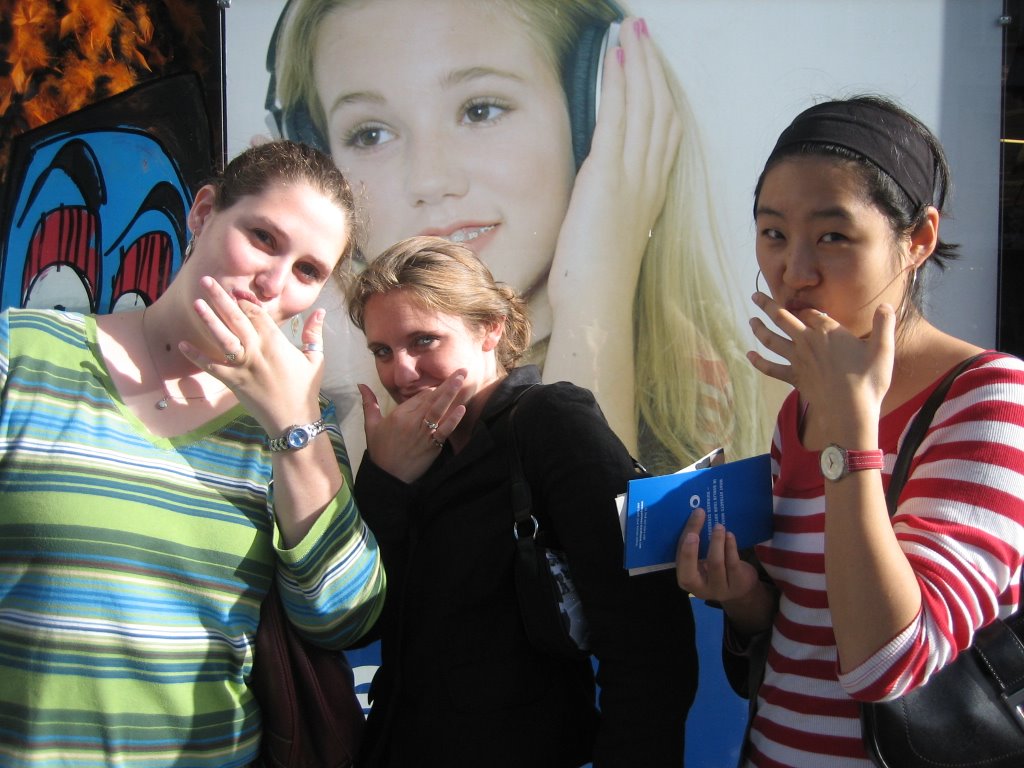
[Tangent: the result of us not bringing any toiletries on the plane? Brushing our teeth on the streets of Dublin.]
From left to right: Kim, Shae, and JaeHee taking advantage of a little toothpaste and some bottled water.

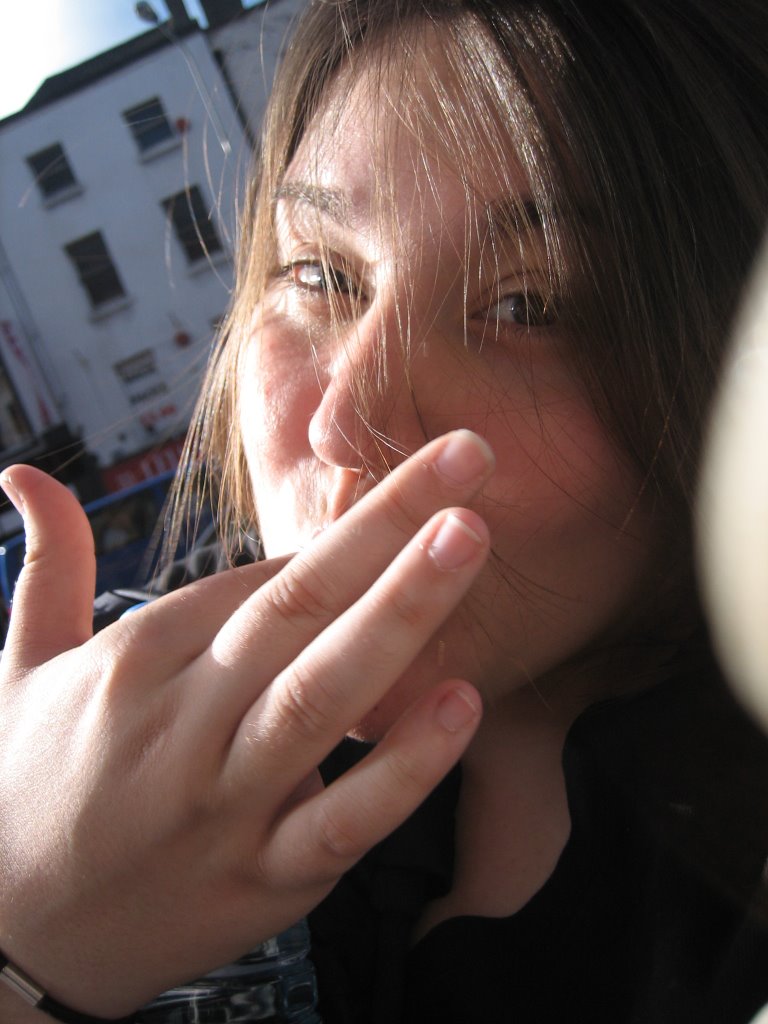
Me, getting in on the oral hygiene-goodness. Seriously, the mouth felt fuzzy that morning.

3. You get what you pay for.

Being students in a foreign country whose currency is trouncing the dollar, we try to find bargains on everything from haircuts to CDs. When it comes to accommodation, we are equally frugal. This can, on occasion, cause problems.

Our hostel in Dublin was touted as one of the best that Ireland had to offer by Hostelworld.com. After all, it was convenient to City Centre and attractions, including the Guinness Brewery, which was right next door. Surely we must have booked a gem of a budget hotel, eh?

Not so much.

We trudged up to our room at 2AM after a very delayed flight out of Glasgow, to find that we were sharing a 10-bed ensuite with six other travelers. Too tired to think, we all changed into our jammies and eagerly plopped into our respective bunks. Our respective bunks that smelled of nasty, dirty, unwashed men. All of the bedding reeked to high heaven of some ungodly mix of B.O., patchouli, and cigarette smoke; while I never had a desire to attend any incarnation of Woodstock, I felt like I was there.

Fortunately, breakfast was pretty decent the next morning, though the raspberry jam was magenta.

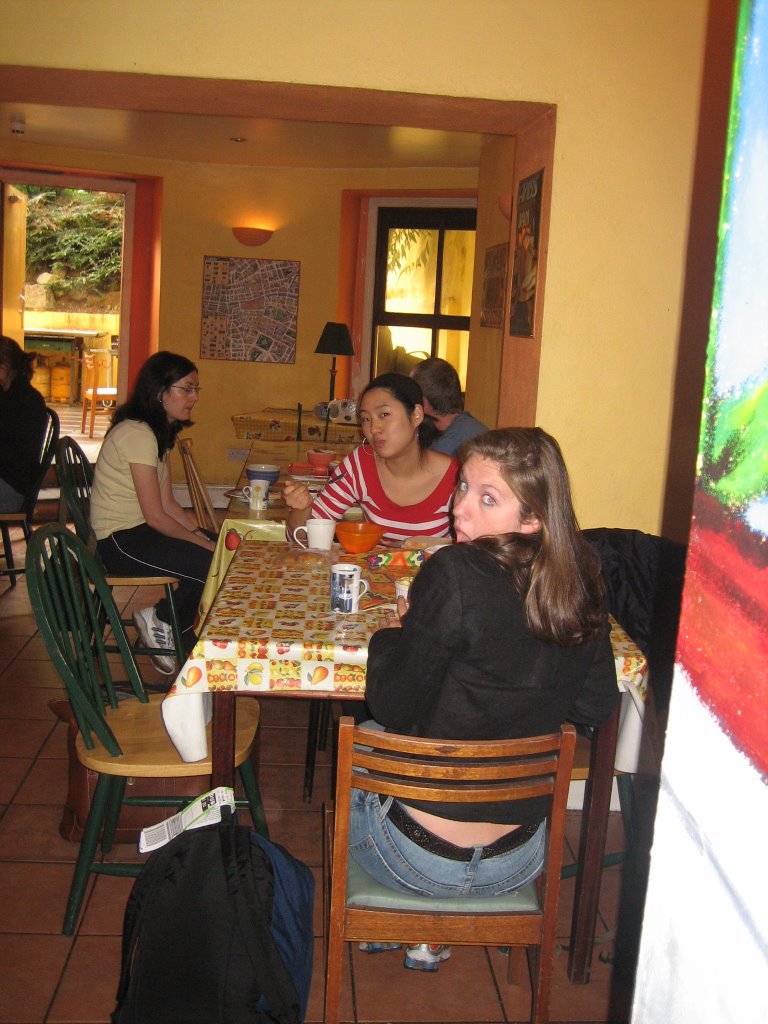
JaeHee and Shae sitting at the breakfast table. The breakfast room, with its cheery colored walls and city maps, was perhaps the hostel's only redeeming quality.

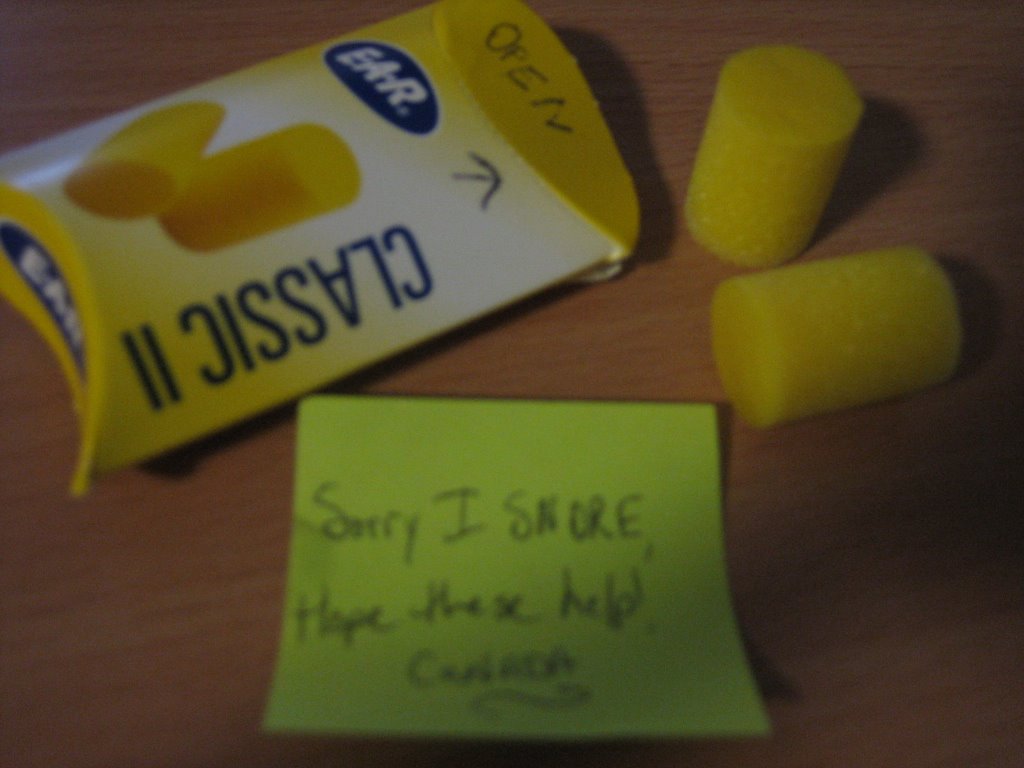
As horrible as the first night may have been, it paled in comparison to our second and, thankfully, last night at the Brewery Hostel. Coming home from a day tour of Dublin, we encountered queer little packages on our pillows.

If you can't make out the note, it reads: "Sorry I SNORE. Hope these help! -Canada"

How cute and considerate, but surely she couldn't be that bad, we thought.

Fast forward seven hours...

This girl sounded like she was sawing logs from her bunk. She was felling the great California Redwoods with each snorting, blustering breath. Around three in the morning, a few drunken Americans who were sharing the room stumbled in and proceeded to ask us how we were sleeping through such a racket. We weren't, was the unanimous reply from the seven other roommates.

Canada, I know we're friendly neighbors, but I'm tempted to take this girl's behavior as an act of aggression. You had better watch oot, eh?

4. Try to blend in with the locals.

This seems pretty straightforward. You know, when in Rome, and such. As Americans, we've been advised not to talk too loudly, not to travel in huge groups, not to make fun of France for always surrendering, etc.

So, we tried to do what's natural. We stopped into the famous Temple Bar on Friday evening, and settled down for a pint, grabbing the only seats available in the packed pub.

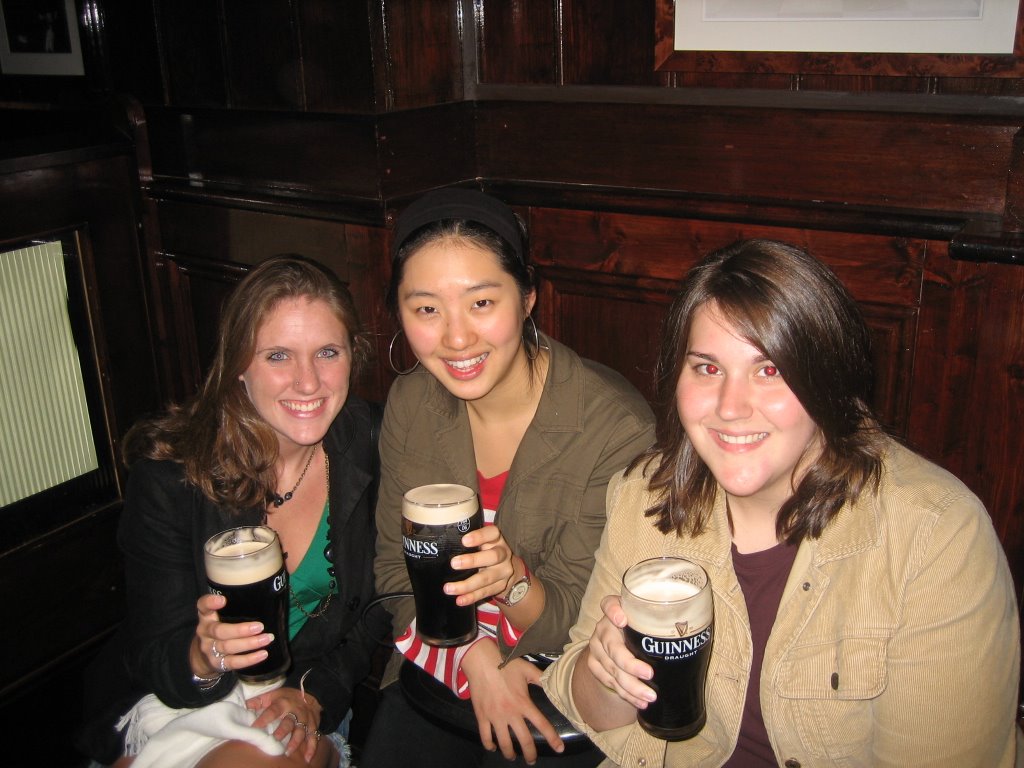
Aww, aren't we cute? [We had better be pretty damned cute, because those stupid pints of Guinness cost nearly $8US.]

Well, blend in is something we completely and utterly failed to do. Everyone stared, a couple snickered. This one guy leered, causing the hair on the back of my neck to stand up.

Now, I'm no Sherlock Holmes, but I think it might have had something to do with the fact that we were unwittingly perched on the pub's stage for the better part of an hour; we may as well have been iguanas at a giraffe party. After finishing our pints, we quickly and quietly gathered our belongings and made for the door.

And, finally...

5. Take some Vitamin C.

While I'm still scurvy-free, I did manage to contract some nasty viral infection in Ireland, which led to tracheitis after a week back in Glasgow. My flatmates were saints for putting up with the cacophony of my simultaneous hacking and wheezing fits. One morning, I very nearly dislodged my spleen as I coughed foul, green sputum into the sink. There's an image I'll never forget.

Seriously, though, Ireland was amazing, as I hope the next few posts will show.

Sunday, October 01, 2006

Shiny, Happy People

Okay, so I lied when I said Ireland would be my next post. I'll not hesitate to admit that if given the chance to post a paltry, little entry versus one with structured, witty commentary, I'll jump for the inconsequential one every time.

In reviewing some of my past entries, I realized that I talk about my flatmates quite a bit, and yet you've no way to put a face to each name (though, honestly, I have always referred to them in the collective, a la "my flatmates"). Well, dear readers, wonder no more.

[The parentheticals after each name identify my flatmates' respective hometowns/countries.]


Front Row, left to right: Meredith (Mars, Pennsylvania), Hassan (Karachi, Pakistan)
Back Row, left to right: Sylvain (Paris, France), JaeHee (Seoul, South Korea), Me (The Big Sleazy, Louisiana), Zein (Karachi, Pakistan)

Flat G Factoids and Trivia:
  • Zein, Hassan, and Sylvain are all Master's students studying management here at the University.
  • Meredith, JaeHee, and I were fortunate enough to know each other from our exchange program before moving in together.
  • Hassan, Zein's younger brother, doesn't actually live with us, but spends so much time in our flat that we've granted him honorary resident status.
  • Never cook on 6.
  • Fishsticks and lamb are the devil.
We have a lot of fun. Some people might say a little too much fun. (In that case, some people would be wrong.)

Thursday, September 28, 2006

England's Lake District, Part Two

For my homestay, I visited a sheep farm about ten miles outside of the small market town of Penrith in Cumbria, England. Situated in a tiny village called Reagill is Reagill Grange, a property under the ownership of the Lordship of Lonsdale. It is here that Eddie Jackson's family has been raising sheep for wool and mutton for the past few generations.

I could talk for hours about the estate itself; hectares upon hectares of verdant, rolling hills divided into individual pastures by miles of moss-covered, eighteenth-century stone fences, this family farm in the Eden Valley will steal your heart as it did mine. However, the more I try to describe the place for you, the more likely I am to muck it up, so I'll leave the photos to speak for themselves. (For the most part, anyway.)

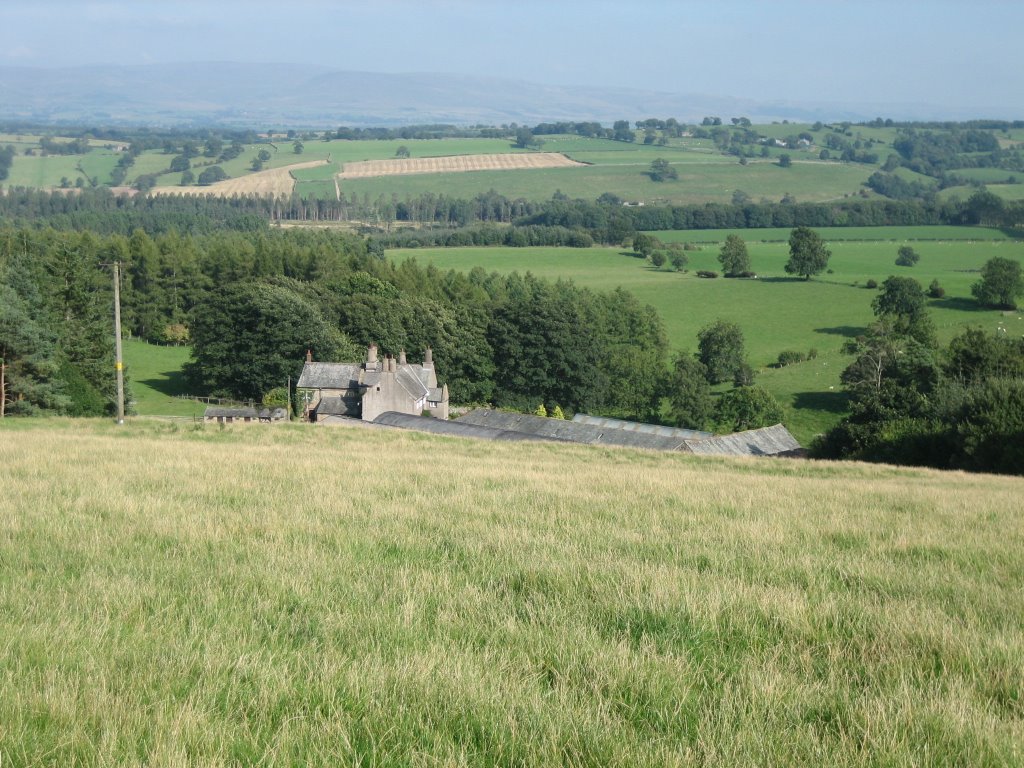
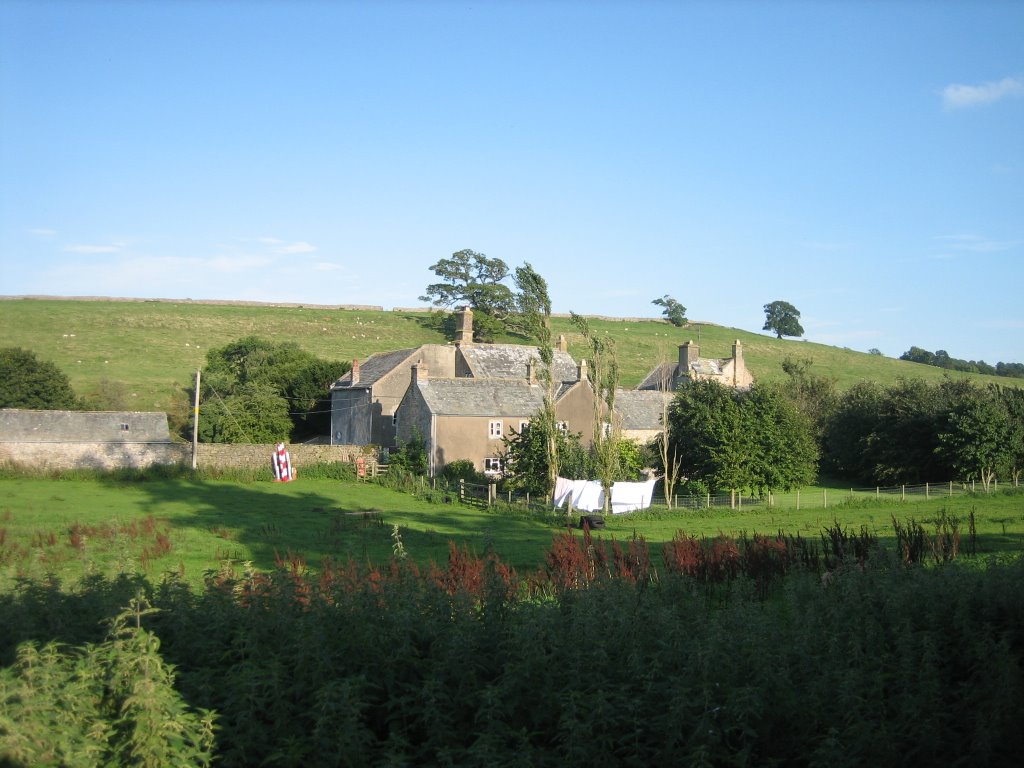
A view of the farmhouse from one of the north fields. You can see the Pennines, the "backbone of England," in the background.

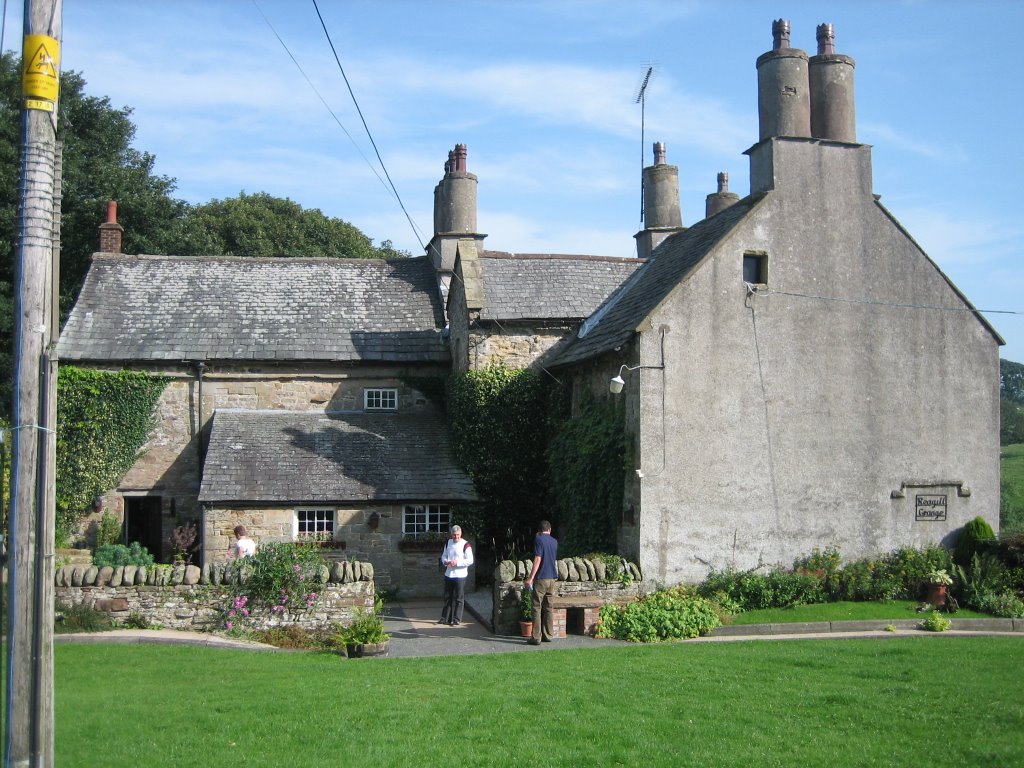
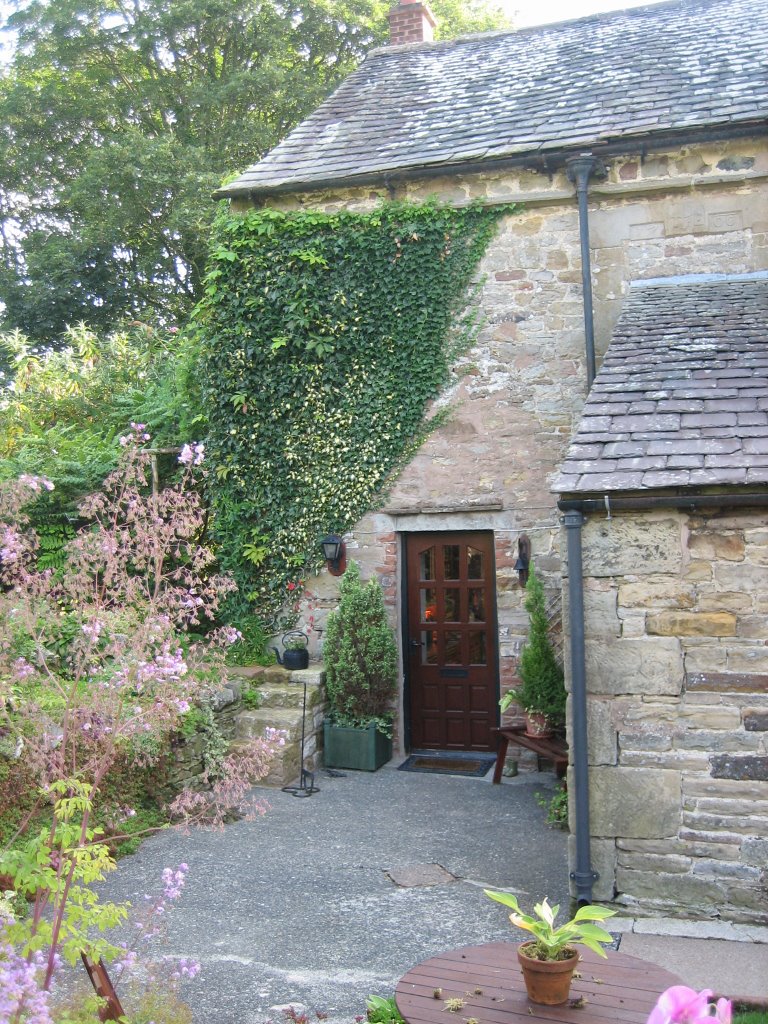
As we drove into the village, Eddie mentioned something about the kitchen being the "most recent addition" to the house. Stupid me, coming from a yuppie town where everyone gets a new kitchen every six months or so, assumed that "recent" meant "within the past few years." In a moment that only serves to remind me that America and England are two countries separated by a common language, Eddie went on to tell Jenna and I that the kitchen was 300 years old! Only five minutes later, I would find myself slurping carrot and bacon soup and sipping tea in a kitchen that was several decades older than my entire country.
This would be the door to that kitchen, just catty-corner to a darling English sitting garden tended by Eddie's wife, Jane.

As if finding out that I would be eating my morning Muesli in an eighteenth-century kitchen weren't enough to set my little historian's heart a-flutter, finding out the age of the house itself nearly sent me apoplectic.

"So, Eddie, if your kitchen is 300 years old, how old is the rest of the house?" I asked, my curiosity piqued.

"Well, the oldest standing parts of the house are the stairwell and the hearth in the great room. According to the Trust [National Trust of England], they're over a thousand years old."

One thousand years old?! ONE THOUSAND YEARS OLD?! I was going to be sleeping in an English farmhouse that had seen more than a millennium of history, more than ten centuries of human sacrifice and struggle?! Had I not been seated, my knees would have buckled, causing me to crumple into a trembling, giggling pile of sheer, geeky joy.

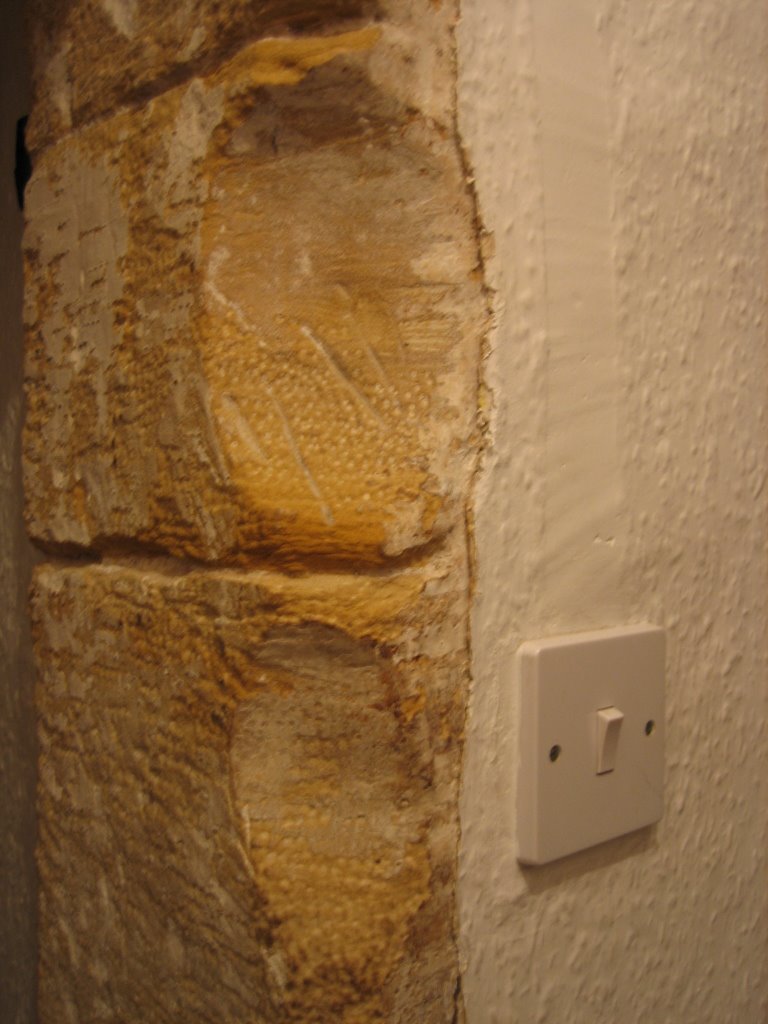
Here is the stone doorjamb leading into the one-thousand-year-old(!) staircase. See those hollows carved into the edges of the stone? That would be where some thirty generations of farmers honed the edges of their knives. (I'll try to resist the urge to say nanny-nanny-boo-boo to everyone reading...Yeah, not gonna happen. NANNY-NANNY-BOO-BOO. Hmm, I feel better.)

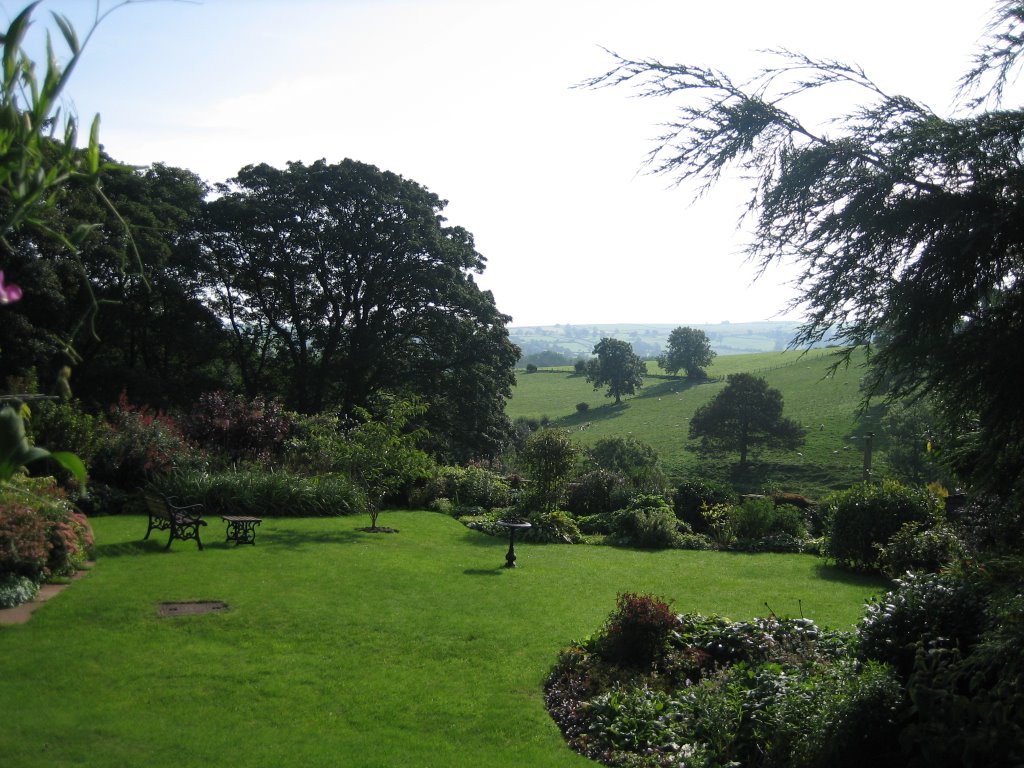
The Jacksons' backyard, also tended by Jane.

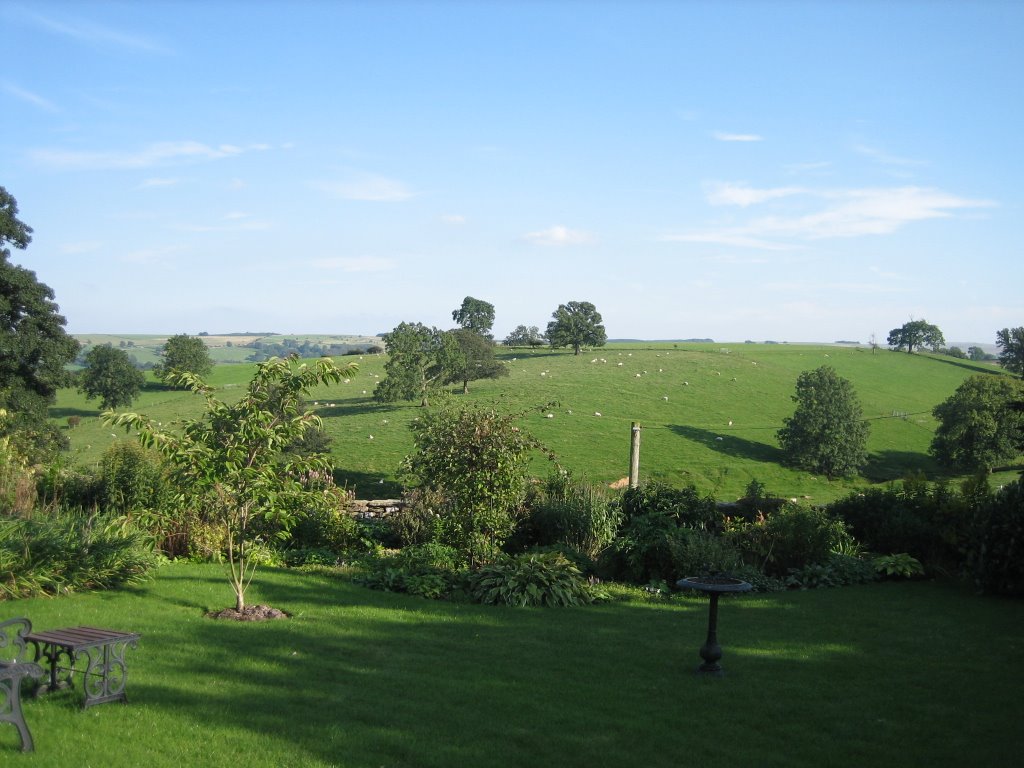
A view of the Eden Valley from the Jacksons' backyard. (Those little white dots? Yeah, sheep.) If I had local scenery like this, I'd never get anything accomplished.

After visiting Ullswater with the rest of our group, we asked Eddie if he would give us a tour of the sheep farm. He seemed a little taken aback, telling us that most students he had hosted weren't half as interested in seeing the sheep, let alone tending them. Oh yes, we were different. The three of us hopped on ATVs and crisscrossed the fields in the warm afternoon sun, occasionally stopping so that Eddie could point out an interesting historical site.

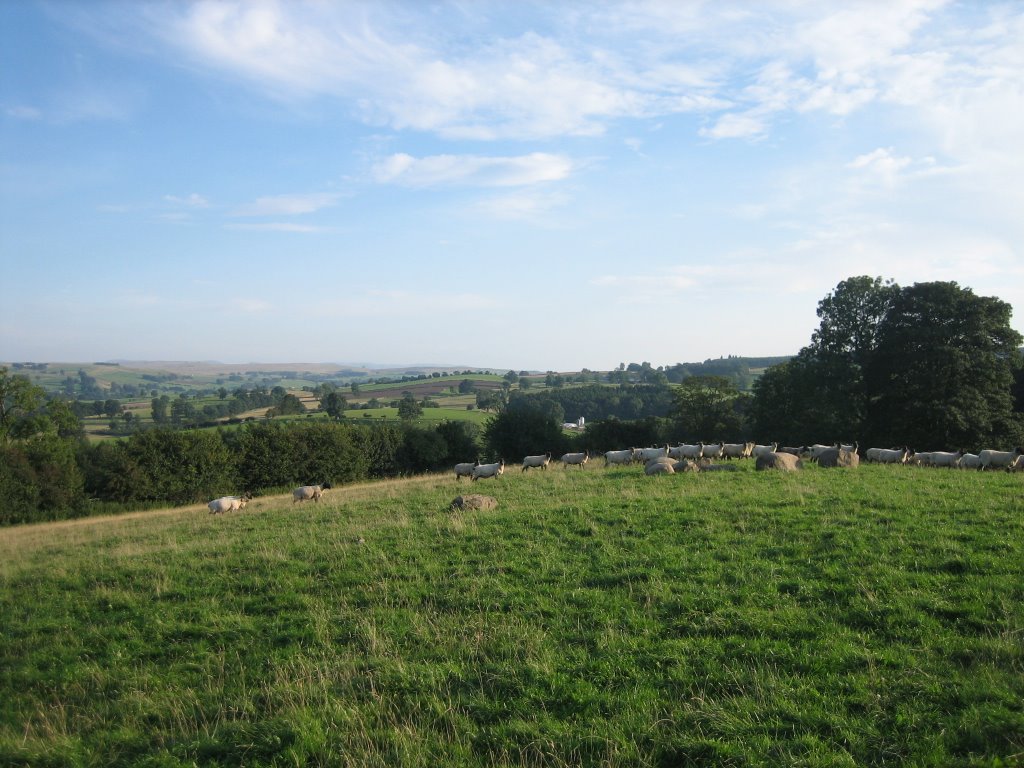
The view across one of the eastern pastures. On a semi-related note, sheep are unbelievably chatty animals.

The first point of historical interest: an old farmhouse on land abutting the Jackson's property. All you Catholics and history buffs, pay close attention. This house provided refuge to one of the four knights who murdered Thomas Becket, the Archbishop of Canterbury (aka St. Thomas Becket, Thomas à Becket) in 1170. Almost fell off the four-wheeler when I heard that one.

An old cottage in one of the fields on the Jackson farm.

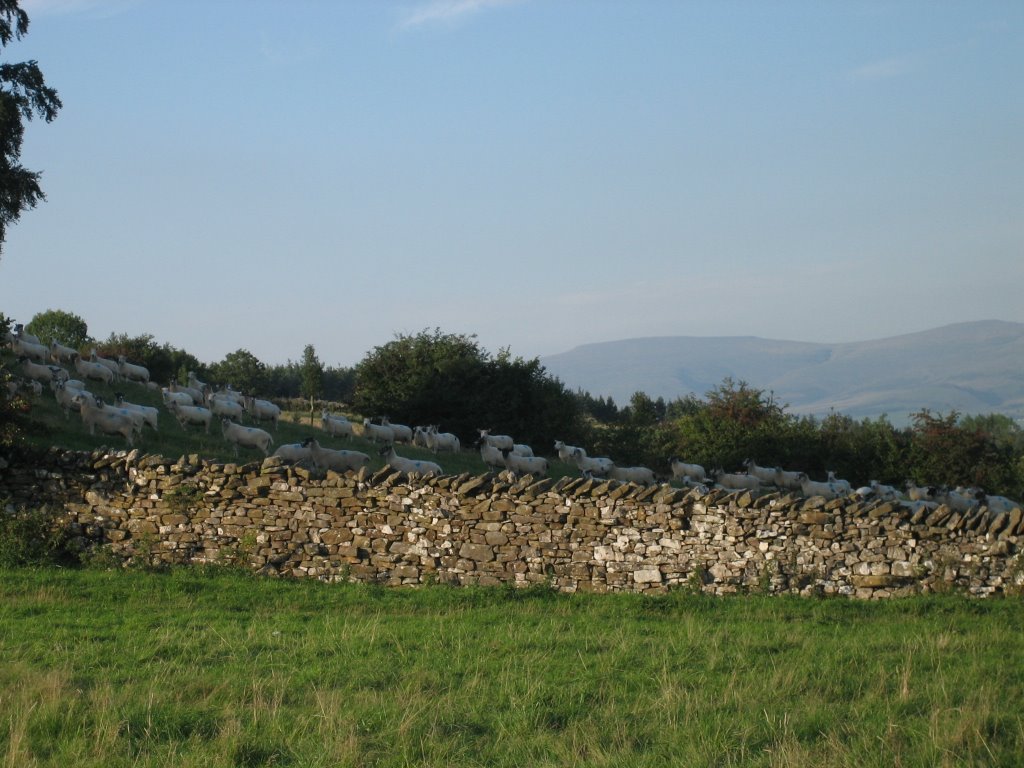
Dozens of sheep pointing north: or, a flock of woolly, bleating compasses.

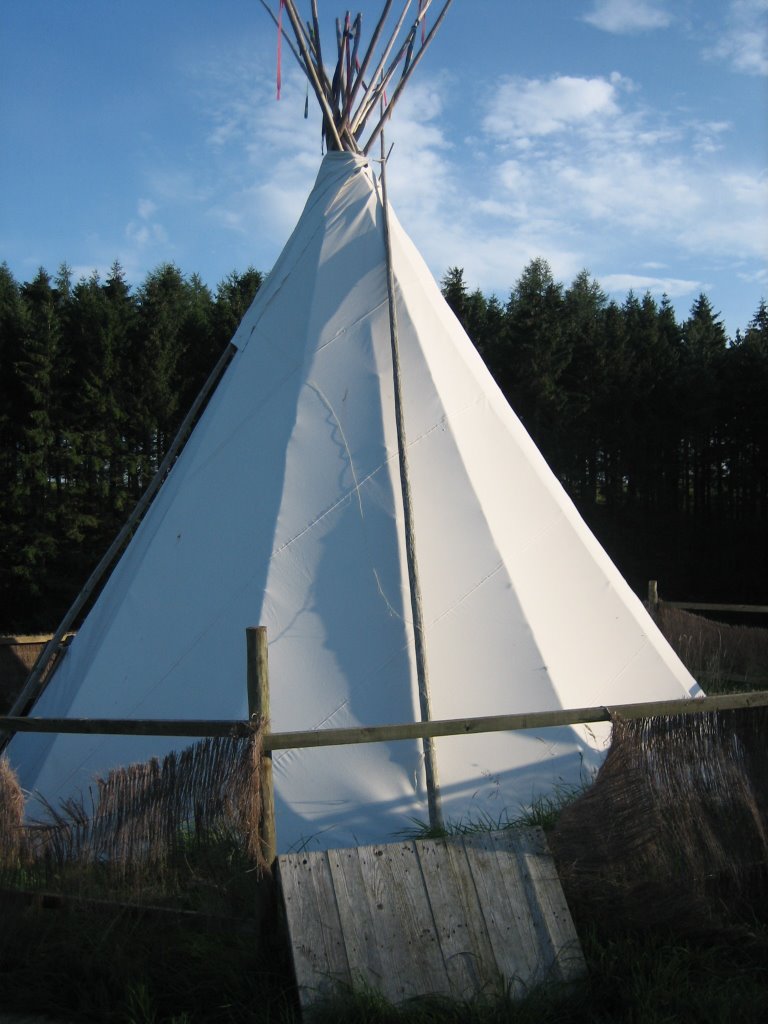
One of the Jacksons' neighbors is an artist, and being a little, um, artsy, has set up his very own Scottish tipi on his land. Yeah, that's what I thought, too.

The area of Cumbria in which we were staying is positively oozing history. Over the weekend, the Jacksons brought us to various different sites. The first one made me squeal with girlish delight. Sadly, that is no exaggeration.
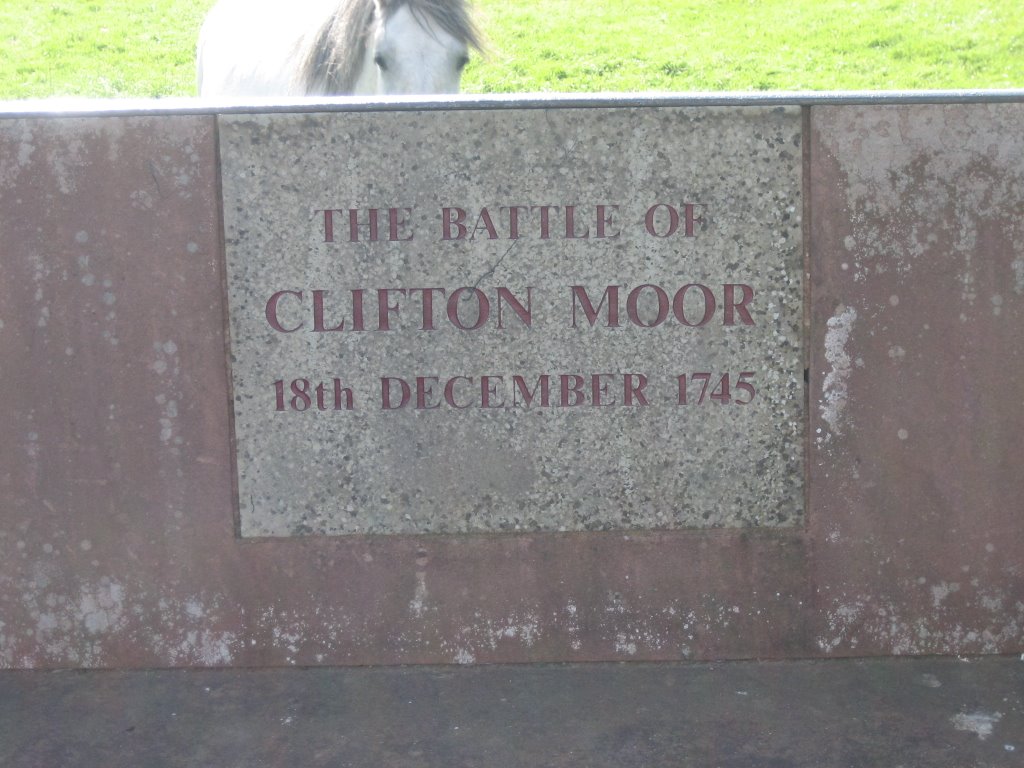
Just outside of Penrith is a monument to the Battle of Clifton Moor, the last battle fought on English soil, and one of the turning points of the Jacobite Rebellion of 1745. If you've ever spoken to me for more than five minutes, you've likely heard me gush over the "Forty-Five" or Bonnie Prince Charlie. Well, this was the site of the last battle the Highlanders fought as they were chased out of England; less than four months later, nearly 1,300 Highland soldiers would be slaughtered at the Battle of Culloden outside of Inverness in Scotland. The Battle of Culloden and the subsequent acts of proscription passed by the English destroyed Scottish clan life forever. I haven't a drop of Scottish blood in my body, and still I get riled up whenever I hear the name "Cumberland." (Confused? Look up the Duke of Cumberland.)

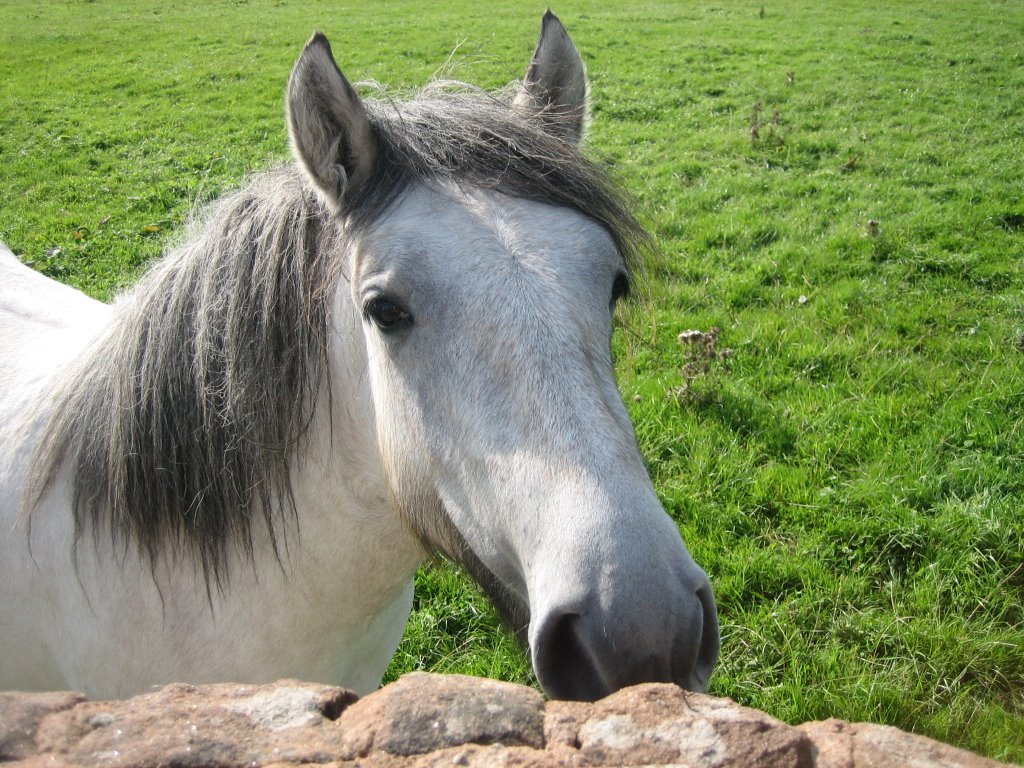
To brighten the mood, I'll direct your attention to the equine face peeking over the wall.

Whilst standing at the monument, we were visited by a resident of the pasture behind the stone wall. Egads, I love horsies.

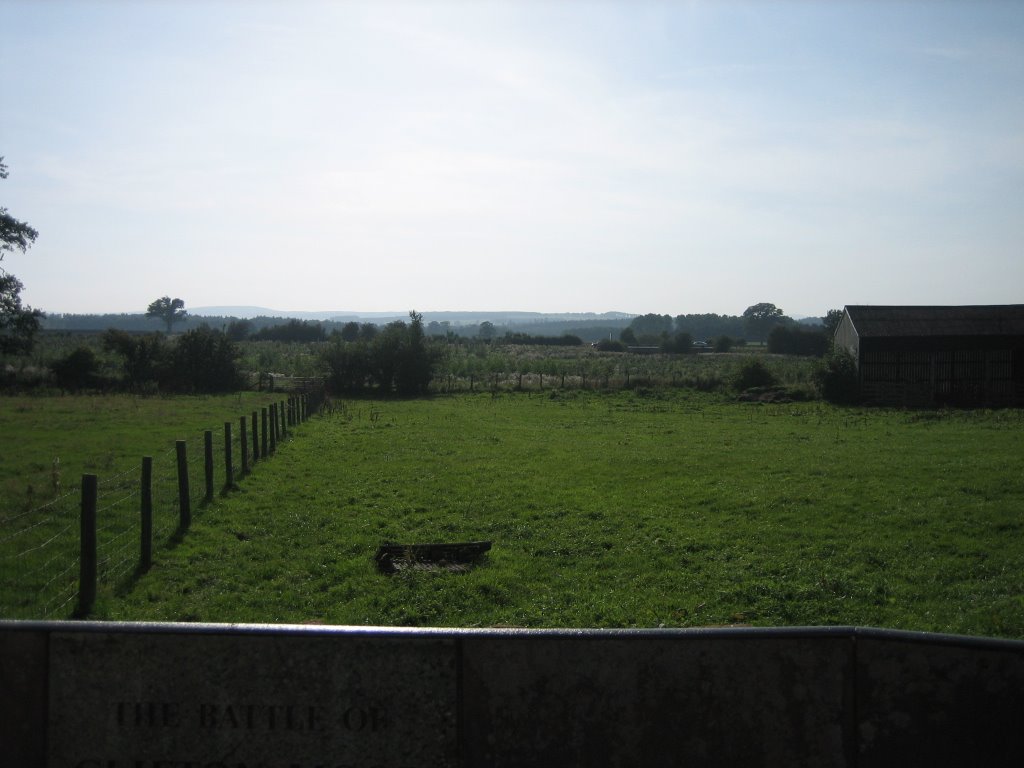
It might seem odd to find a random pony on a battlefield, but this is all that remains of Clifton Moor. Unlike Culloden, which I hope to visit in the coming weeks, Clifton Moor was not turned into a memorial battlefield, and is now serving as pastureland.

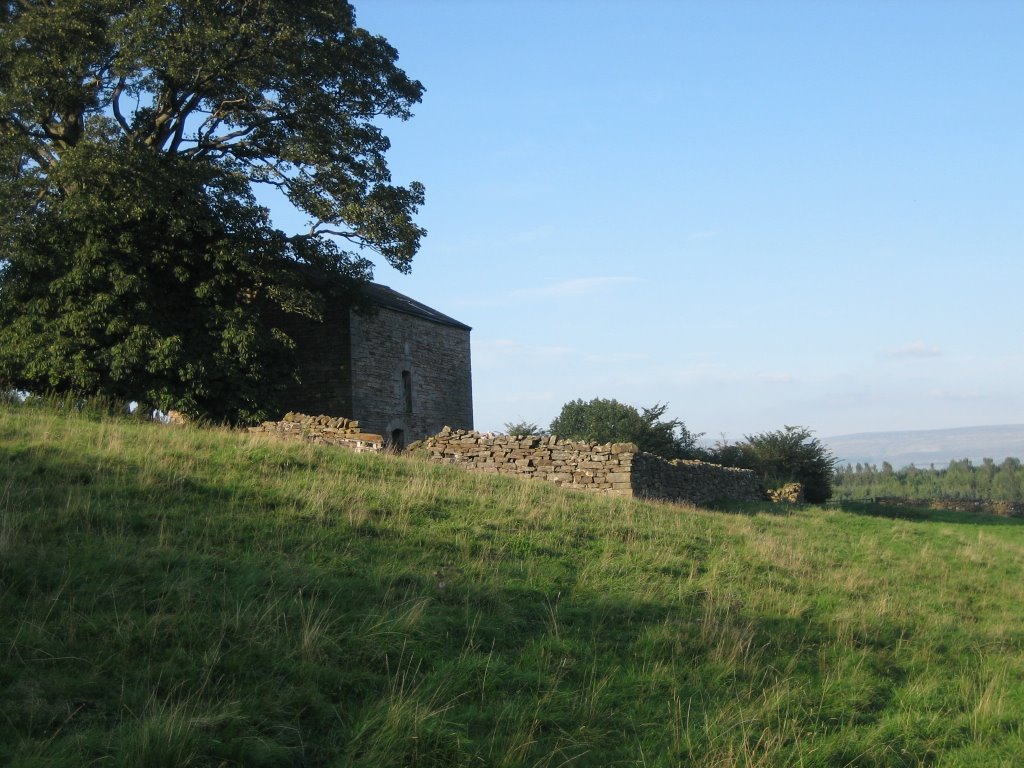
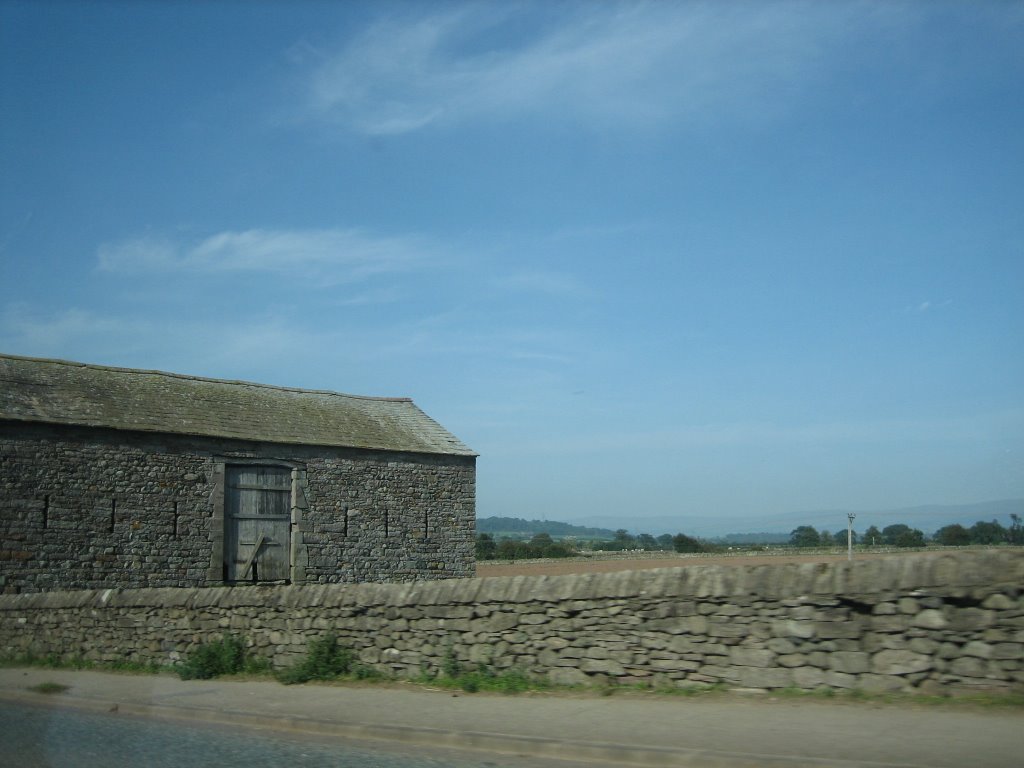
This barn, as seen from the car on the way back to Penrith, housed the wounded Jacobites following the battle. It is now protected under the National Trust and cannot be developed or altered.

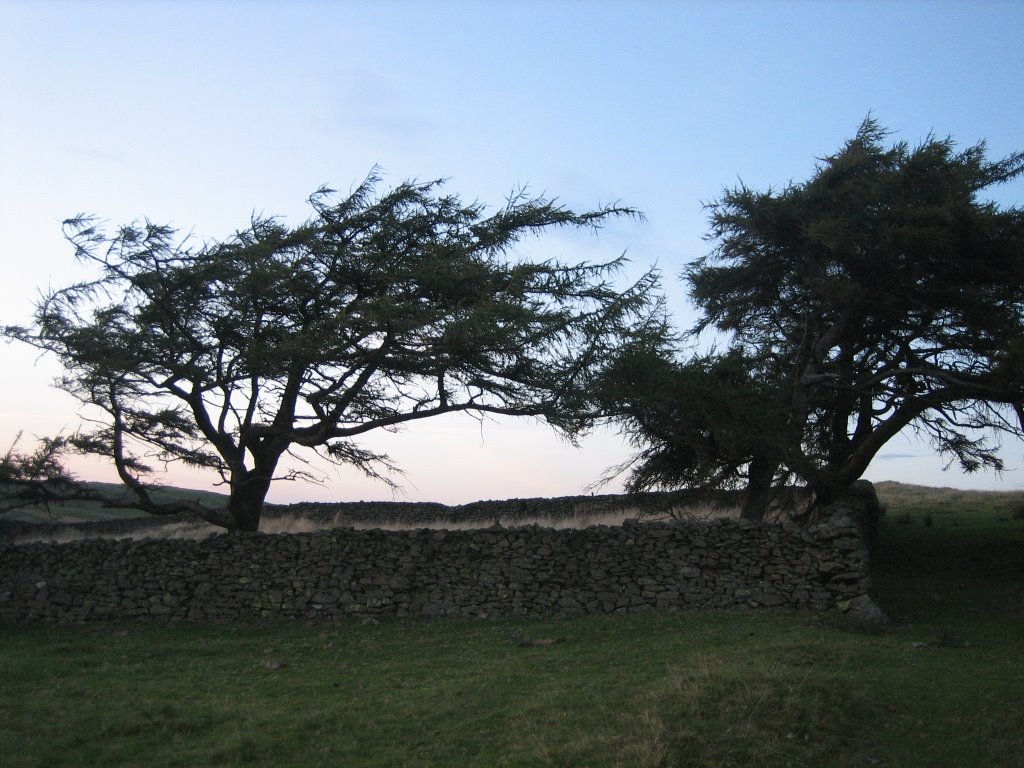
These gorgeous trees were in the ruins of a churchyard in the Howgill Fells, a group of hills in the Yorkshire Dales. We were in the Howgills visiting Fox's Pulpit, the site of the 1652 sermon delivered by George Fox that launched the Quaker movement (aka the Society of Friends).

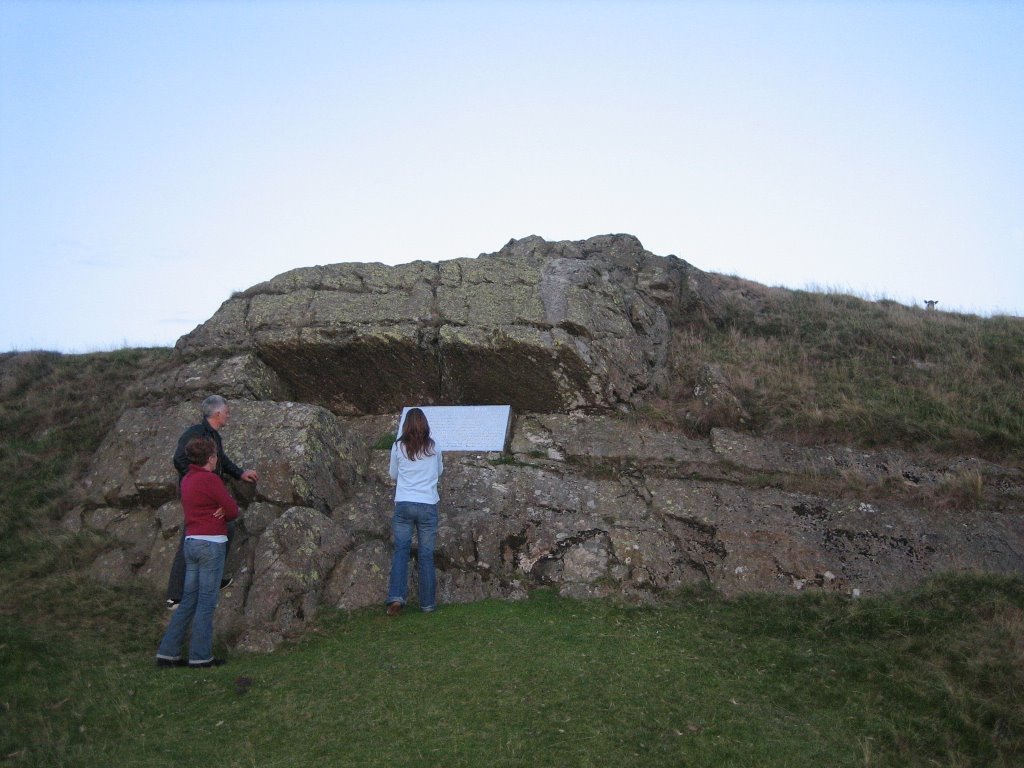
Said pulpit. The inscription on the tablet reads:

LET YOUR LIVES SPEAK
HERE OR NEAR THIS ROCK GEORGE FOX PREACHED
TO ABOUT ONE THOUSAND SEEKERS FOR THREE
HOURS ON SUNDAY JUNE 13, 1652. GREAT POWER
INSPIRED HIS MESSAGE AND THE MEETING PROVED
OF FIRST IMPORTANCE IN GATHERING THE SOCIETY
OF FRIENDS KNOWN AS QUAKERS. MANY MEN AND
WOMEN CONVINCED OF THE TRUTH ON THIS FELL AND
IN OTHER PARTS OF THE NORTHERN COUNTIES WENT
FORTH THROUGH THE LAND AND OVER THE SEAS WITH
THE LIVING WORD OF THE LORD ENDURING GREAT
HARDSHIPS AND WINNING MULTITUDES TO CHRIST.
JUNE 1952


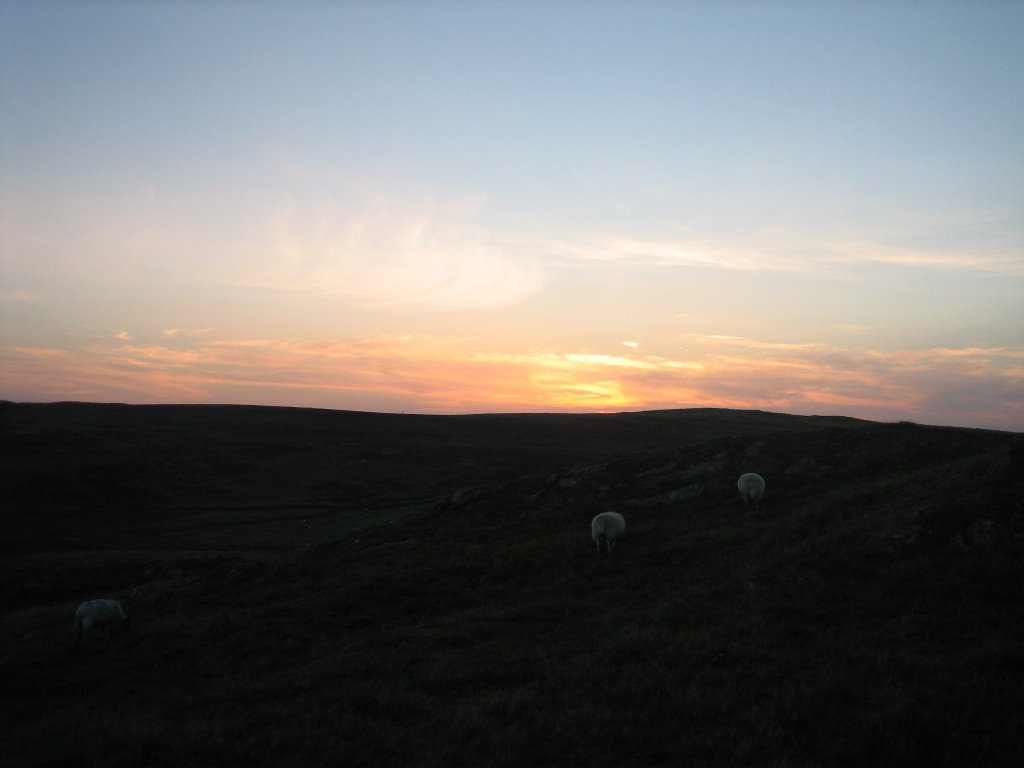
The sunset over the Howgills. Is it just me, or is everything prettier here?

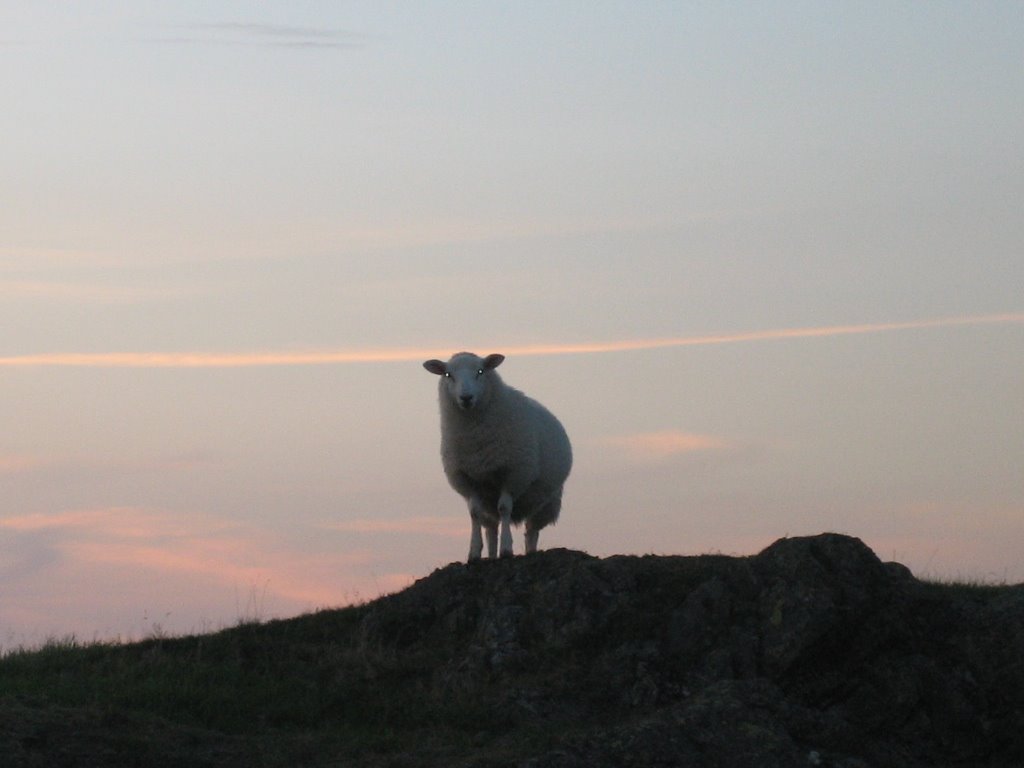
This sheep made me giggle like an idiot when he perched on a little rock outcropping and started to bleat, not to any of his fellow sheep, but to Jenna and me. Of course, we bleated back. To do otherwise would have been rude.

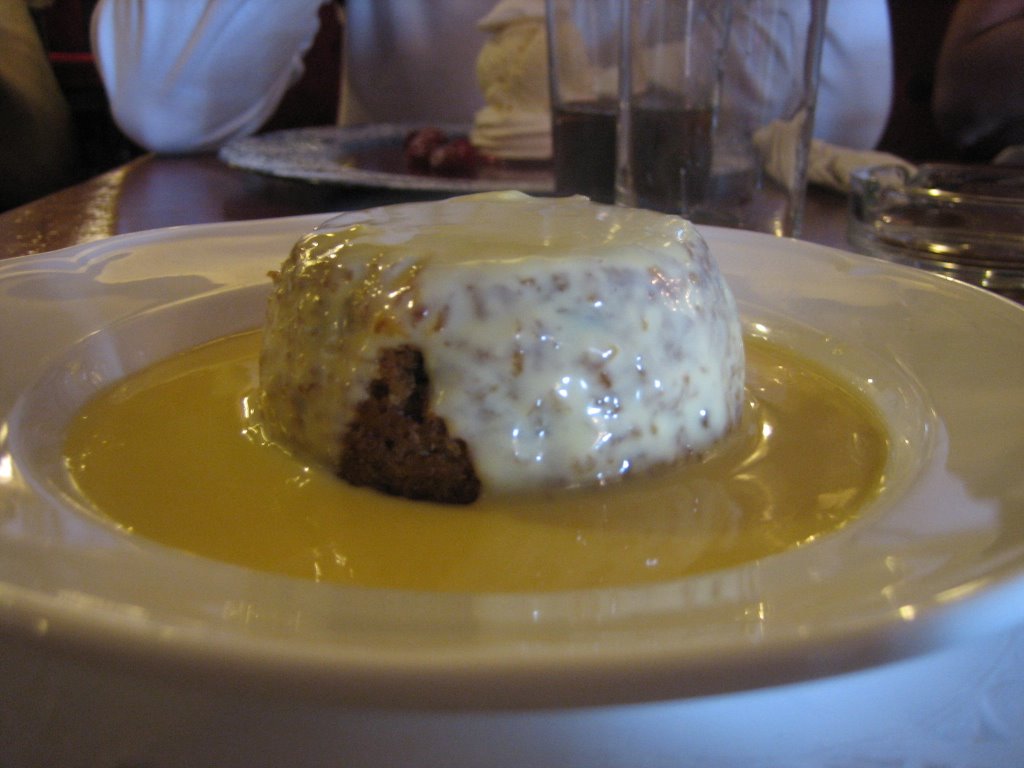
Finally, a picture from lunch on the final day in Reagill. The Jacksons brought us to their favorite pub (which had been in operation since the 1500s, naturally), and urged us to get a pudding for dessert. When I saw it on the menu, I knew I had to get it: Big Spotted Dick.

Get your minds out the gutter, you pervs. Spotted Dick is a lovely pudding filled with currants and served with warm custard. And with a name like Spotted Dick, it's gotta be good. (I'm sure the Smucker's people will sue me for copyright infringement.)

Our next installment: IRELAND

Monday, September 25, 2006

Paging Mr. Darcy: A Weekend in England's Lake District, Part One

I realize that blogging has been a little thin of late, but I have a very good reason for my absence from this corner of cyberspace: traveling (duh). After all, without the occasional jaunt to the continent or the country, you guys would be wasting your time reading about my trips to the local chippie, which, as we discussed in an earlier entry, is a hazard to one's gastrointestinal health.

Perhaps one of the most incredible experiences thus far--which bodes well for the semester as a whole--was the time I spent on a sheep farm in the English countryside bordering the Lake District. Yes, you read that correctly; this suburban princess fell in love with life in a pastoral farming community. After a few weeks in the big city, a friend and I were shipped out to Cumbria to spend a long weekend with a delightful family selected by our exchange program.
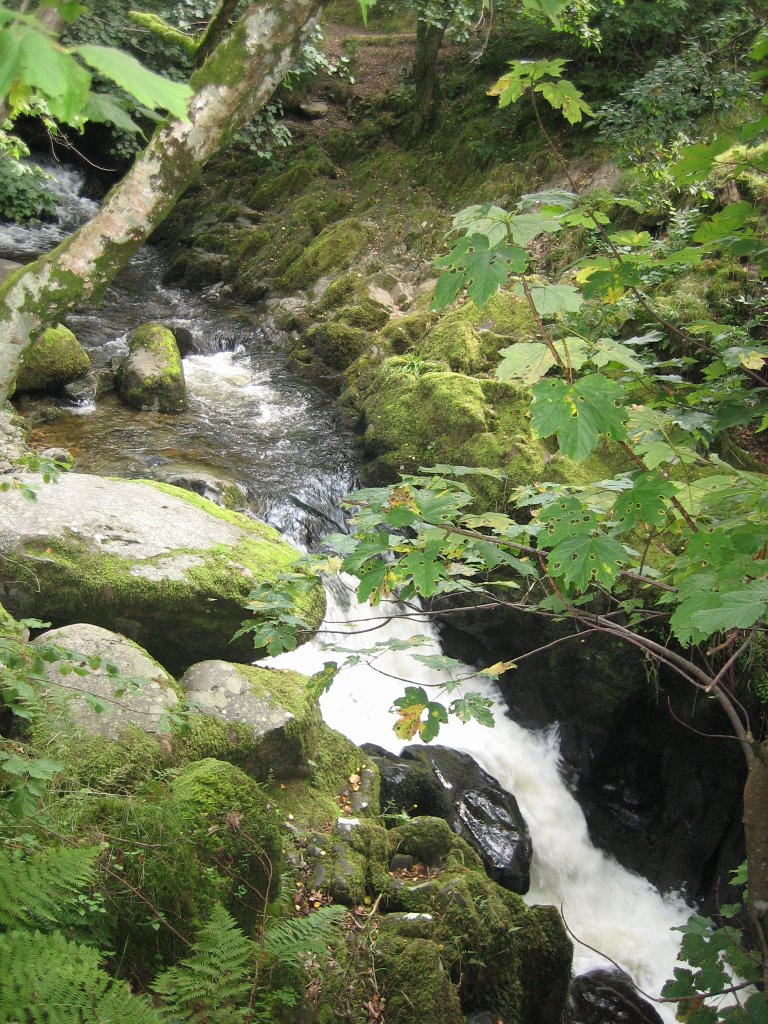
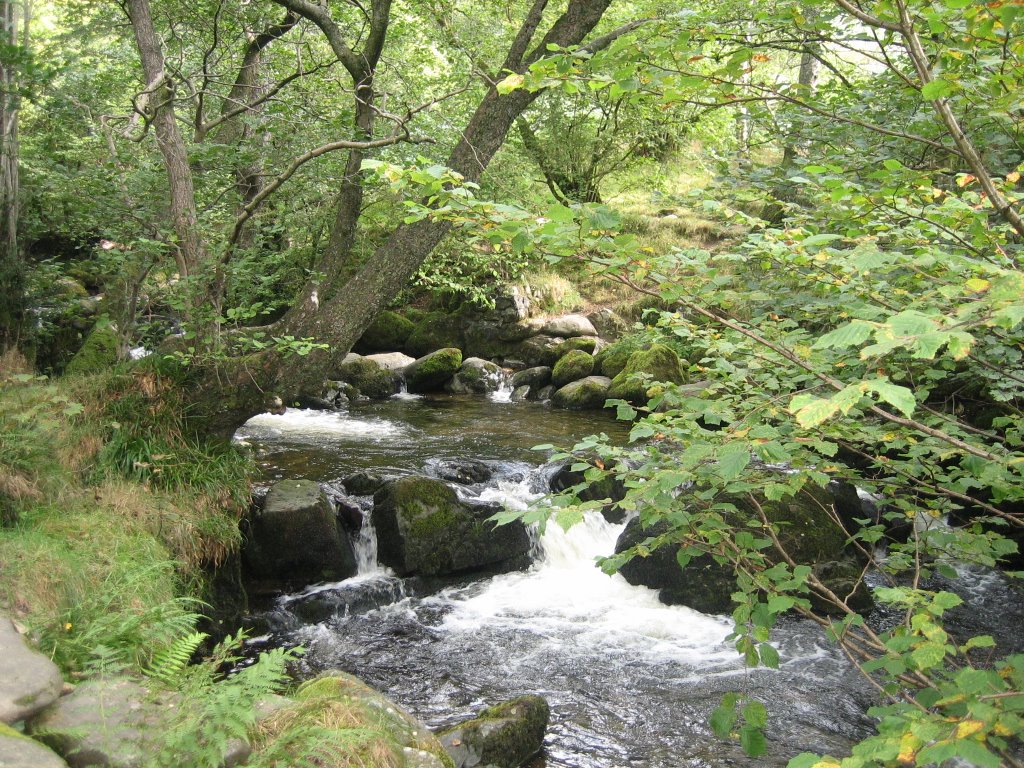
As I proved to be an indiscriminate photographer, this weekend will be broken into two parts, the first detailing a day trip to Ullswater, and the second featuring photos from the farm. So, without further ado, I welcome you the land of Mdmes. Austen and Bronte. (I know I shouldn't have to say it, but click the photo for a larger view.)

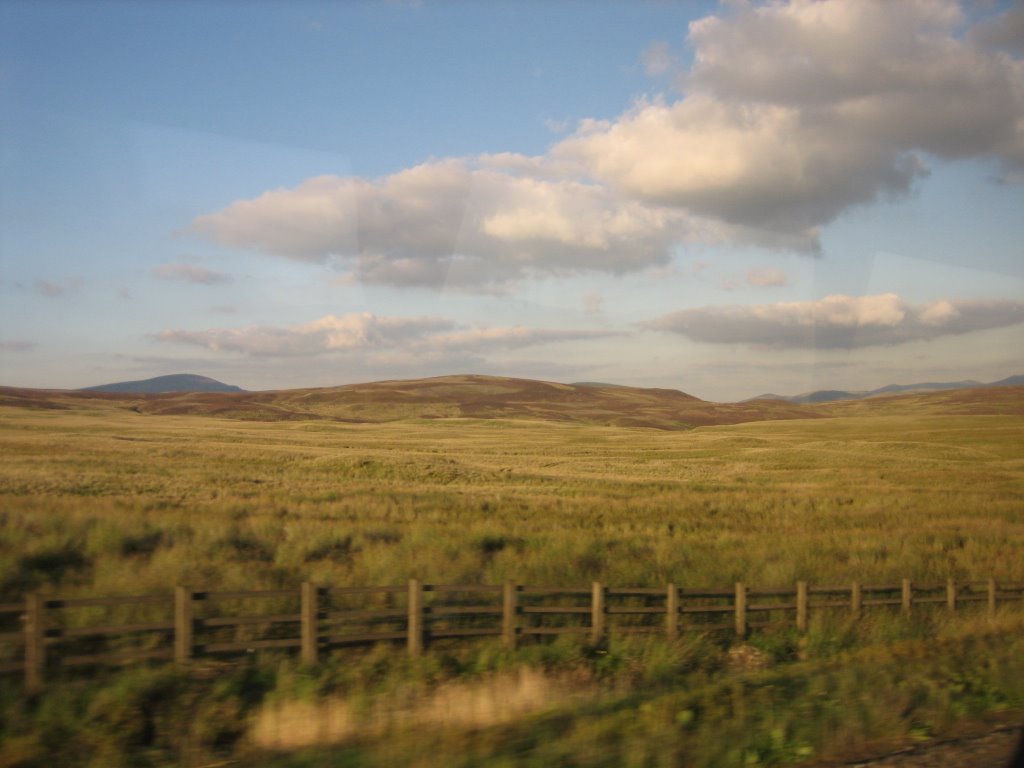
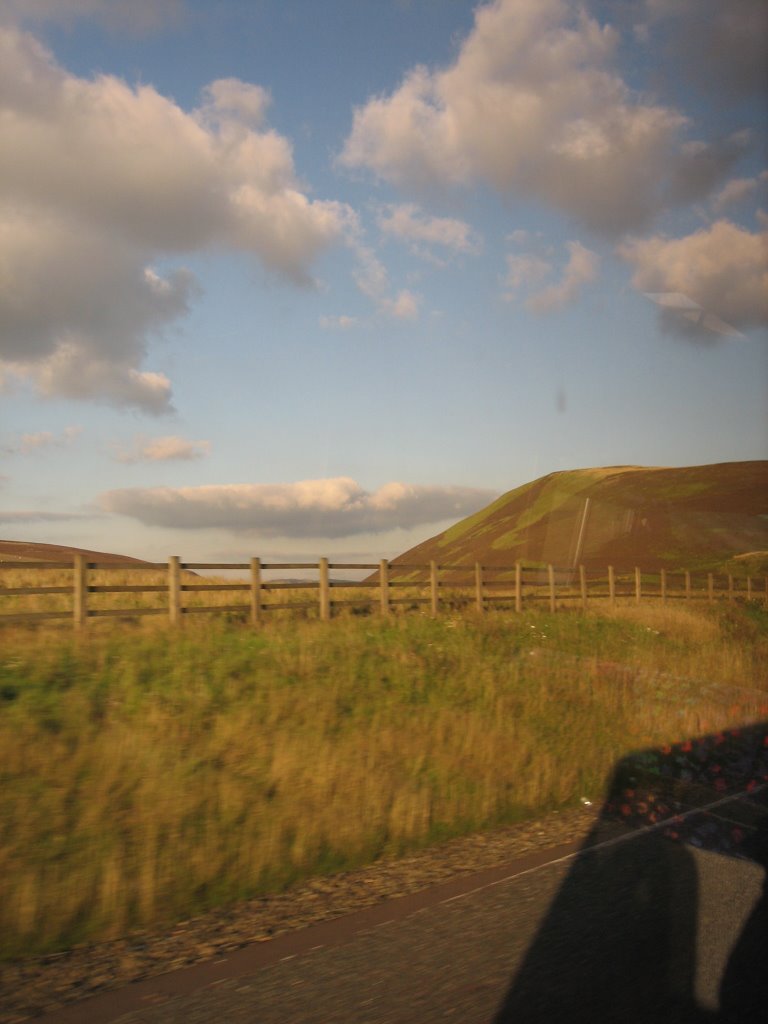
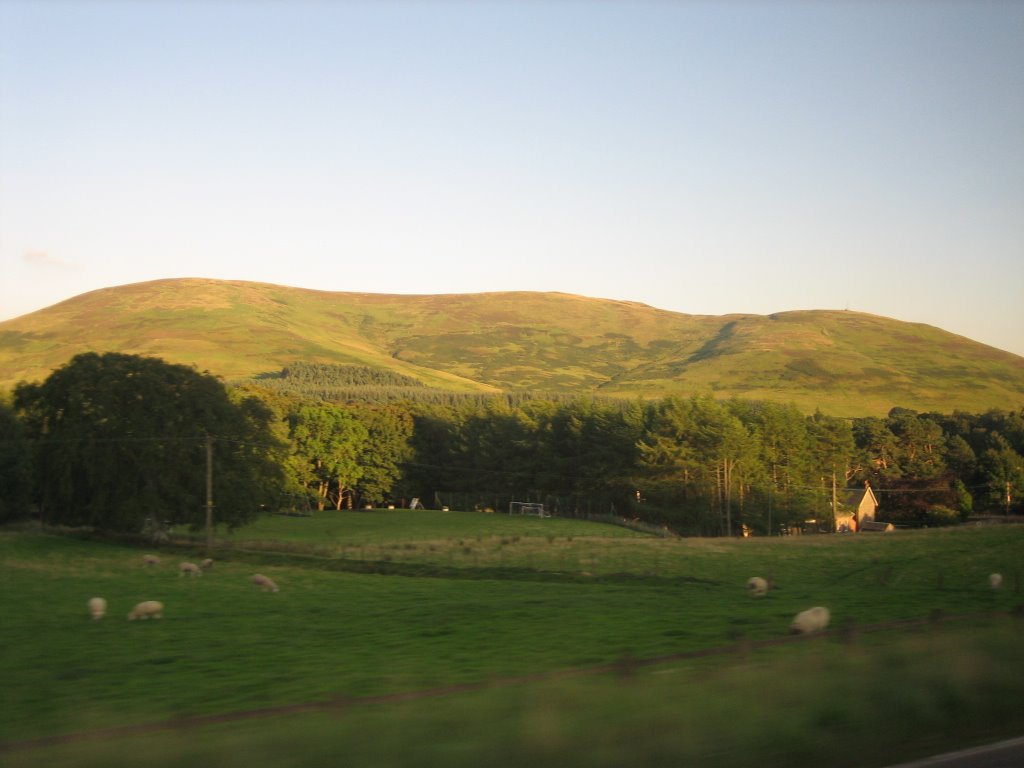
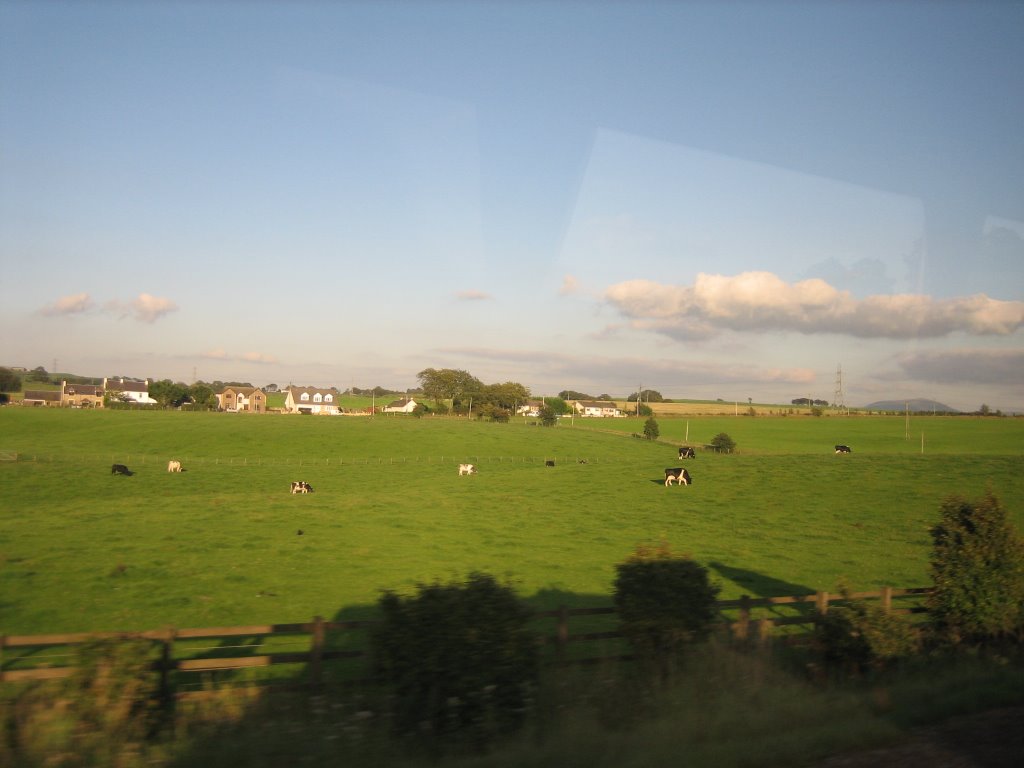
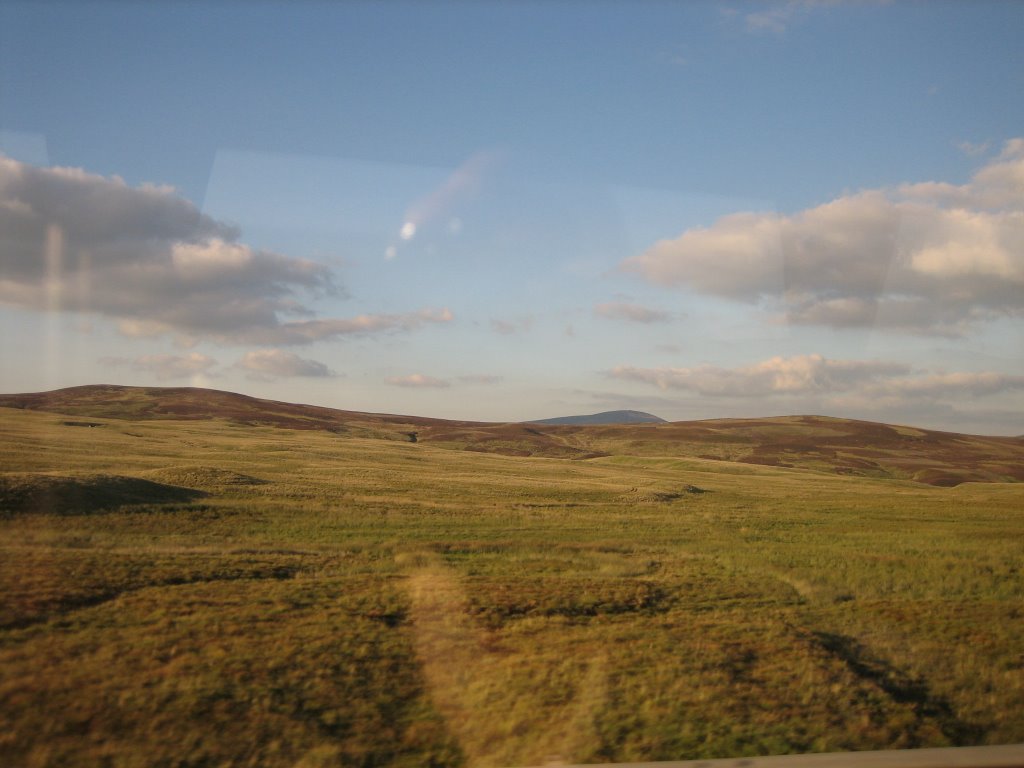
I suppose the best starting place for this entry is to paint a picture of what the Lowlands of Scotland look like (albeit, from the window of a moving coach, and not, say, on foot). The journey to Penrith was just shy of two hours; it could have been eight hours and I still would have had my face pressed against the glass in awe. I don't think I'll ever get tired of seeing Scottish landscapes. (Apologies for the glare in the following pictures; it was sadly unavoidable.)

SHEEP!

COWS!

Yes, well, ahem, excuse me whilst I compose myself after my little outburst. Farm animals just get me ten sorts of fired up. (I know what at least half of you are thinking, and you all should be ashamed of yourselves. Sickos.)

Saturday morning we set out for a hike up Aira Force, a waterfall that empties into Ullswater lake. Take a gander, won't you?

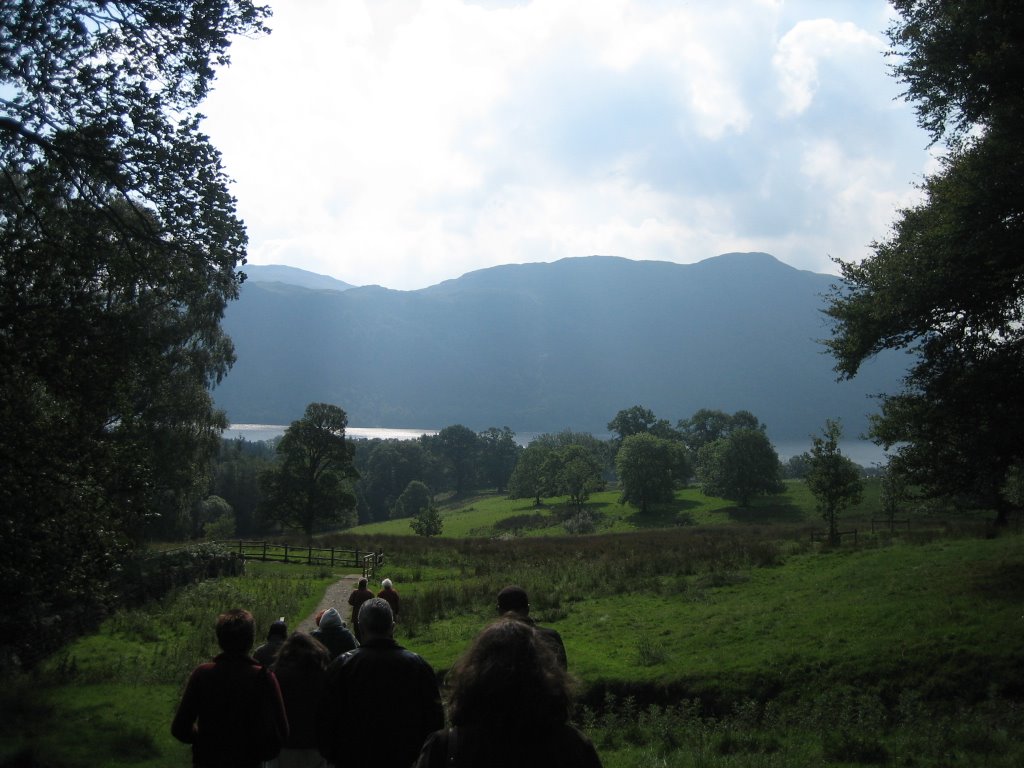
Our gaggle of host families and students working our way to the trails around Aira Force. Check out the fells in the distance. (For the benefit of you non-geology/ecology types, a fell is a treeless mountain landscape shaped by receding glaciers.)

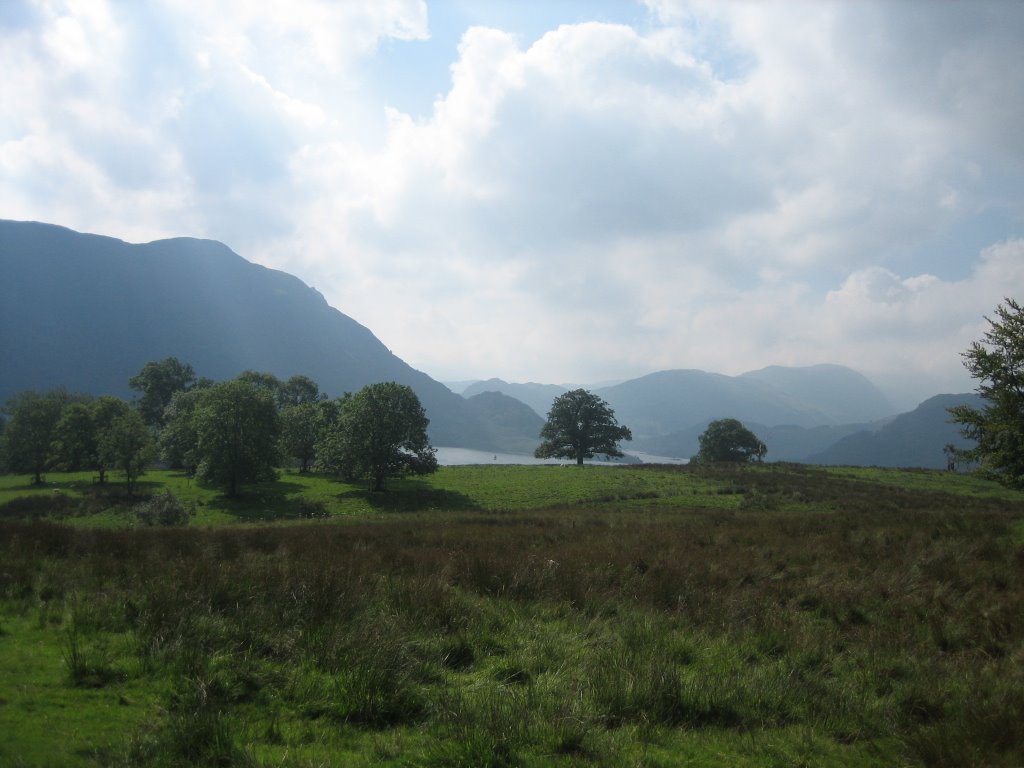
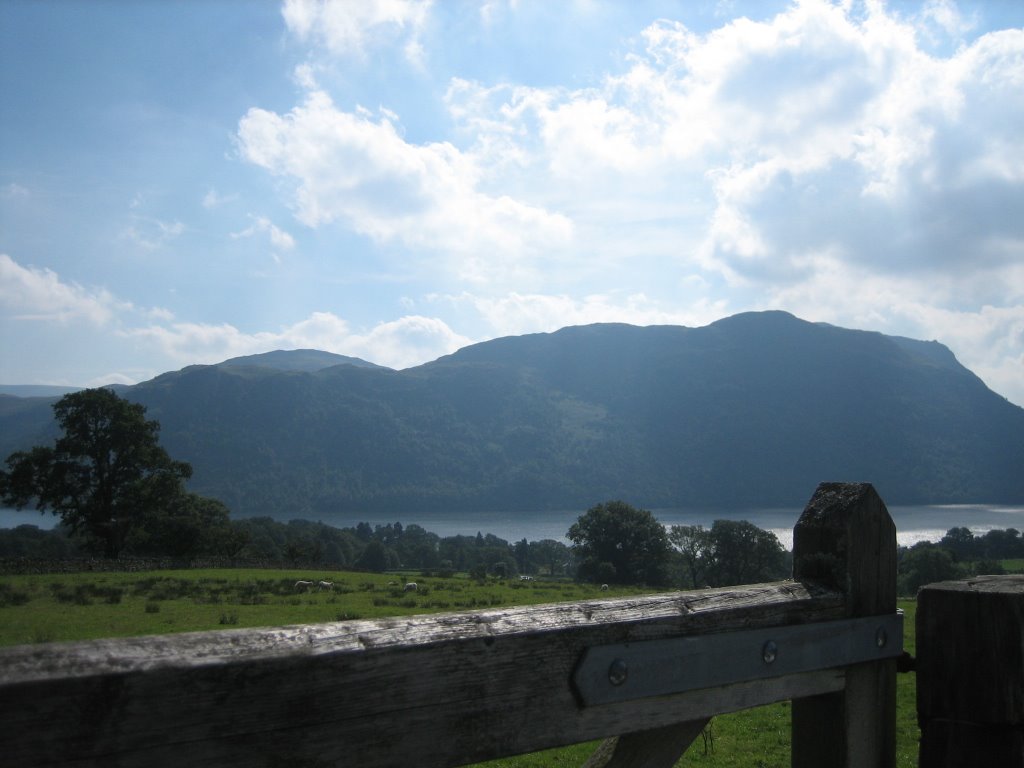
A view of Ullswater from a neighboring field.

Ullswater and fells, with added rustic fencepost goodness.

We descended into the woody underbrush of an old-growth deciduous forest, a seemingly rare sight these days. (This is especially true of the northern parts of England, where much of the land is cleared for logging ventures.)

A few yards upstream from the waterfall.

If my philosophy and biology studies allowed for such flights of fancy, I'd almost expect a drift of faeries to flutter into the frame of this shot. It doesn't take much to understand why druidic and pagan religions took such a firm hold of certain regions of England, Scotland, and--as I've recently discovered--Ireland. The landscape is, at the risk of sounding like a nutter, quite magical.

While photos are all well and good, when it comes to conveying the majesty of an area, they are often quite lacking. So, I've included a little video of the stream flowing toward its final destination, so that you might also enjoy the babbling sounds of the Lake District. (My sister will likely chide me for my shoddy videography, to which I have only this to say: "NEVER AGAIN!" Silly pigeon-chaser.)


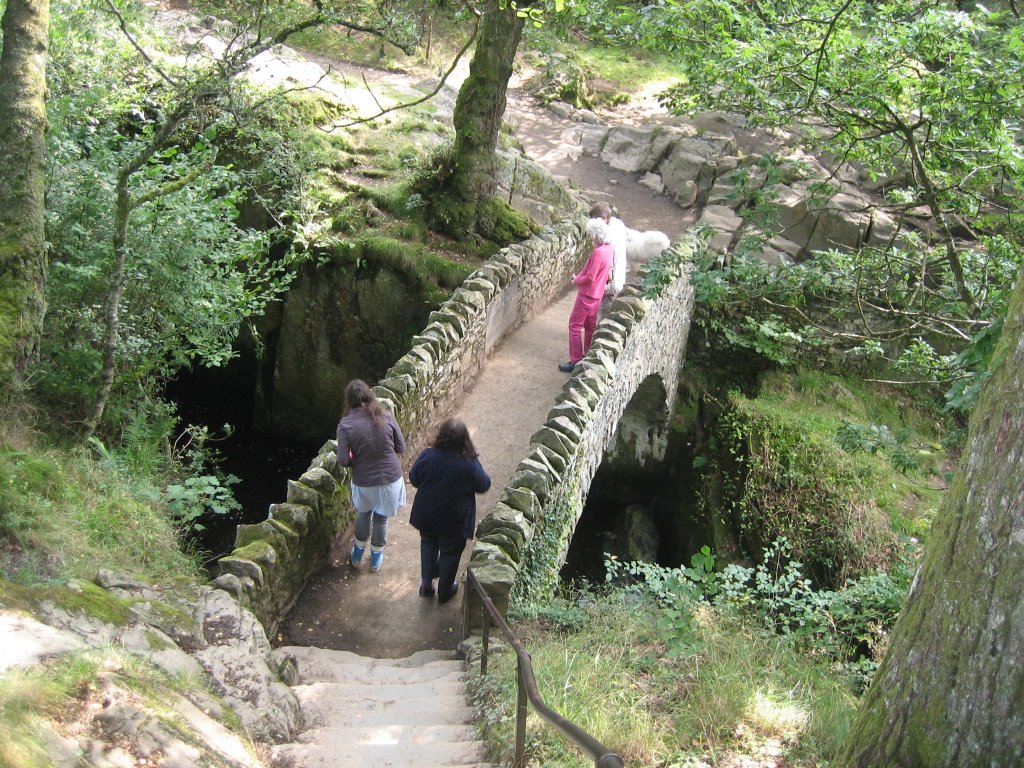
A small footbridge crossing over the falls.

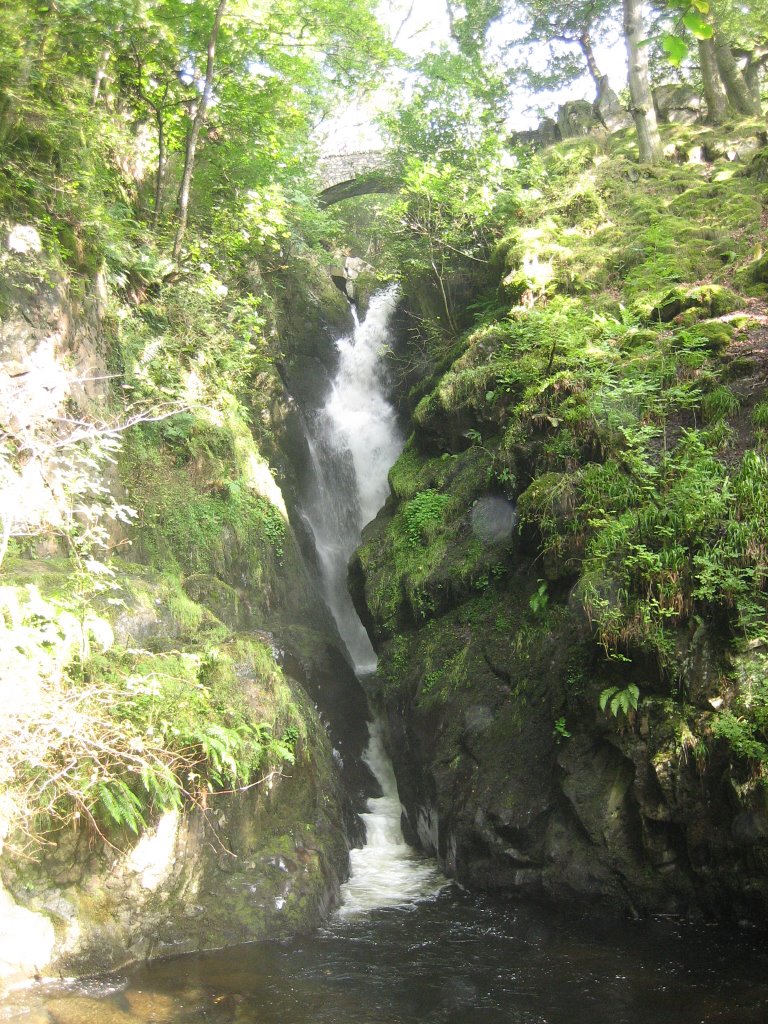
Aira Force in all her glory, as seen from the foot of the pool into which she empties.

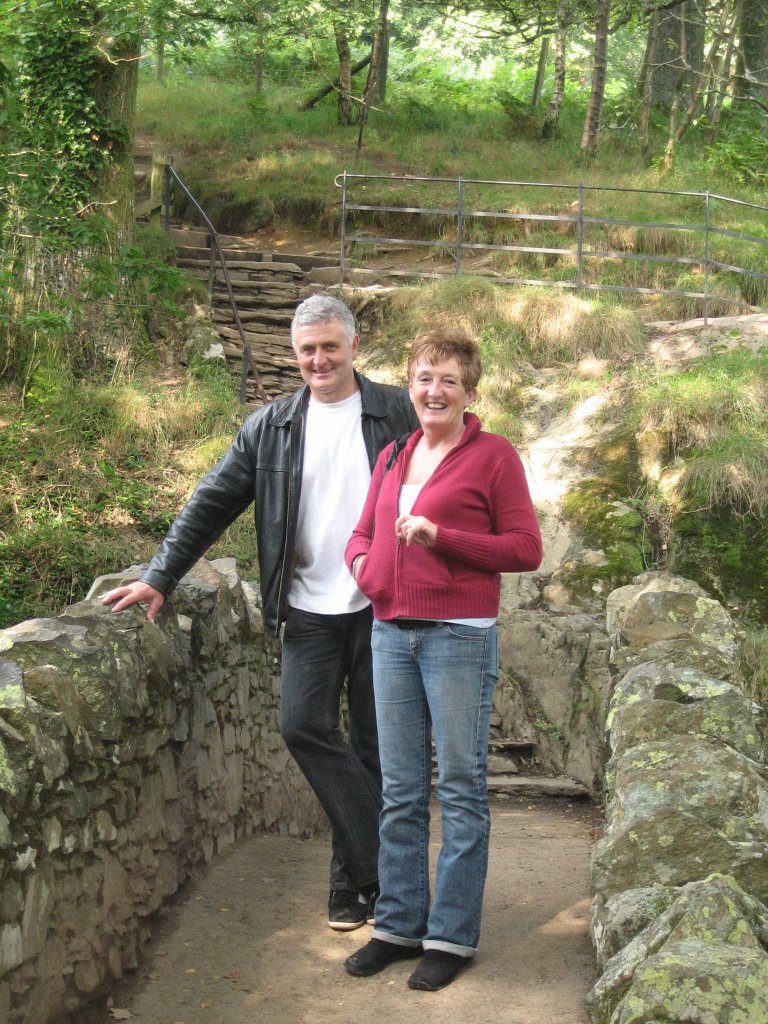
Eddie and Jane Jackson, the most amazing host parents a girl could ask for. Aren't they adorable?

Following our trip to the falls, we made our way to the shores of Ullswater to participate in the quintessential Lake District activity (at least, as portrayed by the works of Jane Austen): boating.

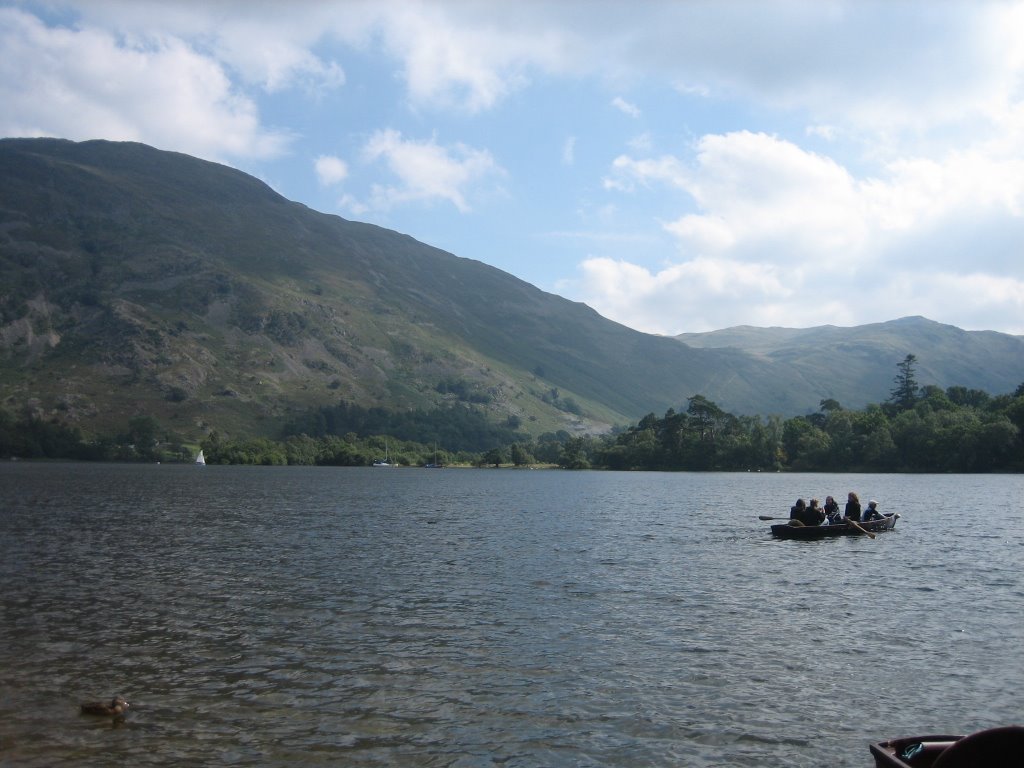
That wee vessel to the right of the frame holds one third of our exchange group. They were the Spanish Armada to our English Navy in the Spanish defeat of 1588. (Fine, so no one died and all ships remained afloat, but a girl can dream of nautical glory, can't she?)

As a final note, we looked for Mr. Darcy, even going so far as to quote Keats while rowing in an attempt to lure him from a neighboring farmhouse or estate. Sadly, no dice.