Thursday, September 28, 2006

England's Lake District, Part Two

For my homestay, I visited a sheep farm about ten miles outside of the small market town of Penrith in Cumbria, England. Situated in a tiny village called Reagill is Reagill Grange, a property under the ownership of the Lordship of Lonsdale. It is here that Eddie Jackson's family has been raising sheep for wool and mutton for the past few generations.

I could talk for hours about the estate itself; hectares upon hectares of verdant, rolling hills divided into individual pastures by miles of moss-covered, eighteenth-century stone fences, this family farm in the Eden Valley will steal your heart as it did mine. However, the more I try to describe the place for you, the more likely I am to muck it up, so I'll leave the photos to speak for themselves. (For the most part, anyway.)
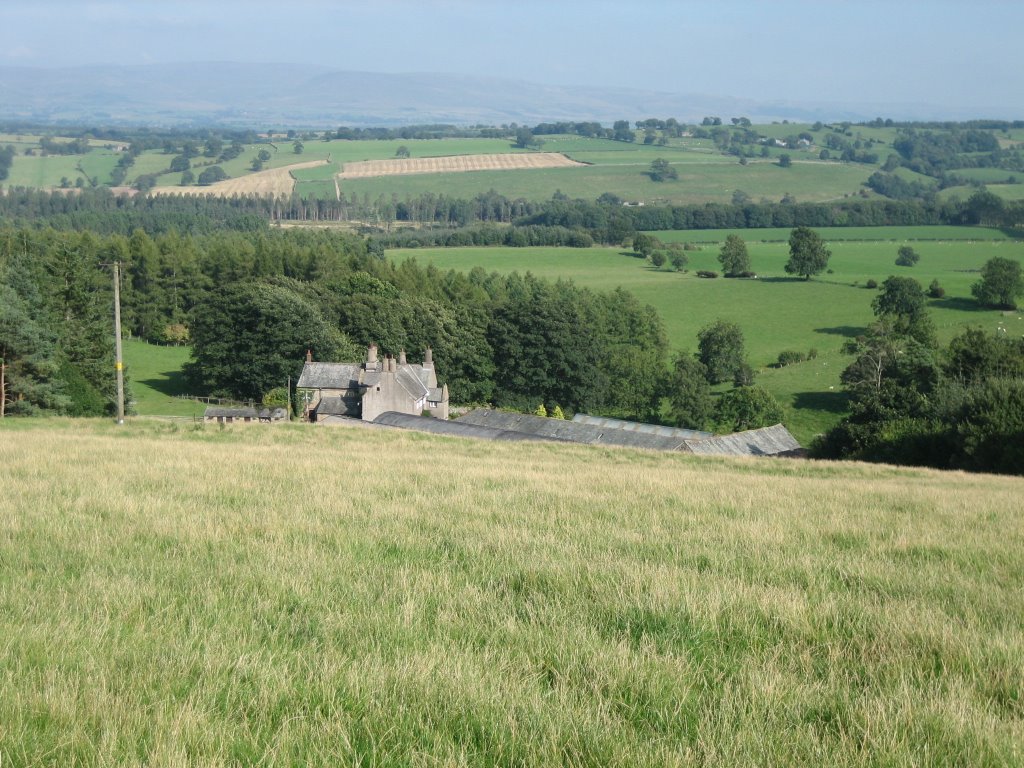
A view of the farmhouse from one of the north fields. You can see the Pennines, the "backbone of England," in the background.
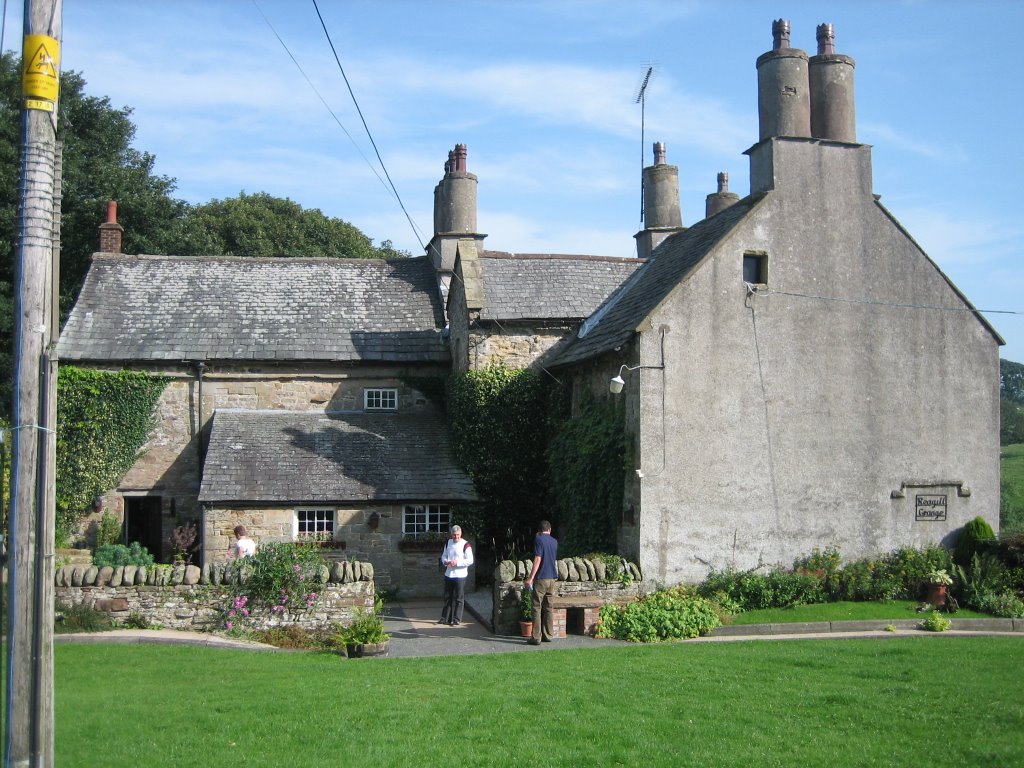
As we drove into the village, Eddie mentioned something about the kitchen being the "most recent addition" to the house. Stupid me, coming from a yuppie town where everyone gets a new kitchen every six months or so, assumed that "recent" meant "within the past few years." In a moment that only serves to remind me that America and England are two countries separated by a common language, Eddie went on to tell Jenna and I that the kitchen was 300 years old! Only five minutes later, I would find myself slurping carrot and bacon soup and sipping tea in a kitchen that was several decades older than my entire country.
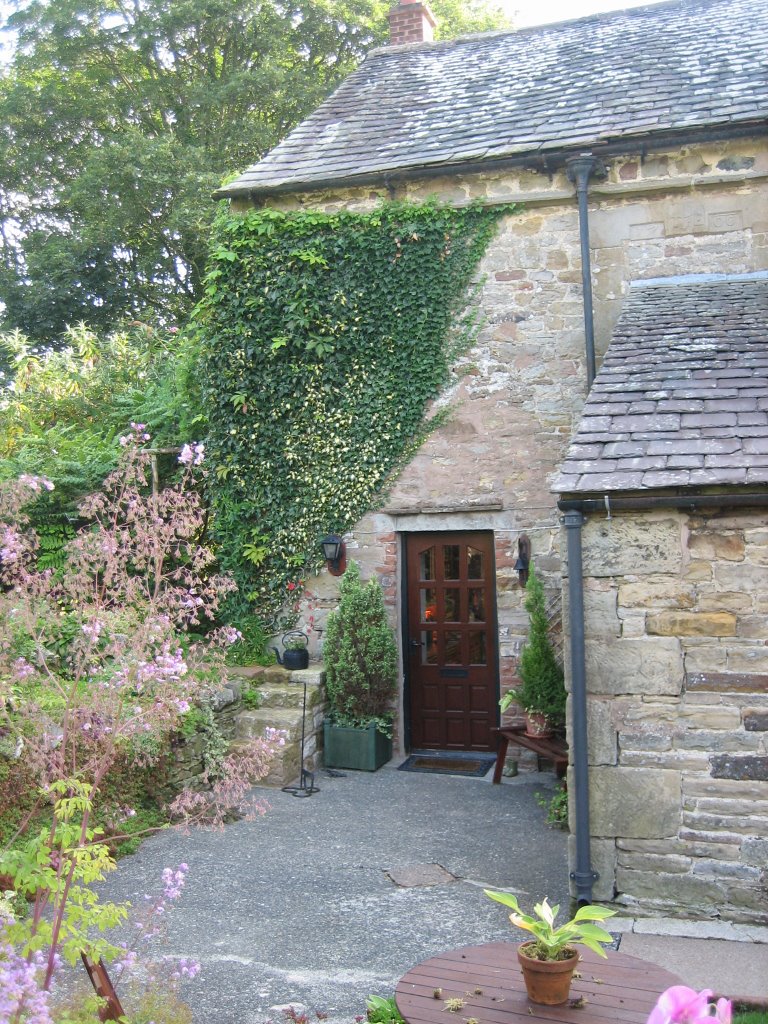
This would be the door to that kitchen, just catty-corner to a darling English sitting garden tended by Eddie's wife, Jane.

As if finding out that I would be eating my morning Muesli in an eighteenth-century kitchen weren't enough to set my little historian's heart a-flutter, finding out the age of the house itself nearly sent me apoplectic.

"So, Eddie, if your kitchen is 300 years old, how old is the rest of the house?" I asked, my curiosity piqued.

"Well, the oldest standing parts of the house are the stairwell and the hearth in the great room. According to the Trust [National Trust of England], they're over a thousand years old."

One thousand years old?! ONE THOUSAND YEARS OLD?! I was going to be sleeping in an English farmhouse that had seen more than a millennium of history, more than ten centuries of human sacrifice and struggle?! Had I not been seated, my knees would have buckled, causing me to crumple into a trembling, giggling pile of sheer, geeky joy.
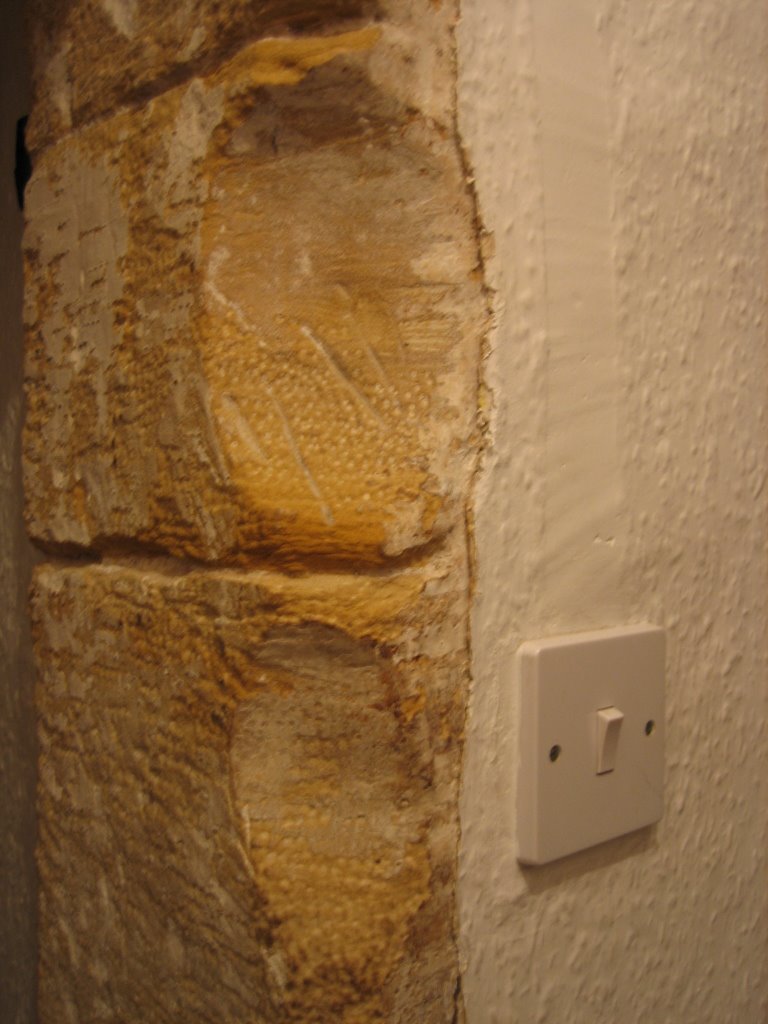
Here is the stone doorjamb leading into the one-thousand-year-old(!) staircase. See those hollows carved into the edges of the stone? That would be where some thirty generations of farmers honed the edges of their knives. (I'll try to resist the urge to say nanny-nanny-boo-boo to everyone reading...Yeah, not gonna happen. NANNY-NANNY-BOO-BOO. Hmm, I feel better.)
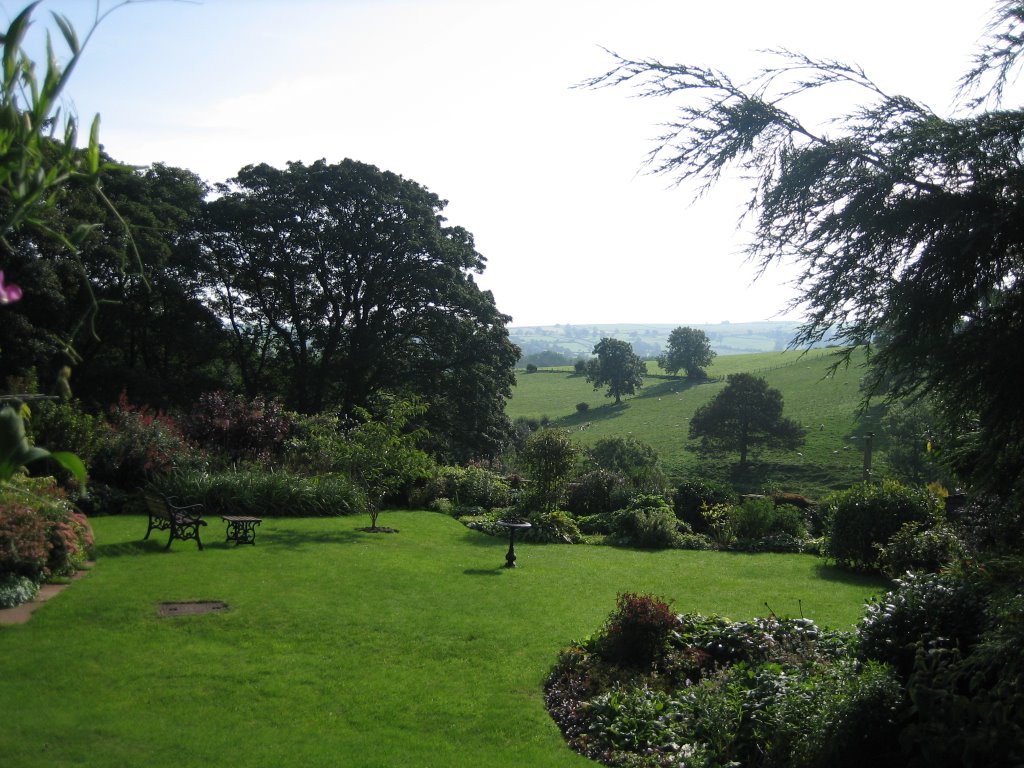
The Jacksons' backyard, also tended by Jane.
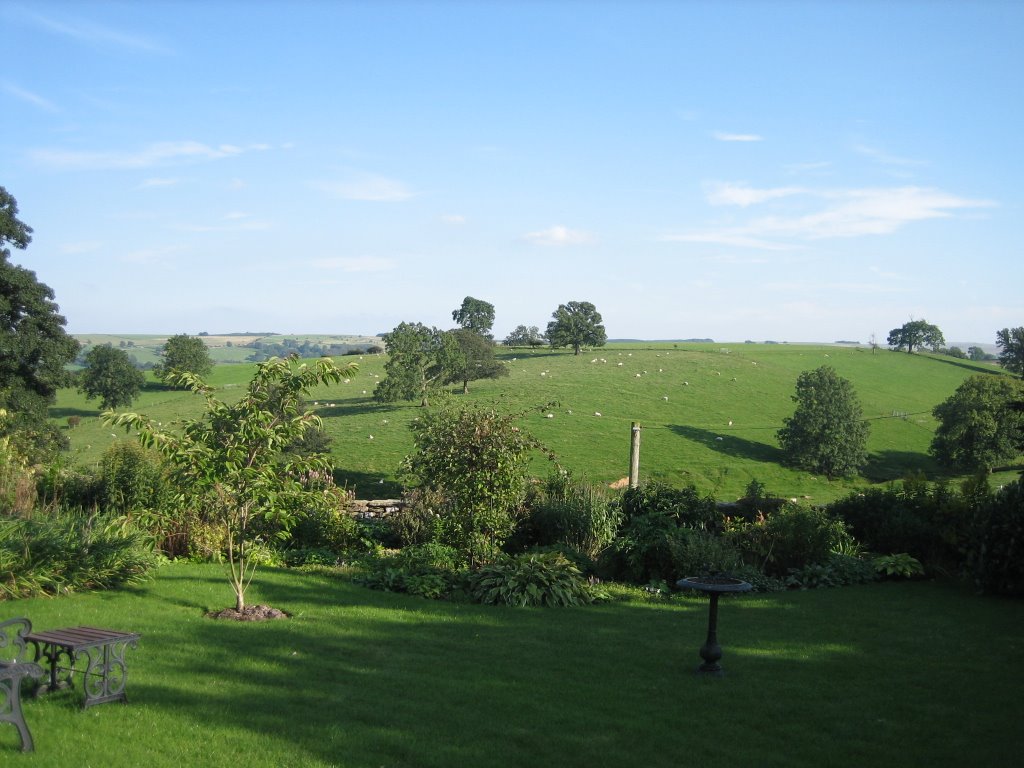
A view of the Eden Valley from the Jacksons' backyard. (Those little white dots? Yeah, sheep.) If I had local scenery like this, I'd never get anything accomplished.

After visiting Ullswater with the rest of our group, we asked Eddie if he would give us a tour of the sheep farm. He seemed a little taken aback, telling us that most students he had hosted weren't half as interested in seeing the sheep, let alone tending them. Oh yes, we were different. The three of us hopped on ATVs and crisscrossed the fields in the warm afternoon sun, occasionally stopping so that Eddie could point out an interesting historical site.
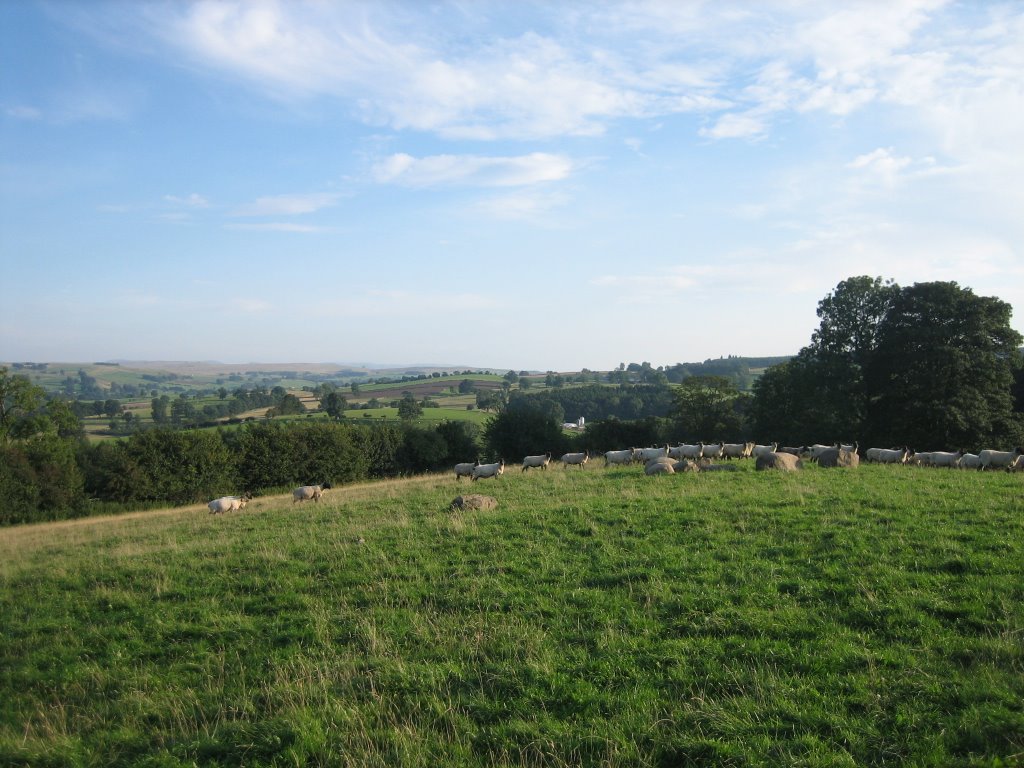
The view across one of the eastern pastures. On a semi-related note, sheep are unbelievably chatty animals.
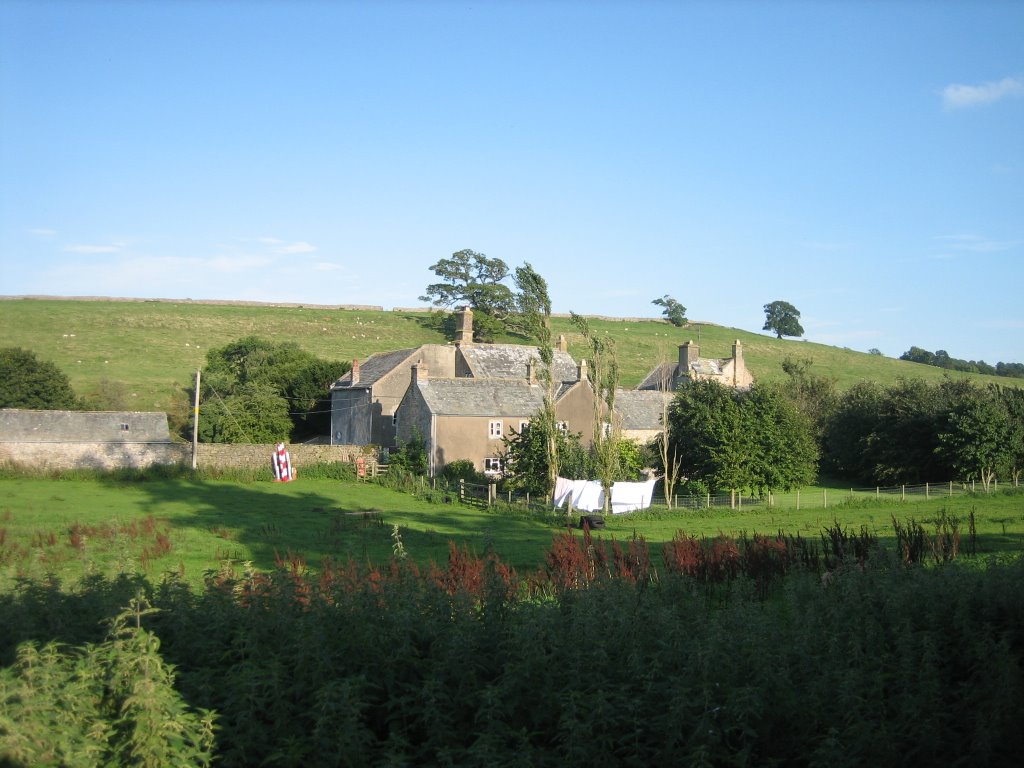
The first point of historical interest: an old farmhouse on land abutting the Jackson's property. All you Catholics and history buffs, pay close attention. This house provided refuge to one of the four knights who murdered Thomas Becket, the Archbishop of Canterbury (aka St. Thomas Becket, Thomas à Becket) in 1170. Almost fell off the four-wheeler when I heard that one.
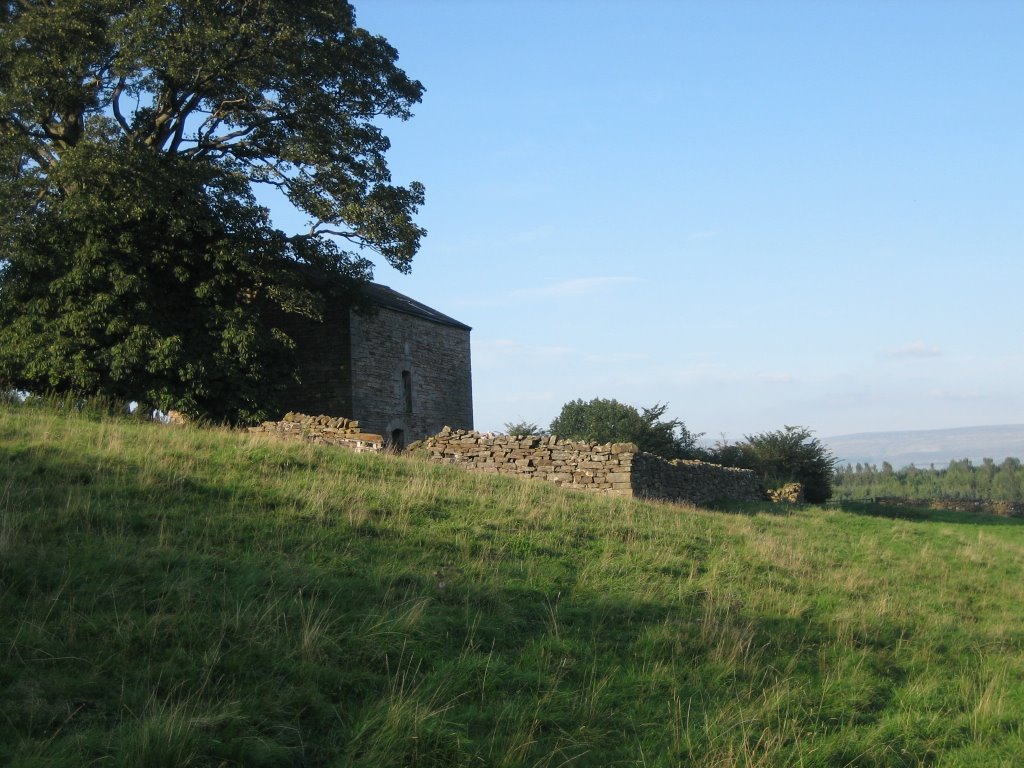
An old cottage in one of the fields on the Jackson farm.
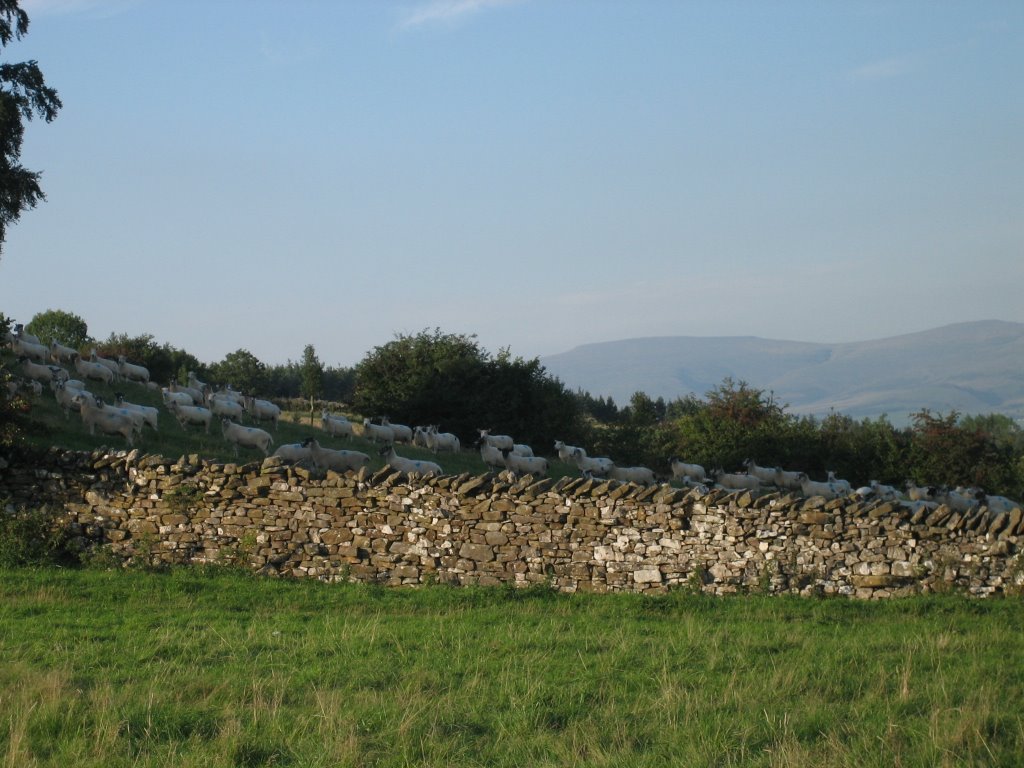
Dozens of sheep pointing north: or, a flock of woolly, bleating compasses.
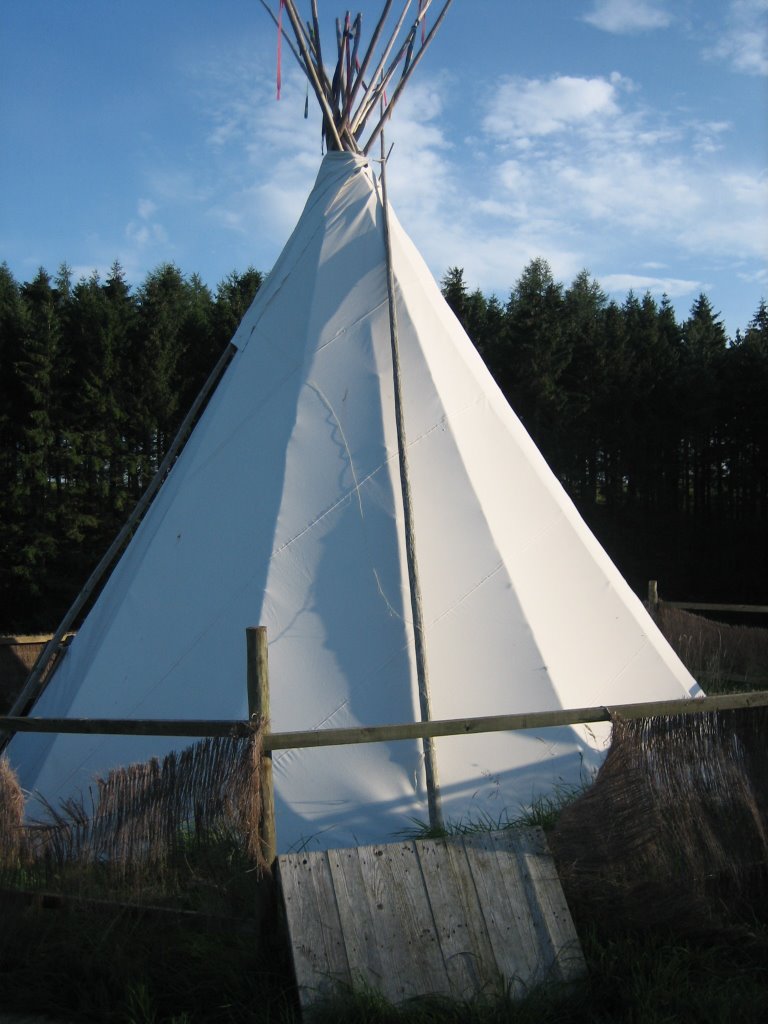
One of the Jacksons' neighbors is an artist, and being a little, um, artsy, has set up his very own Scottish tipi on his land. Yeah, that's what I thought, too.

The area of Cumbria in which we were staying is positively oozing history. Over the weekend, the Jacksons brought us to various different sites. The first one made me squeal with girlish delight. Sadly, that is no exaggeration.
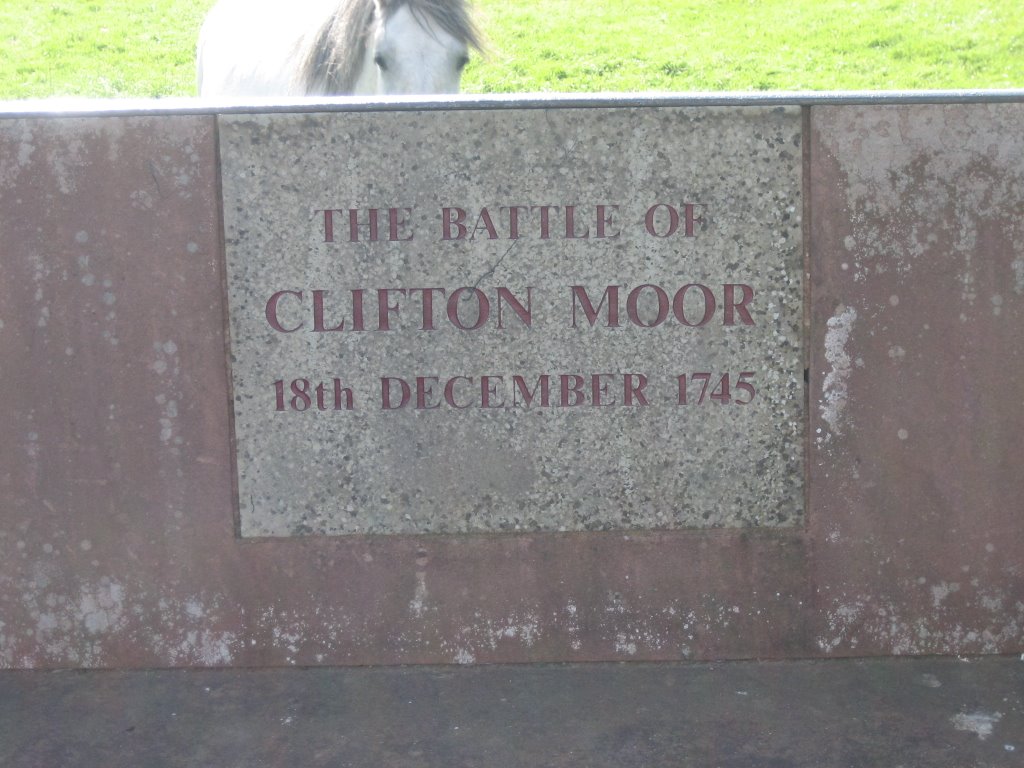
Just outside of Penrith is a monument to the Battle of Clifton Moor, the last battle fought on English soil, and one of the turning points of the Jacobite Rebellion of 1745. If you've ever spoken to me for more than five minutes, you've likely heard me gush over the "Forty-Five" or Bonnie Prince Charlie. Well, this was the site of the last battle the Highlanders fought as they were chased out of England; less than four months later, nearly 1,300 Highland soldiers would be slaughtered at the Battle of Culloden outside of Inverness in Scotland. The Battle of Culloden and the subsequent acts of proscription passed by the English destroyed Scottish clan life forever. I haven't a drop of Scottish blood in my body, and still I get riled up whenever I hear the name "Cumberland." (Confused? Look up the Duke of Cumberland.)

To brighten the mood, I'll direct your attention to the equine face peeking over the wall.
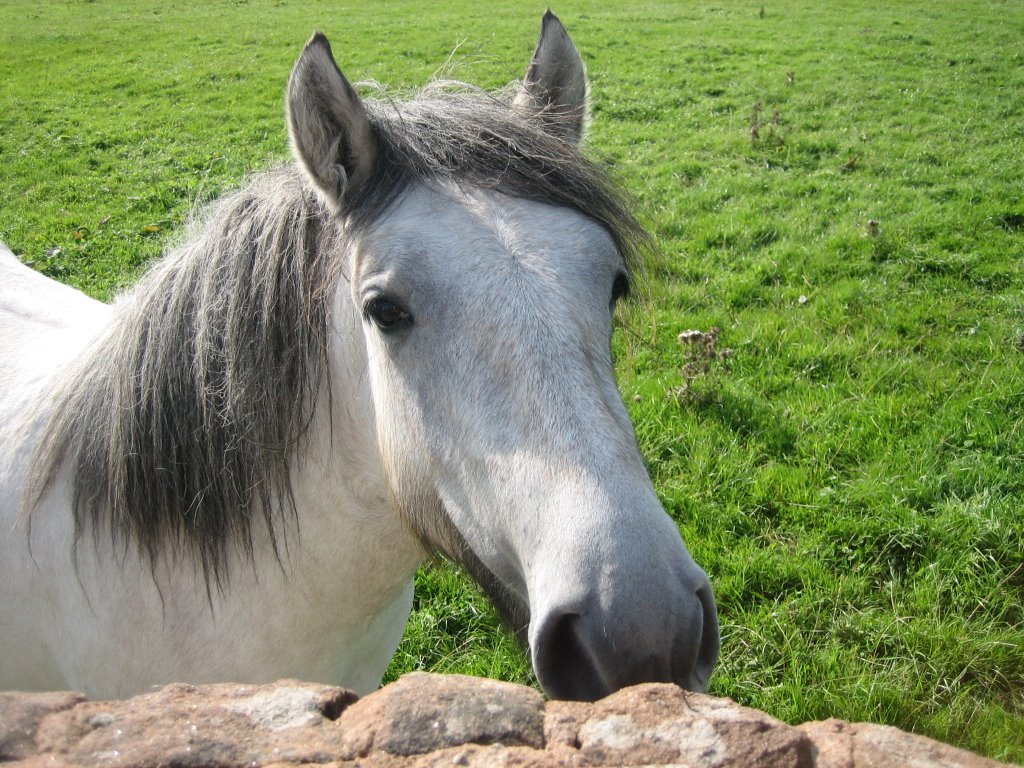
Whilst standing at the monument, we were visited by a resident of the pasture behind the stone wall. Egads, I love horsies.
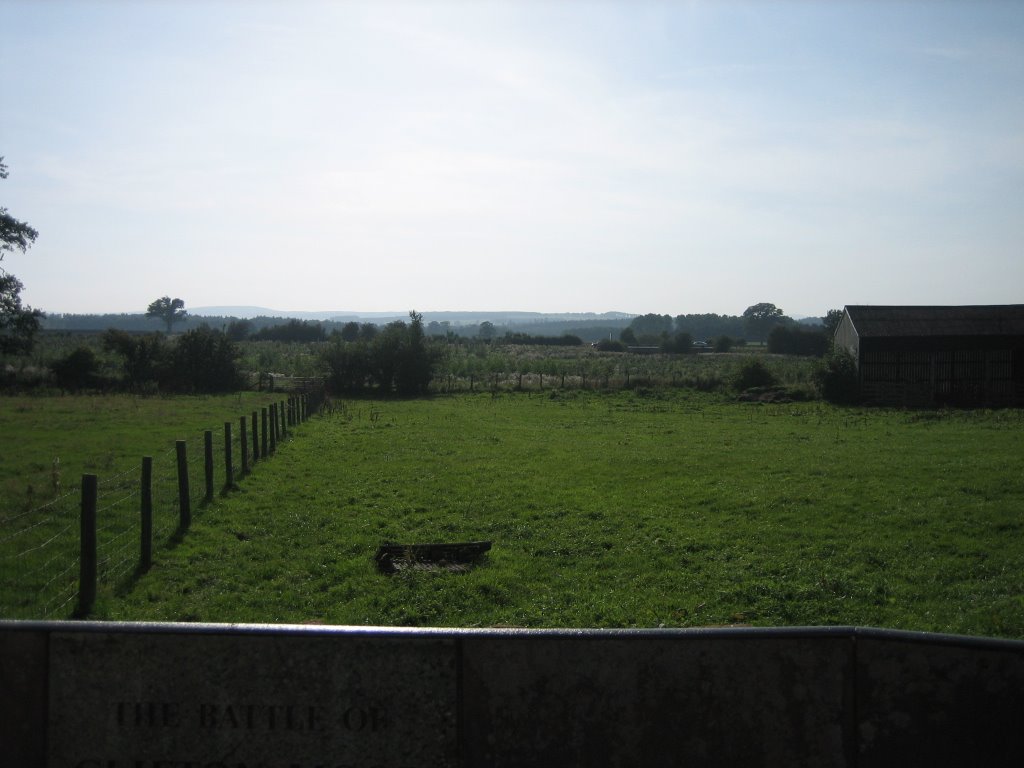
It might seem odd to find a random pony on a battlefield, but this is all that remains of Clifton Moor. Unlike Culloden, which I hope to visit in the coming weeks, Clifton Moor was not turned into a memorial battlefield, and is now serving as pastureland.
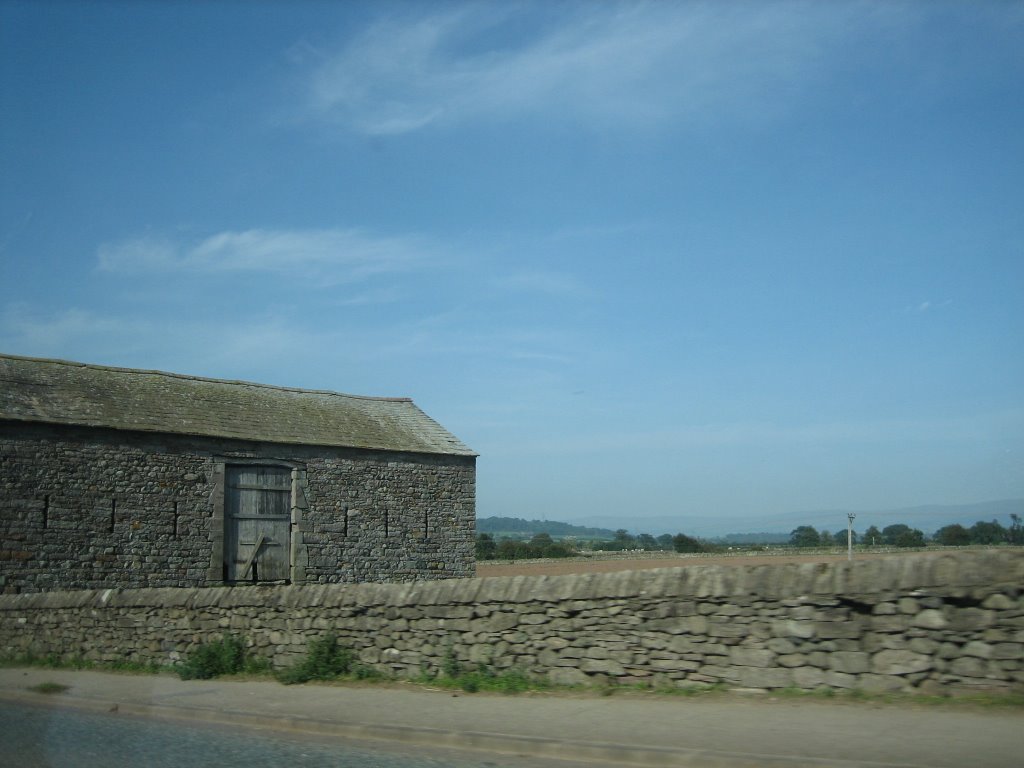
This barn, as seen from the car on the way back to Penrith, housed the wounded Jacobites following the battle. It is now protected under the National Trust and cannot be developed or altered.
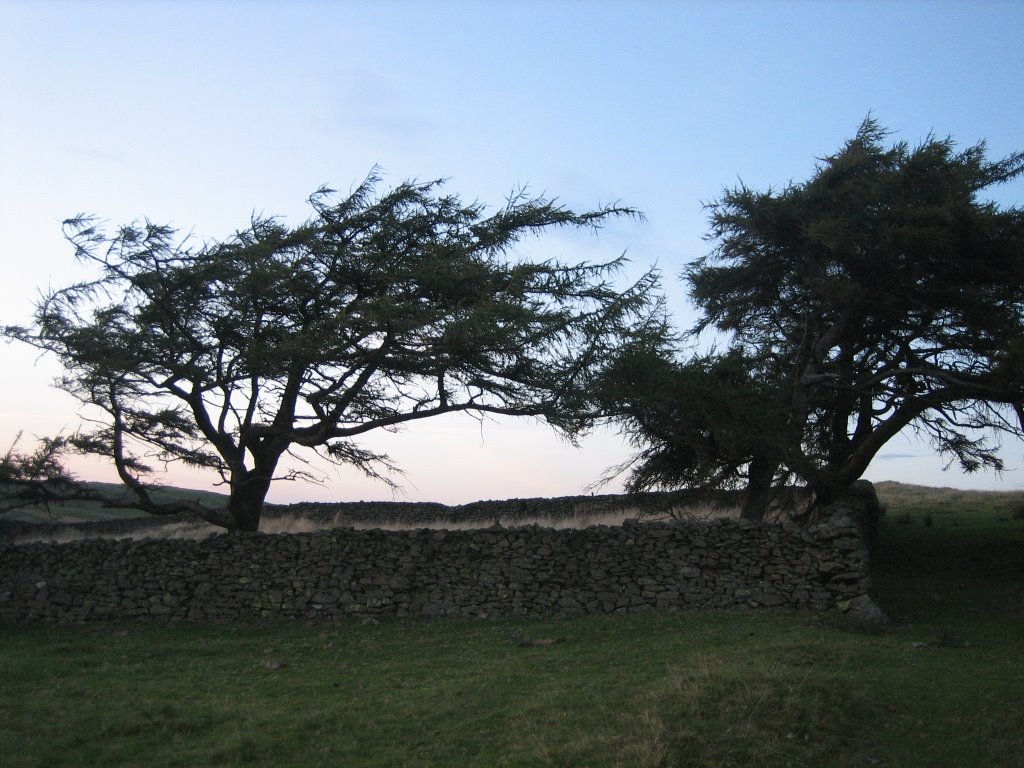
These gorgeous trees were in the ruins of a churchyard in the Howgill Fells, a group of hills in the Yorkshire Dales. We were in the Howgills visiting Fox's Pulpit, the site of the 1652 sermon delivered by George Fox that launched the Quaker movement (aka the Society of Friends).
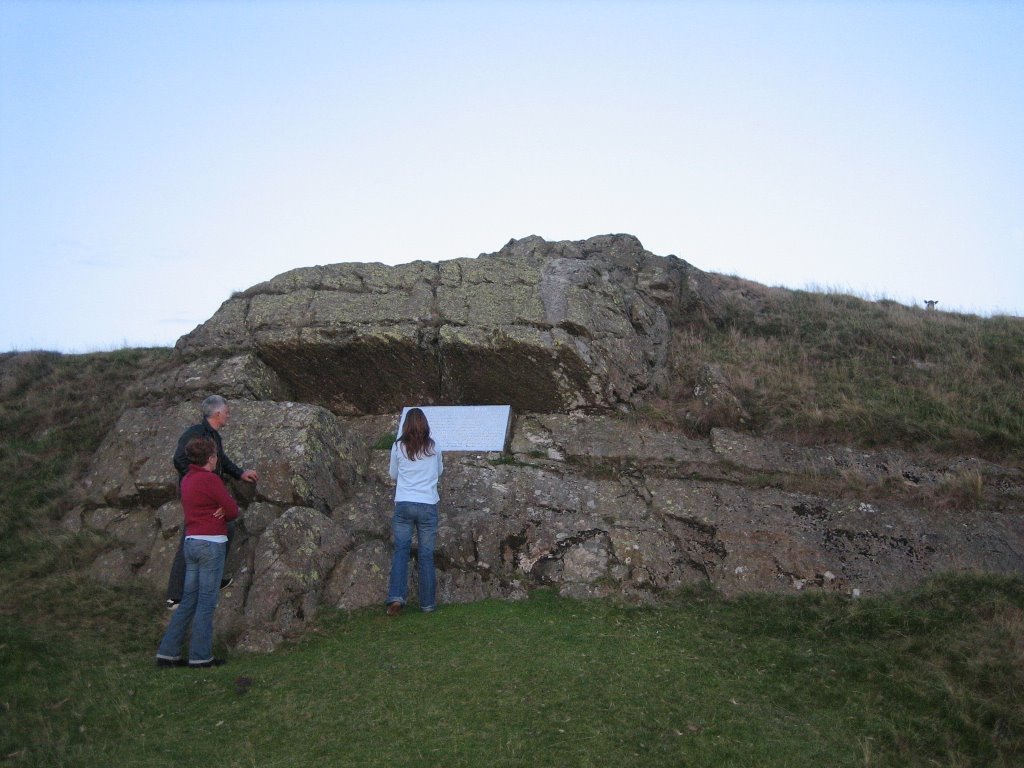
Said pulpit. The inscription on the tablet reads:

LET YOUR LIVES SPEAK
HERE OR NEAR THIS ROCK GEORGE FOX PREACHED
TO ABOUT ONE THOUSAND SEEKERS FOR THREE
HOURS ON SUNDAY JUNE 13, 1652. GREAT POWER
INSPIRED HIS MESSAGE AND THE MEETING PROVED
OF FIRST IMPORTANCE IN GATHERING THE SOCIETY
OF FRIENDS KNOWN AS QUAKERS. MANY MEN AND
WOMEN CONVINCED OF THE TRUTH ON THIS FELL AND
IN OTHER PARTS OF THE NORTHERN COUNTIES WENT
FORTH THROUGH THE LAND AND OVER THE SEAS WITH
THE LIVING WORD OF THE LORD ENDURING GREAT
HARDSHIPS AND WINNING MULTITUDES TO CHRIST.
JUNE 1952
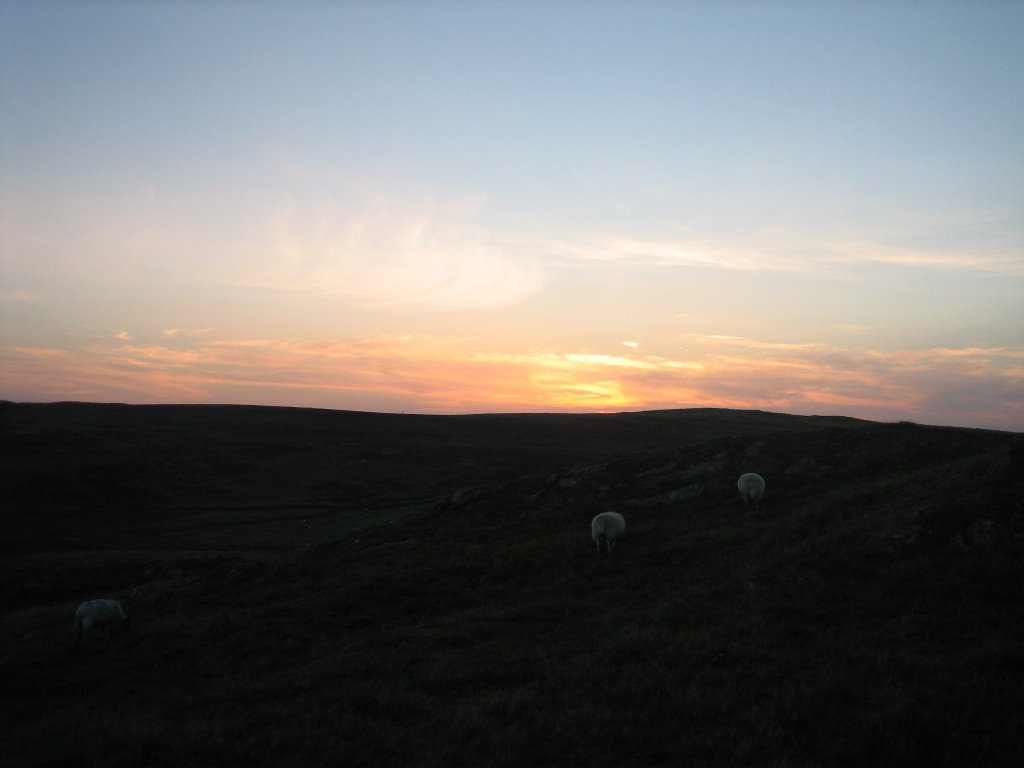

The sunset over the Howgills. Is it just me, or is everything prettier here?
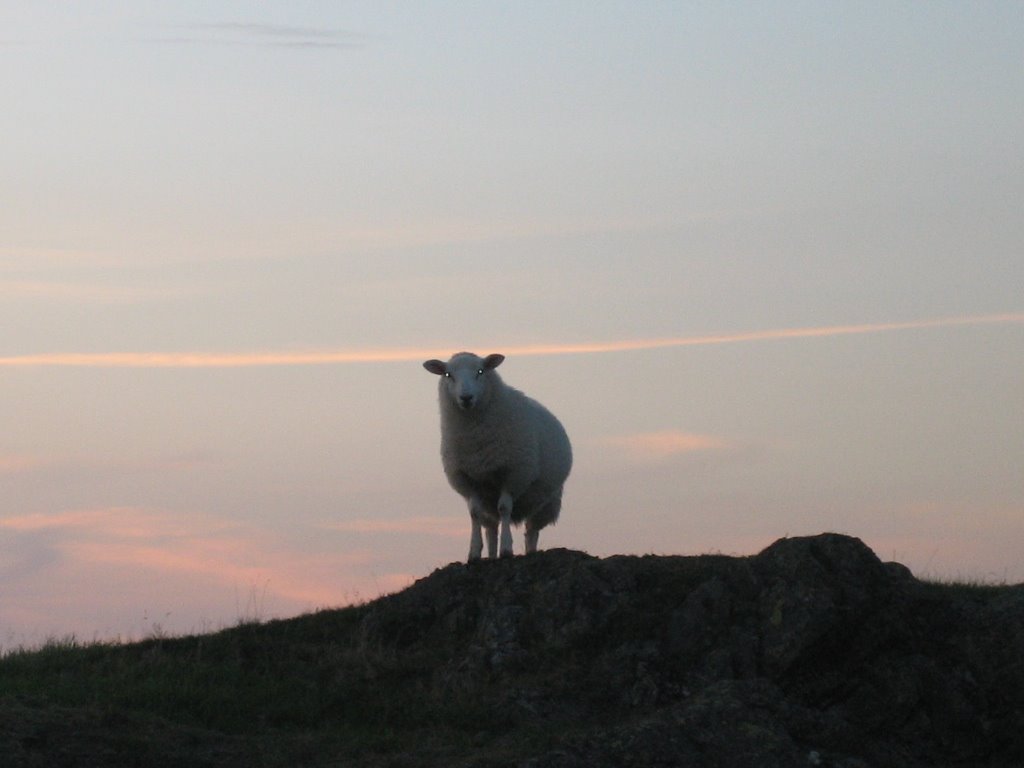
This sheep made me giggle like an idiot when he perched on a little rock outcropping and started to bleat, not to any of his fellow sheep, but to Jenna and me. Of course, we bleated back. To do otherwise would have been rude.

Finally, a picture from lunch on the final day in Reagill. The Jacksons brought us to their favorite pub (which had been in operation since the 1500s, naturally), and urged us to get a pudding for dessert. When I saw it on the menu, I knew I had to get it: Big Spotted Dick.
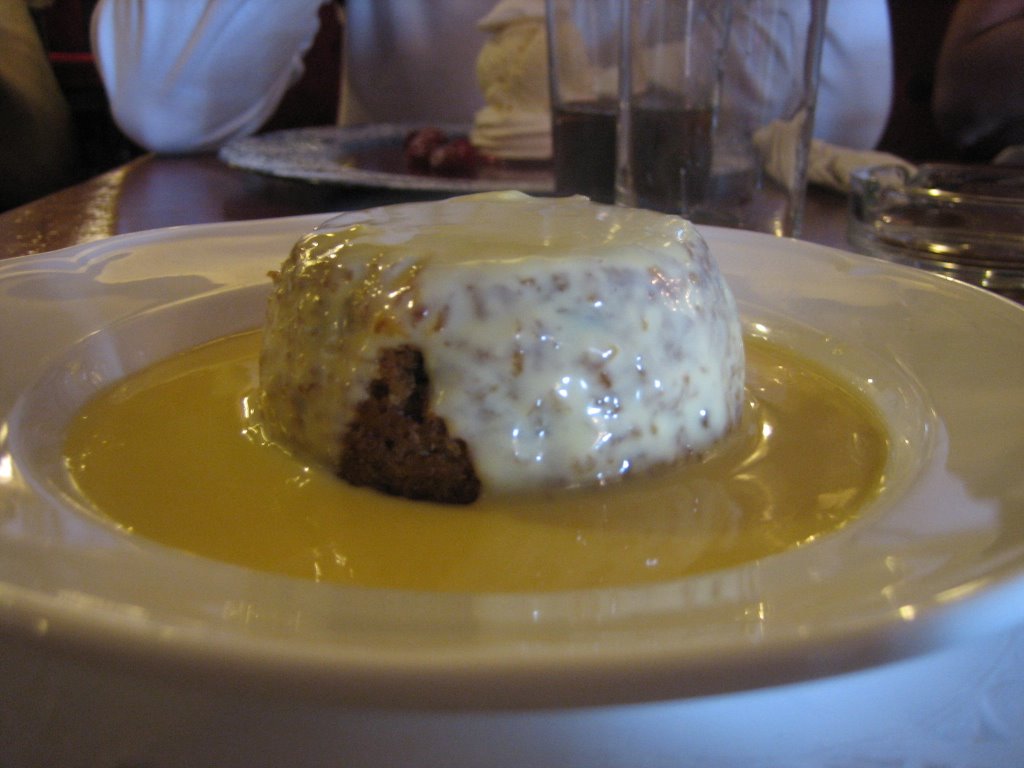
Get your minds out the gutter, you pervs. Spotted Dick is a lovely pudding filled with currants and served with warm custard. And with a name like Spotted Dick, it's gotta be good. (I'm sure the Smucker's people will sue me for copyright infringement.)

Our next installment: IRELAND
Monday, September 25, 2006

Paging Mr. Darcy: A Weekend in England's Lake District, Part One

I realize that blogging has been a little thin of late, but I have a very good reason for my absence from this corner of cyberspace: traveling (duh). After all, without the occasional jaunt to the continent or the country, you guys would be wasting your time reading about my trips to the local chippie, which, as we discussed in an earlier entry, is a hazard to one's gastrointestinal health.

Perhaps one of the most incredible experiences thus far--which bodes well for the semester as a whole--was the time I spent on a sheep farm in the English countryside bordering the Lake District. Yes, you read that correctly; this suburban princess fell in love with life in a pastoral farming community. After a few weeks in the big city, a friend and I were shipped out to Cumbria to spend a long weekend with a delightful family selected by our exchange program.

As I proved to be an indiscriminate photographer, this weekend will be broken into two parts, the first detailing a day trip to Ullswater, and the second featuring photos from the farm. So, without further ado, I welcome you the land of Mdmes. Austen and Bronte. (I know I shouldn't have to say it, but click the photo for a larger view.)

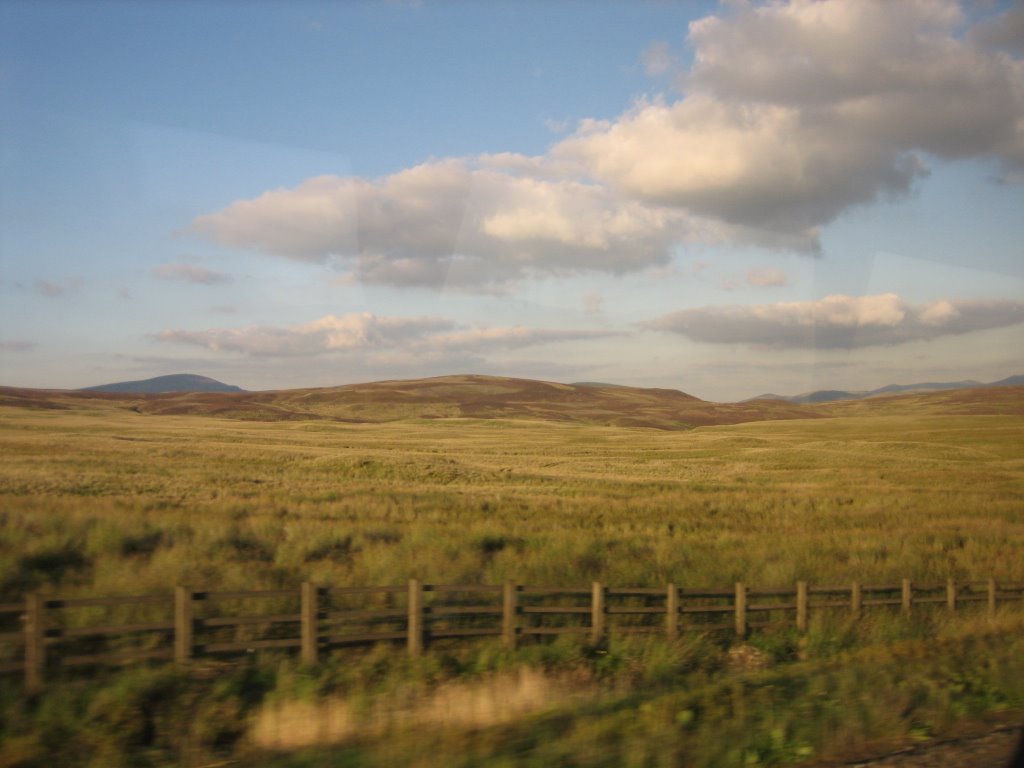
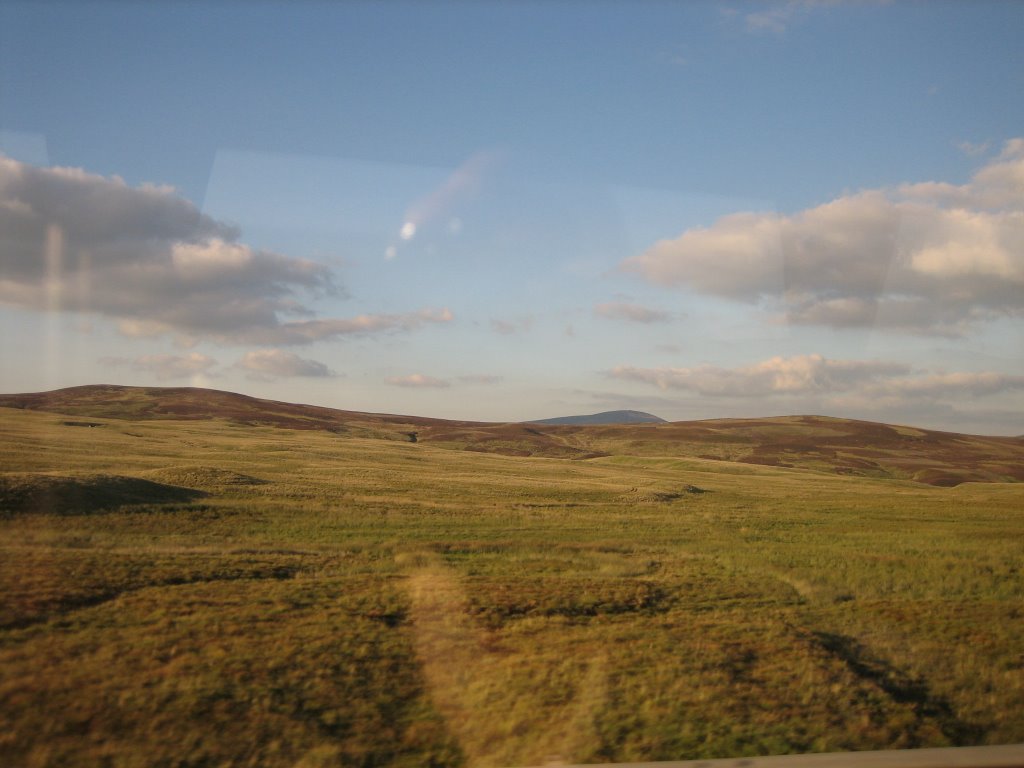
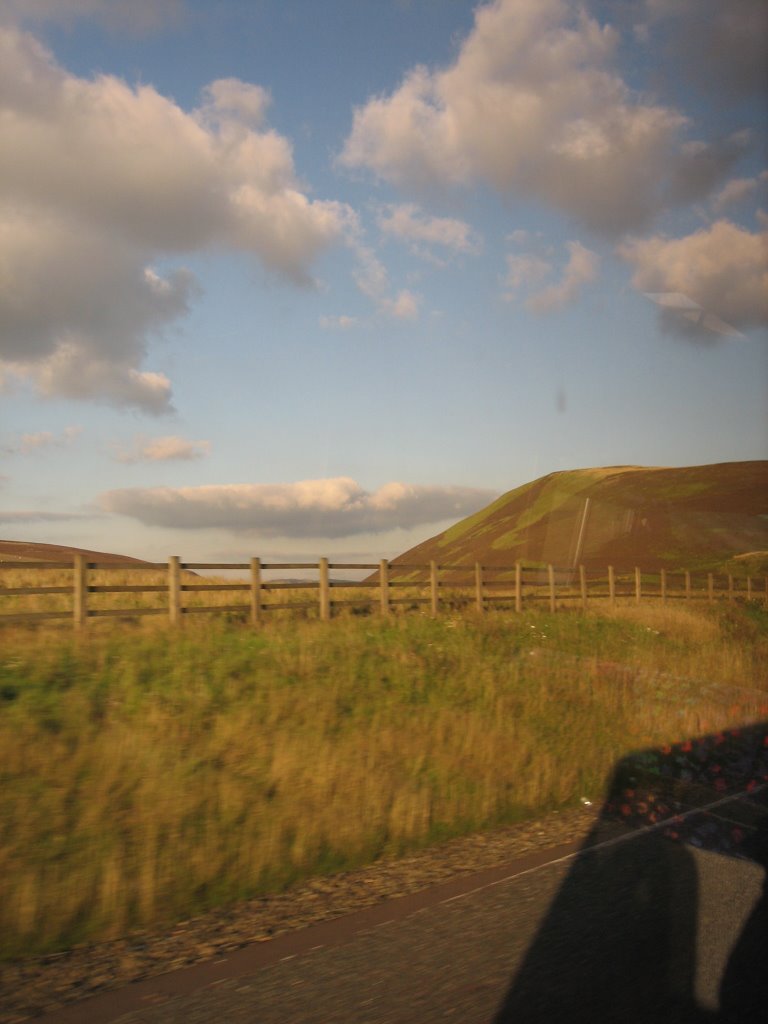
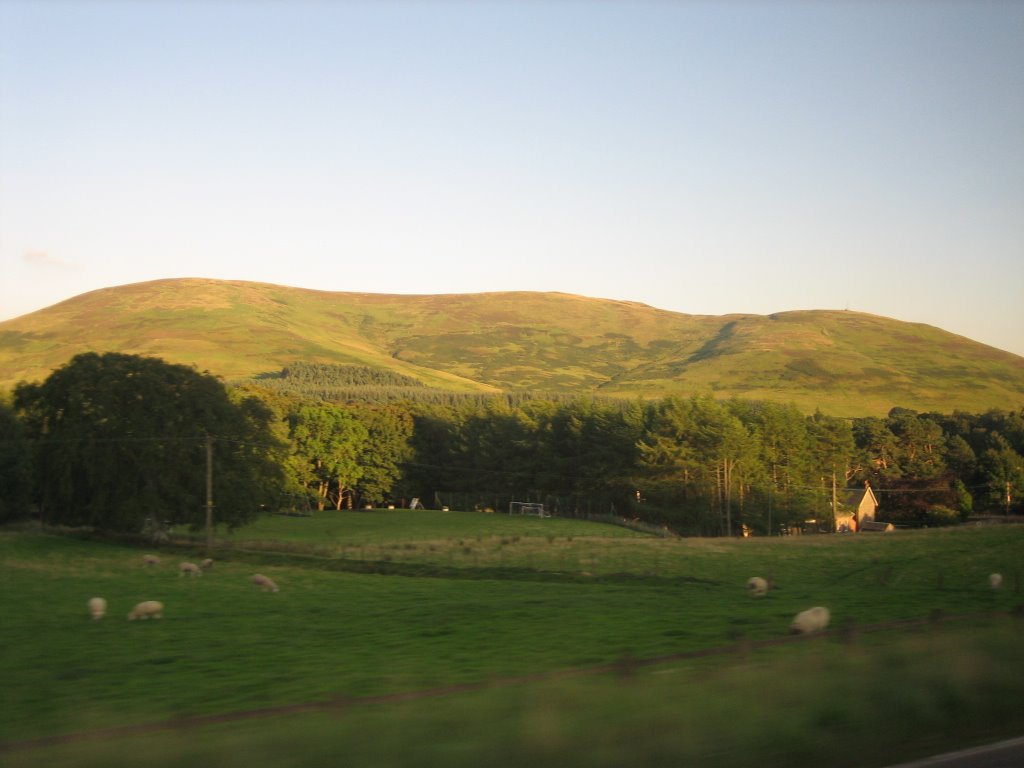
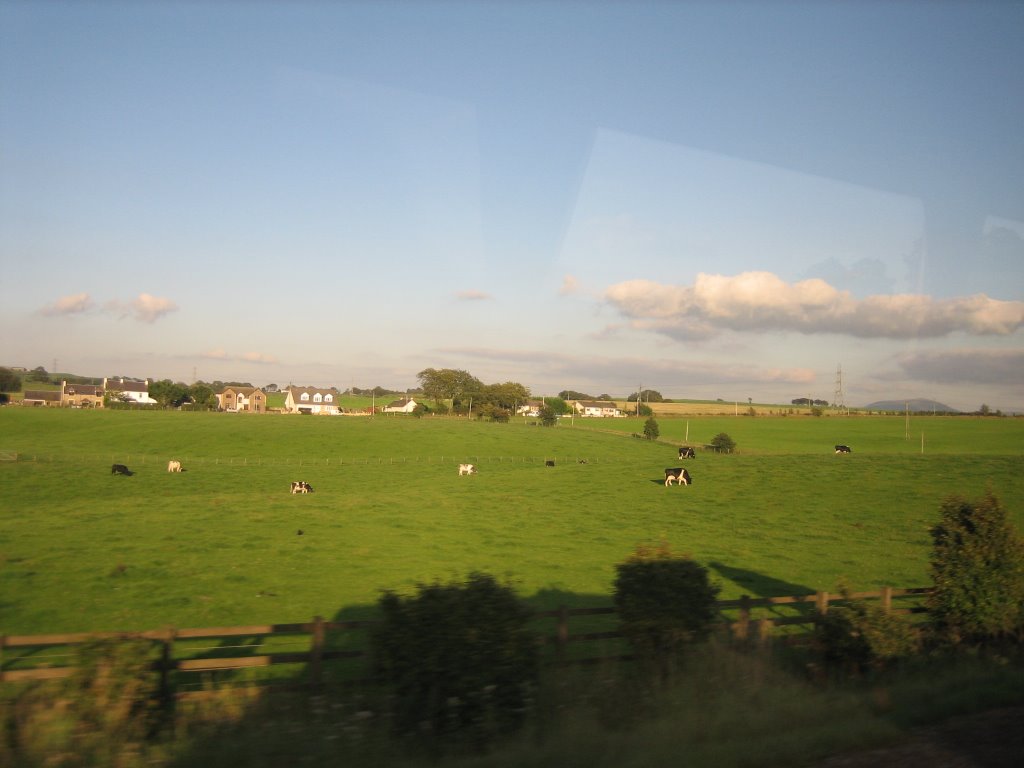
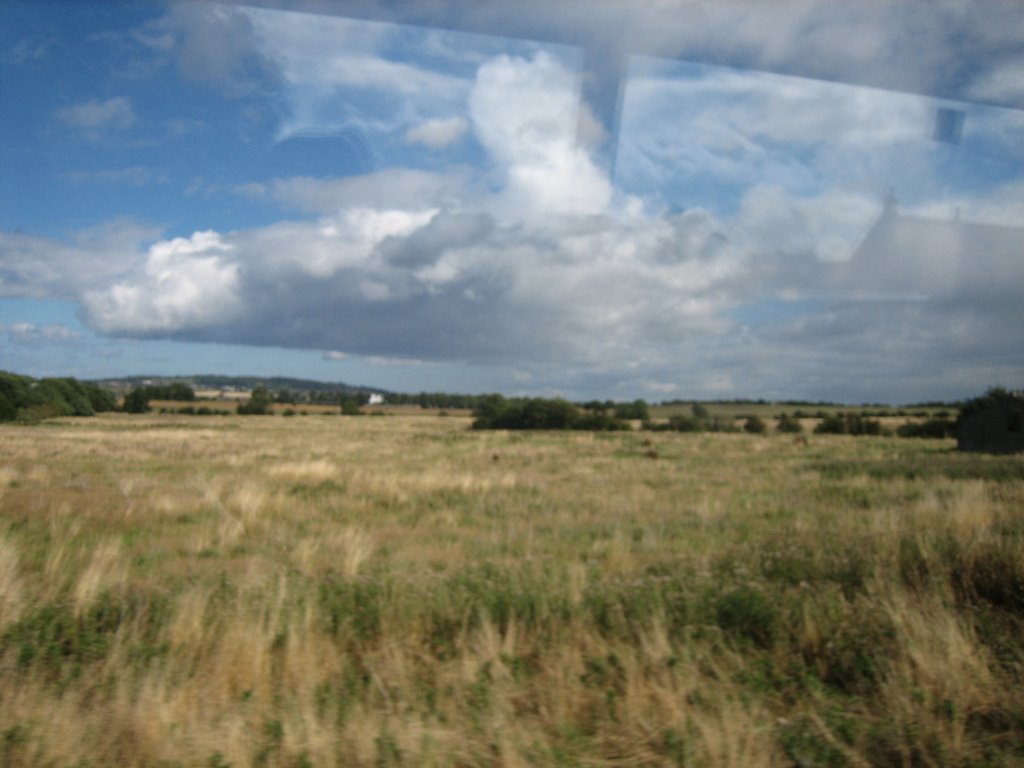
I suppose the best starting place for this entry is to paint a picture of what the Lowlands of Scotland look like (albeit, from the window of a moving coach, and not, say, on foot). The journey to Penrith was just shy of two hours; it could have been eight hours and I still would have had my face pressed against the glass in awe. I don't think I'll ever get tired of seeing Scottish landscapes. (Apologies for the glare in the following pictures; it was sadly unavoidable.)

SHEEP!

COWS!

Yes, well, ahem, excuse me whilst I compose myself after my little outburst. Farm animals just get me ten sorts of fired up. (I know what at least half of you are thinking, and you all should be ashamed of yourselves. Sickos.)

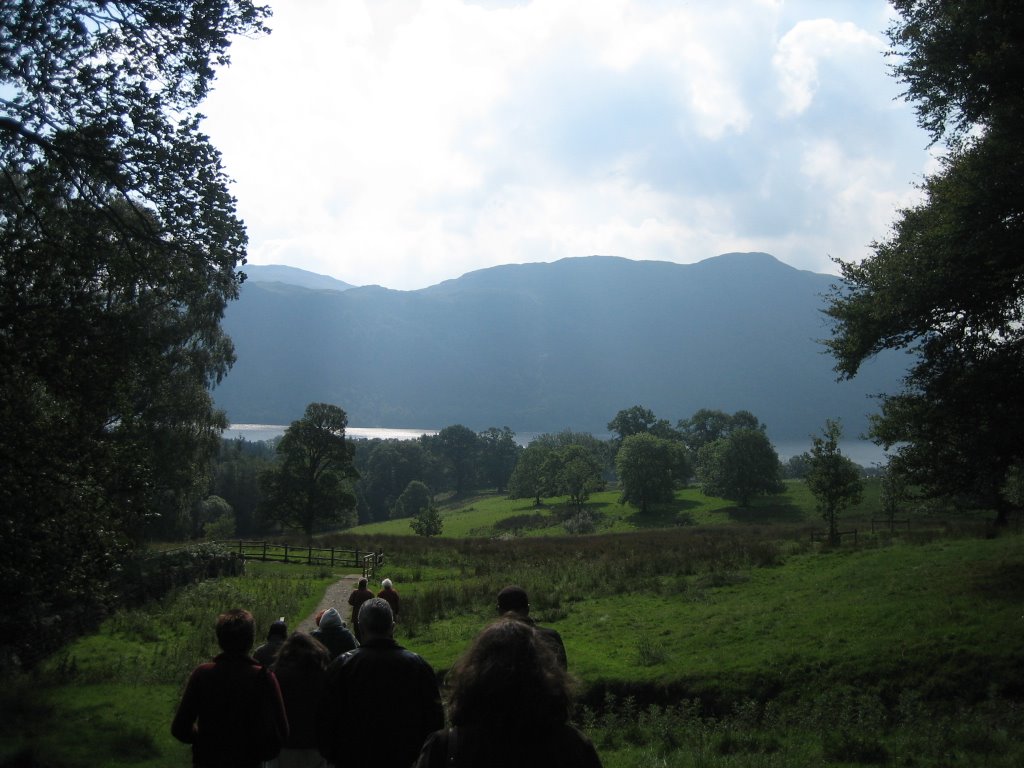
Saturday morning we set out for a hike up Aira Force, a waterfall that empties into Ullswater lake. Take a gander, won't you?

Our gaggle of host families and students working our way to the trails around Aira Force. Check out the fells in the distance. (For the benefit of you non-geology/ecology types, a fell is a treeless mountain landscape shaped by receding glaciers.)

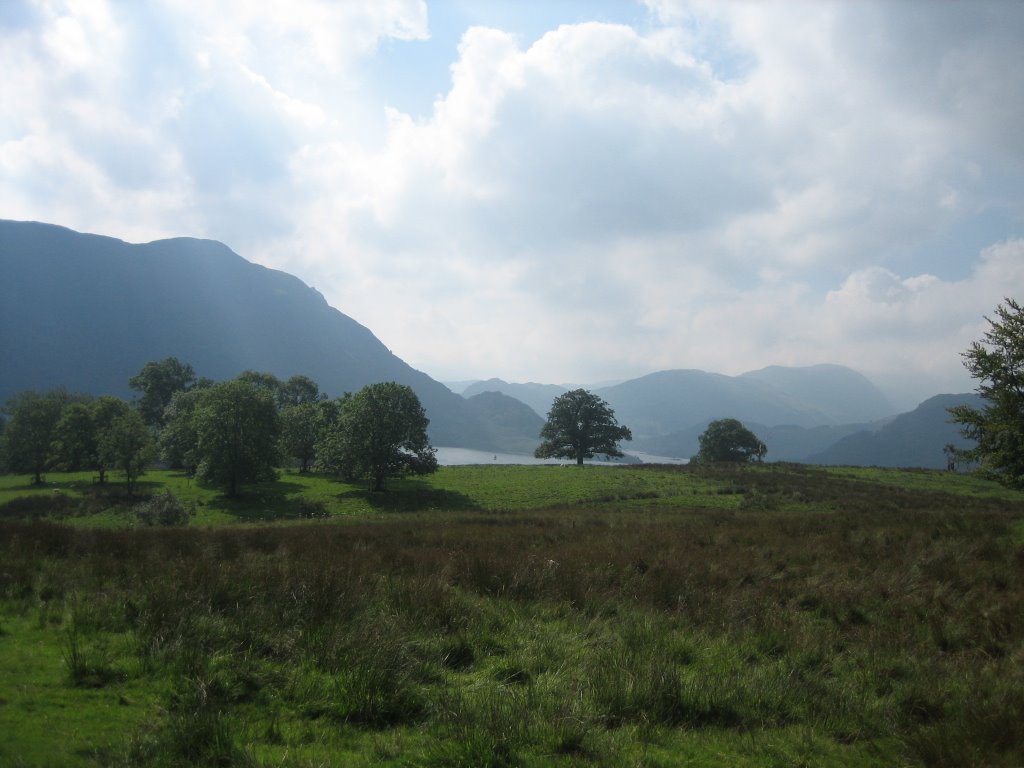
A view of Ullswater from a neighboring field.

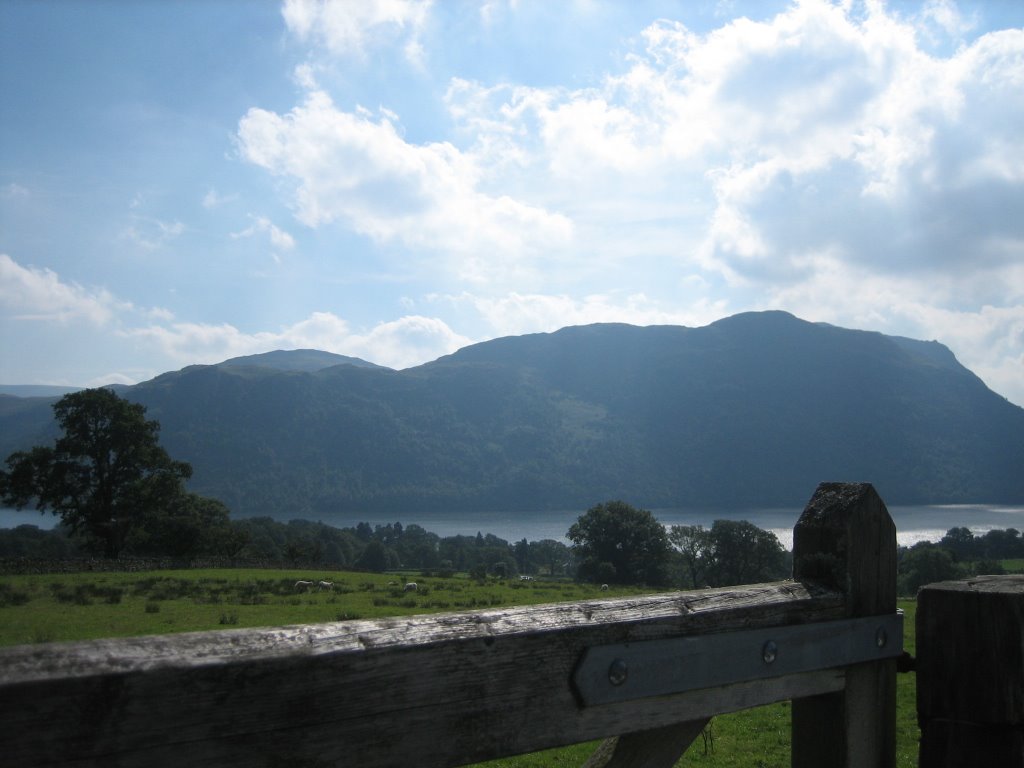
Ullswater and fells, with added rustic fencepost goodness.

We descended into the woody underbrush of an old-growth deciduous forest, a seemingly rare sight these days. (This is especially true of the northern parts of England, where much of the land is cleared for logging ventures.)

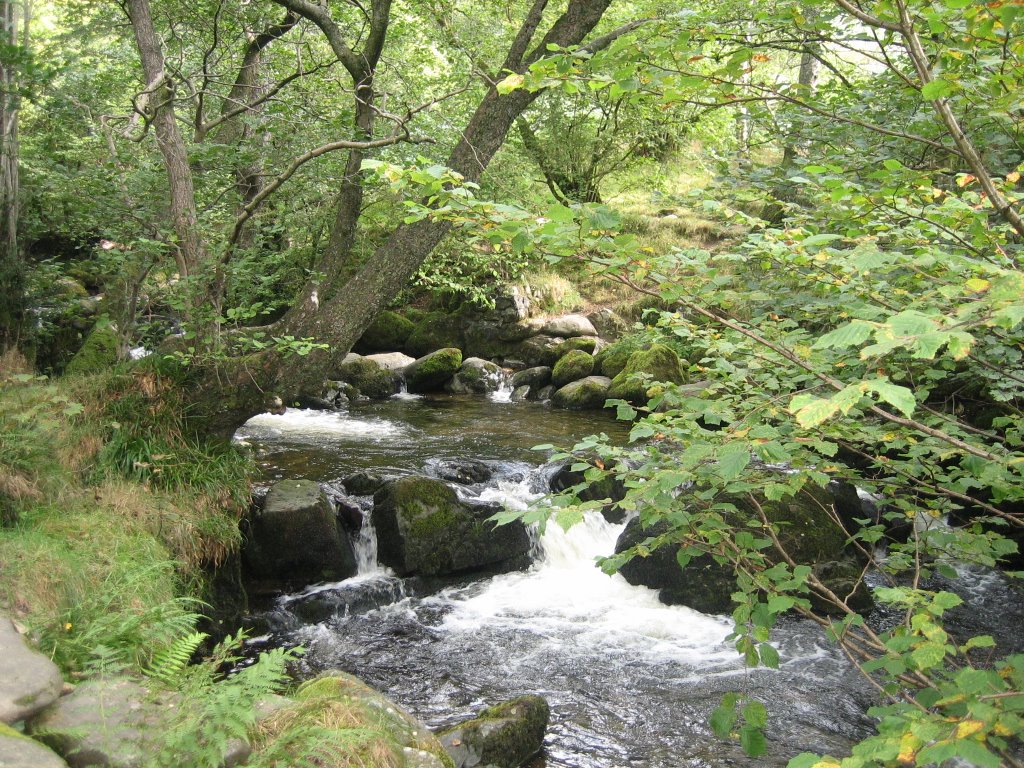
A few yards upstream from the waterfall.

If my philosophy and biology studies allowed for such flights of fancy, I'd almost expect a drift of faeries to flutter into the frame of this shot. It doesn't take much to understand why druidic and pagan religions took such a firm hold of certain regions of England, Scotland, and--as I've recently discovered--Ireland. The landscape is, at the risk of sounding like a nutter, quite magical.

While photos are all well and good, when it comes to conveying the majesty of an area, they are often quite lacking. So, I've included a little video of the stream flowing toward its final destination, so that you might also enjoy the babbling sounds of the Lake District. (My sister will likely chide me for my shoddy videography, to which I have only this to say: "NEVER AGAIN!" Silly pigeon-chaser.)


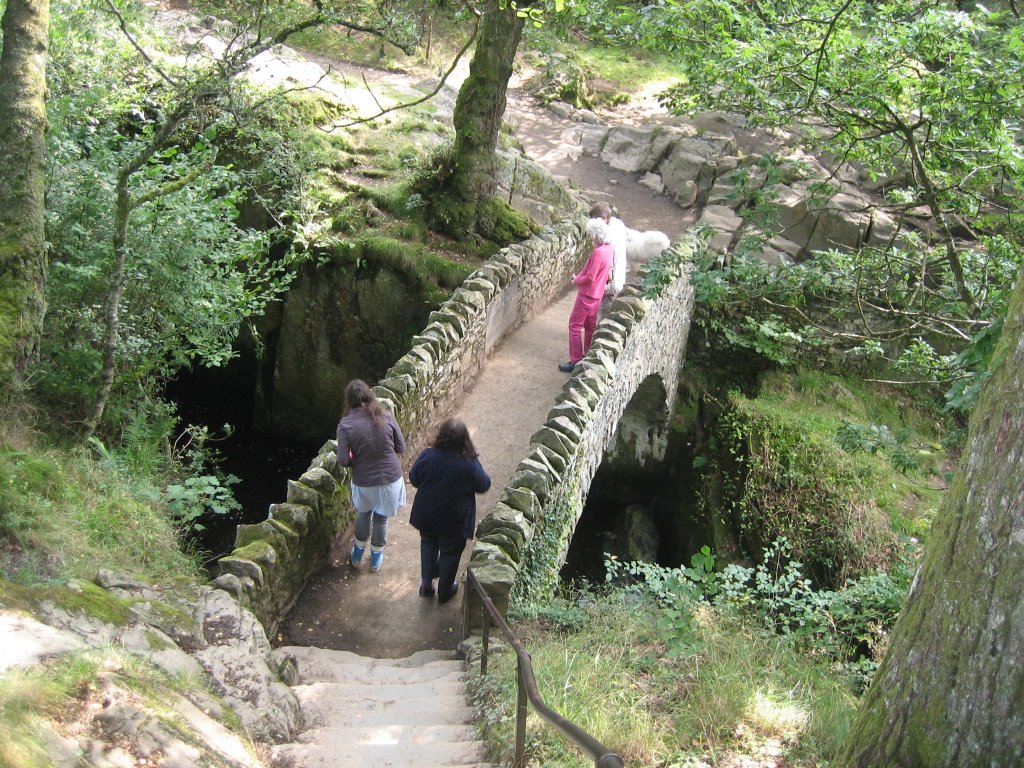
A small footbridge crossing over the falls.

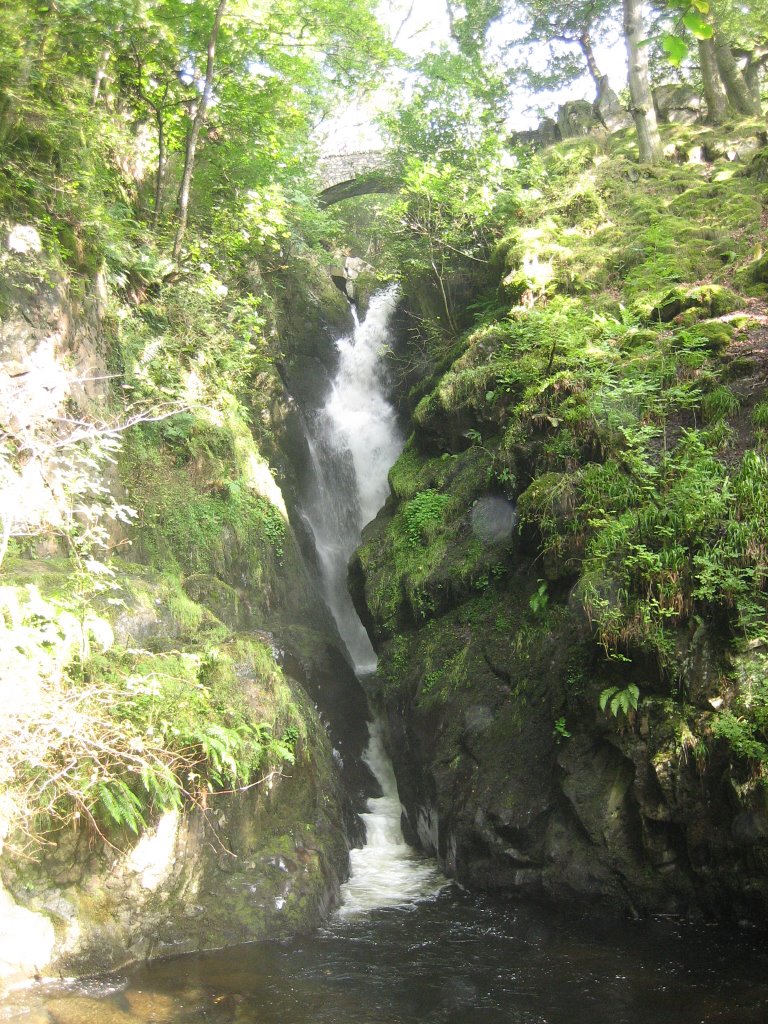
Aira Force in all her glory, as seen from the foot of the pool into which she empties.

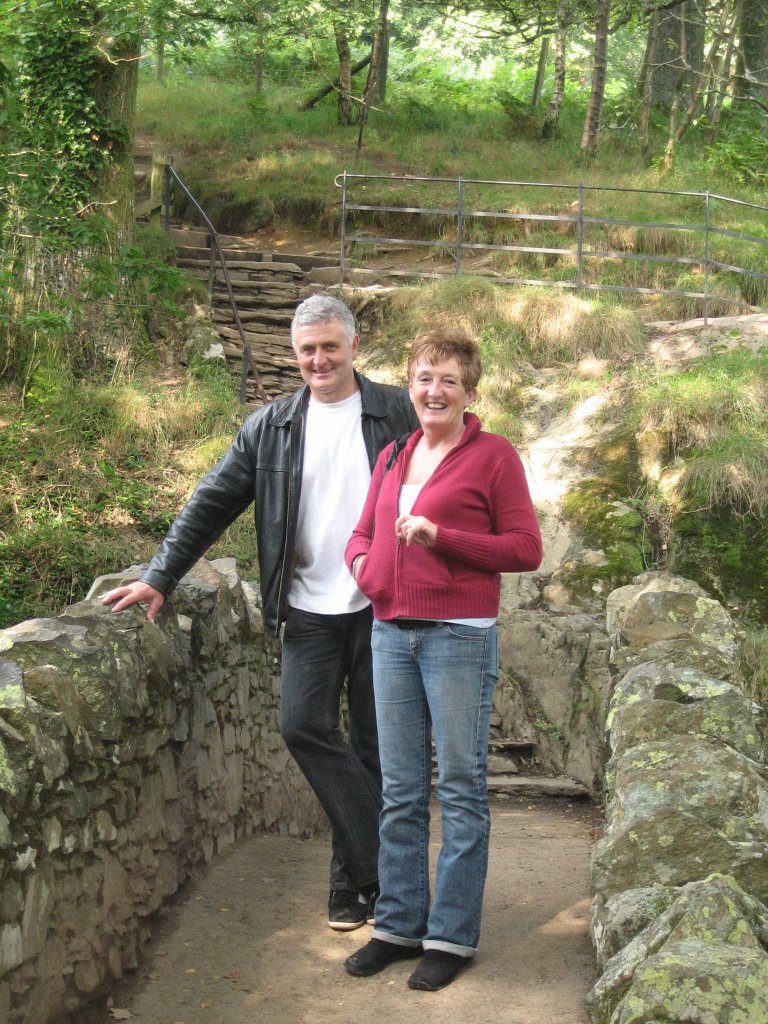
Eddie and Jane Jackson, the most amazing host parents a girl could ask for. Aren't they adorable?

Following our trip to the falls, we made our way to the shores of Ullswater to participate in the quintessential Lake District activity (at least, as portrayed by the works of Jane Austen): boating.

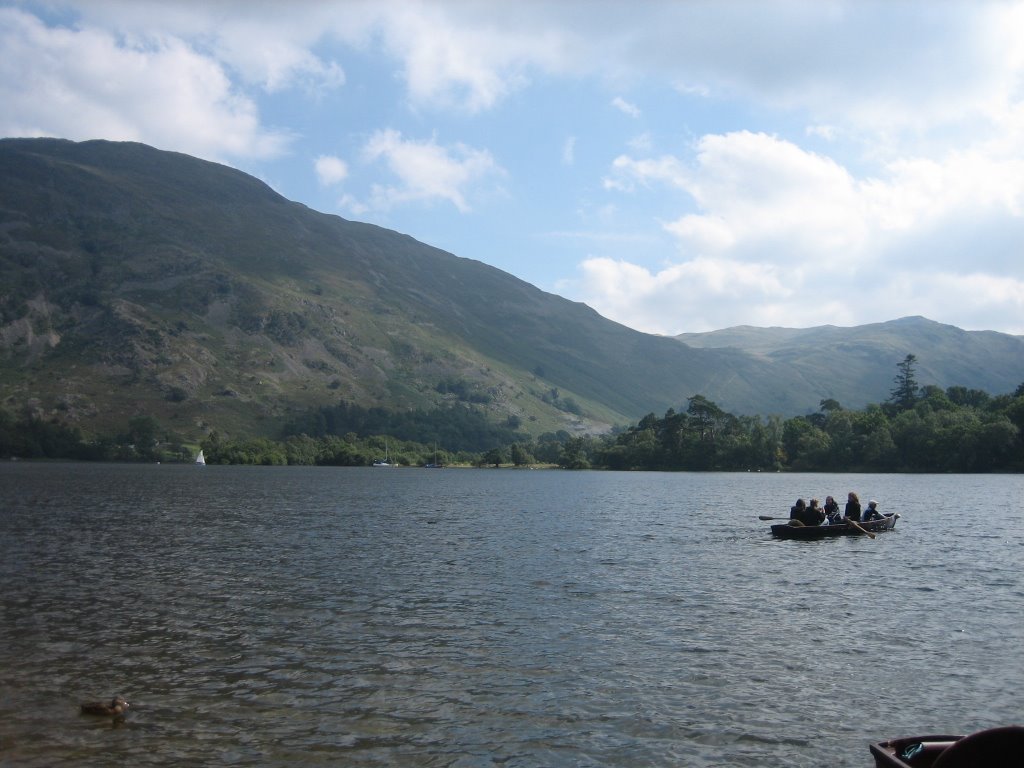
That wee vessel to the right of the frame holds one third of our exchange group. They were the Spanish Armada to our English Navy in the Spanish defeat of 1588. (Fine, so no one died and all ships remained afloat, but a girl can dream of nautical glory, can't she?)

As a final note, we looked for Mr. Darcy, even going so far as to quote Keats while rowing in an attempt to lure him from a neighboring farmhouse or estate. Sadly, no dice.

Via, Veritas, Vita

(The Way, the Truth, and the Life, for those whose Latin is a little rusty.)

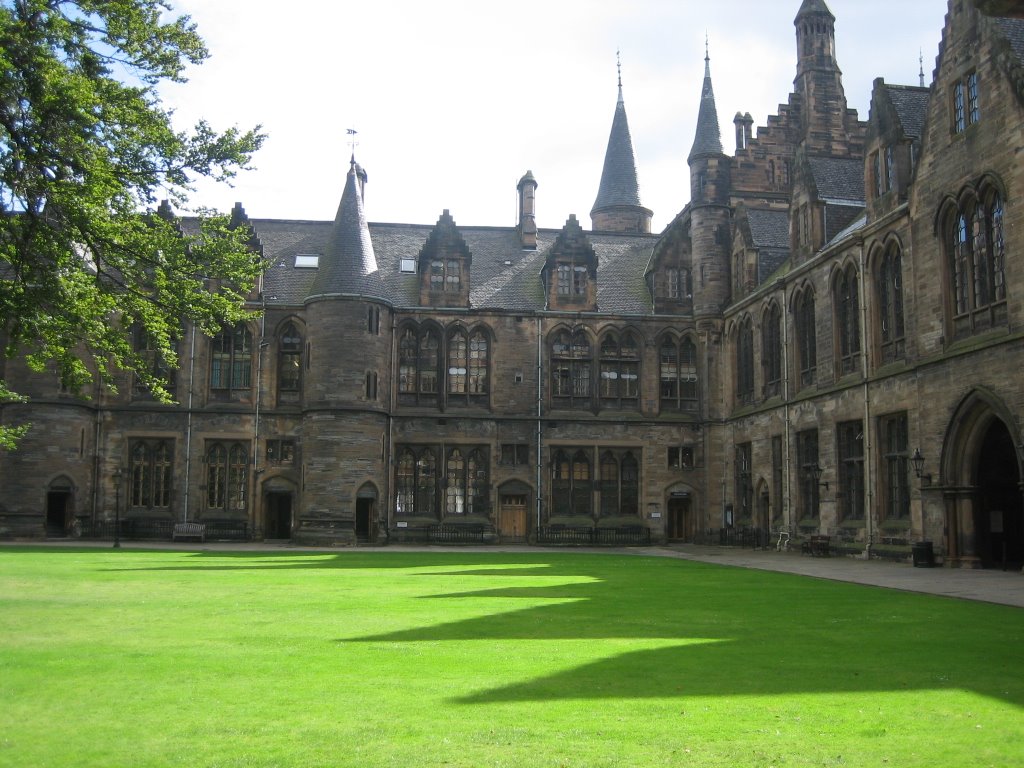
Ladies and gentlemen, allow me to introduce you to my adopted alma mater, the University of Glasgow.

The University itself was founded in 1451, making it the second oldest university in Scotland, and the fourth oldest university in the English-speaking world. For the first four centuries of the school's existence, classes were held in Glasgow Cathedral near the City Centre; however, in 1871, the University was relocated to its current site in the West End of Glasgow.

The pictures featured here are of the Main Building and the interior and exterior quadrangles. There is much more to the University than this little slice of University Ave., but I have chosen to highlight the older buildings for two reasons: 1) many of the new buildings are unsightly in that built-in-the-1970s-according-to-questionable-European-aesthetics kind of way; and 2) in a feeble attempt to avoid looking like a tourist (i.e., chump) whilst on campus, I've stopped carrying my camera with me to class.

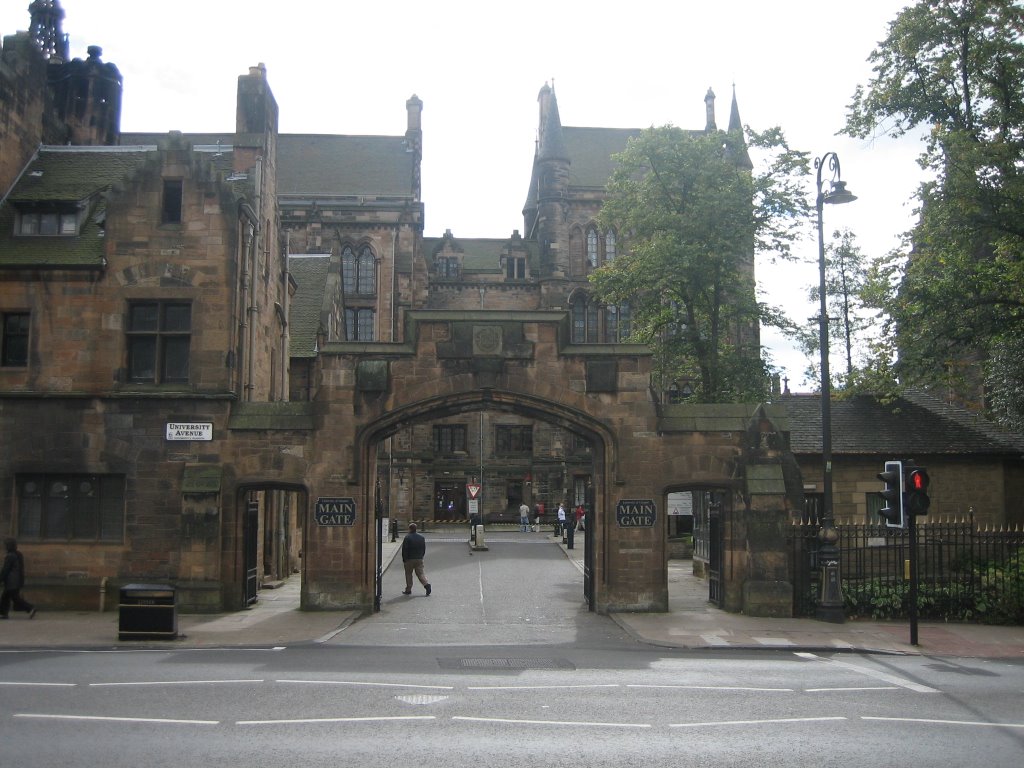
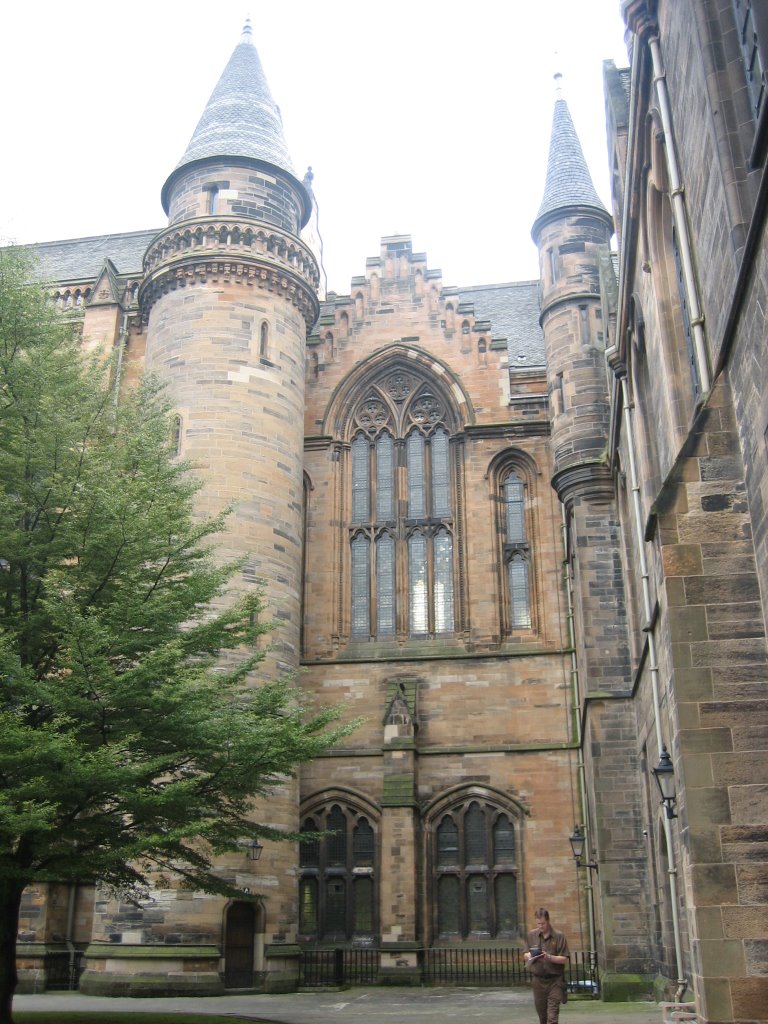
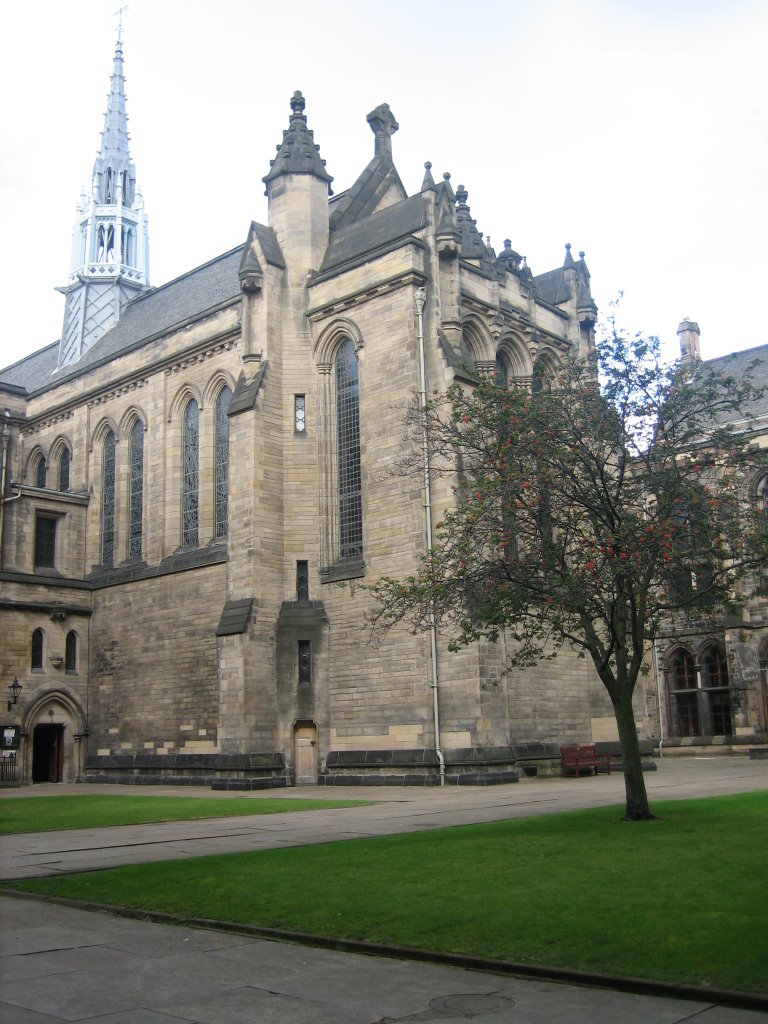
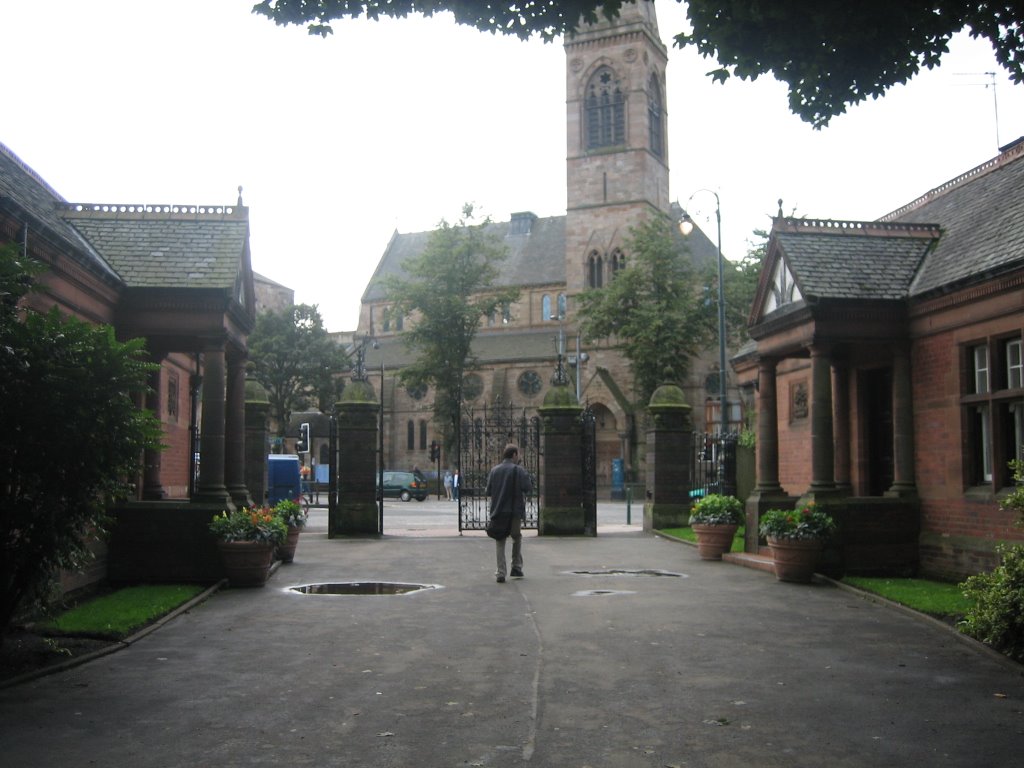
The University's Main Gate on University Ave., as seen from the front of the library and Hunterian Art Museum.View of Bute Hall from the Western Quadrangle on the interior of the Main Building.

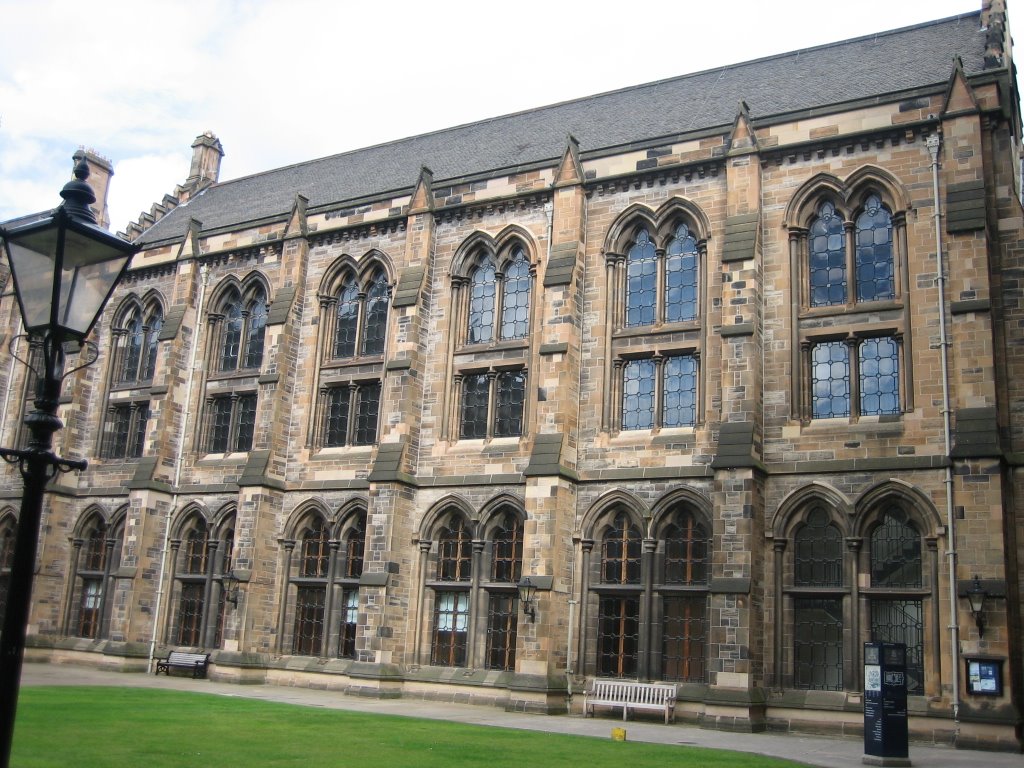
More Bute Hall goodness. Interior pictures to come someday.

Steeple of the University Chapel as seen from the Western Quad.

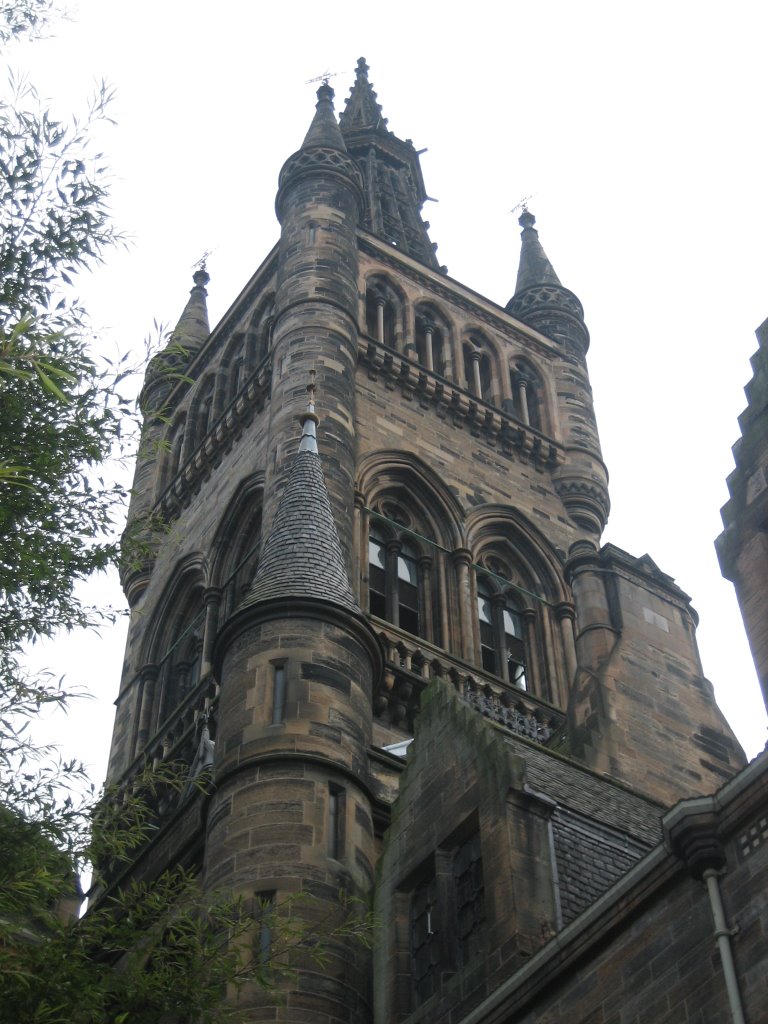
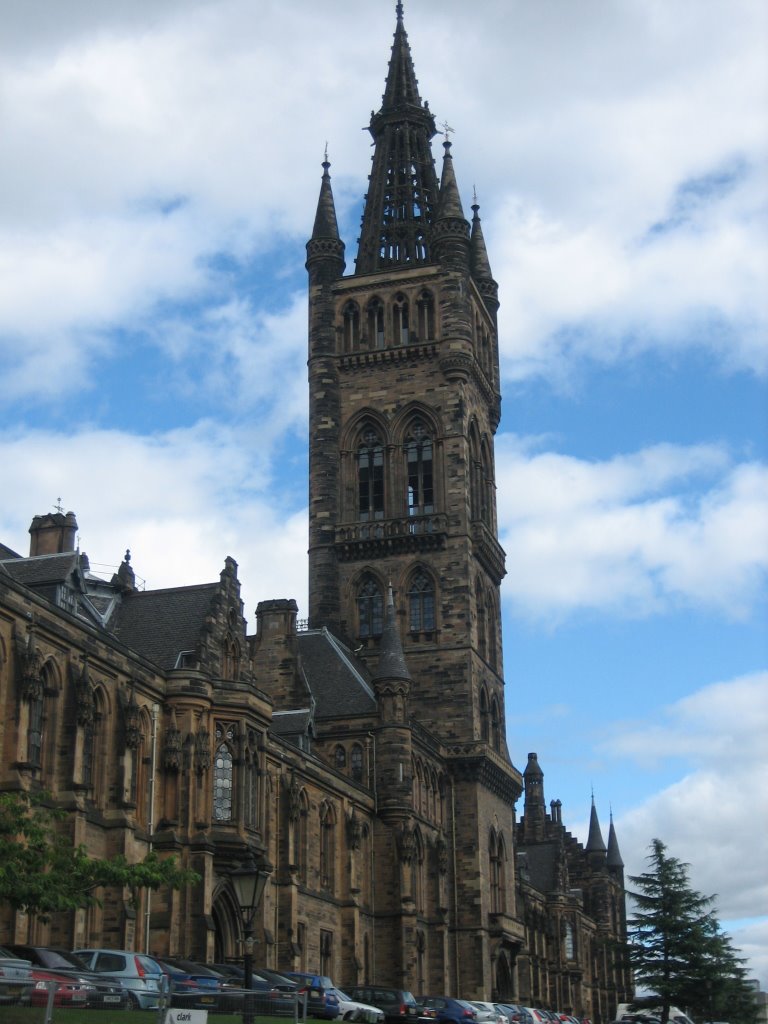
Bell Tower as seen from the Western Quad. Unlike Denny Chimes, the obnoxious bell tower on UA's campus, the UG bell tower has all the charm of a gothic cathedral when it chimes on the hour.

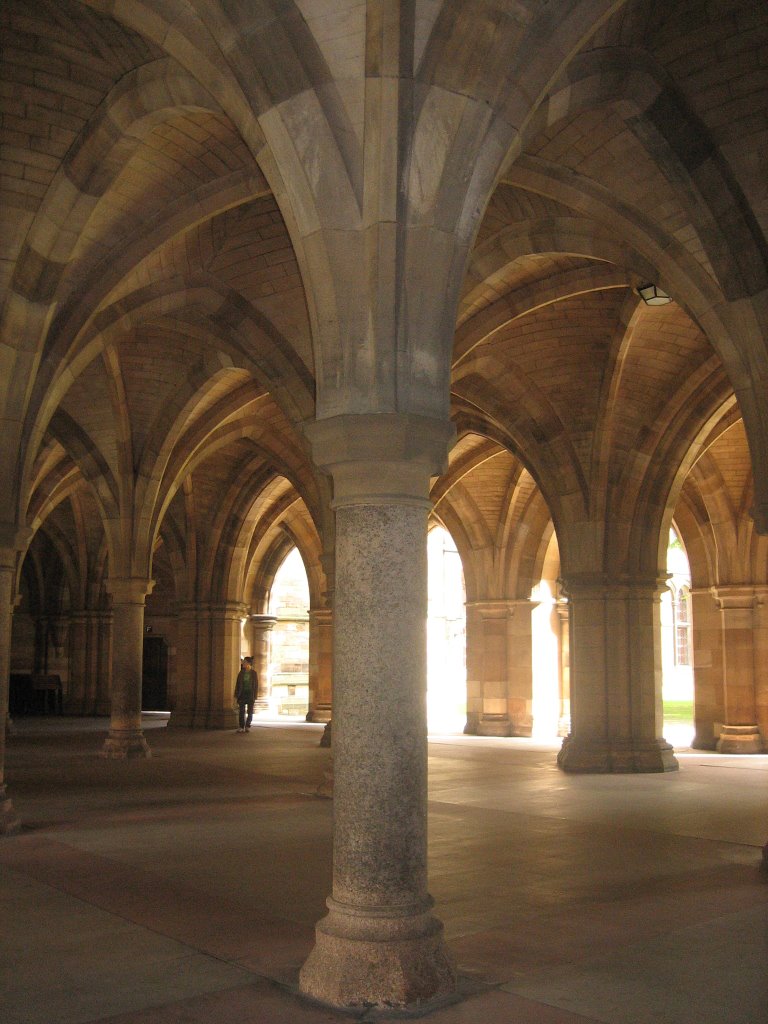
The famous Glasgow cloisters where graduates celebrate the conferring of degrees and commencement as they exit Bute Hall.

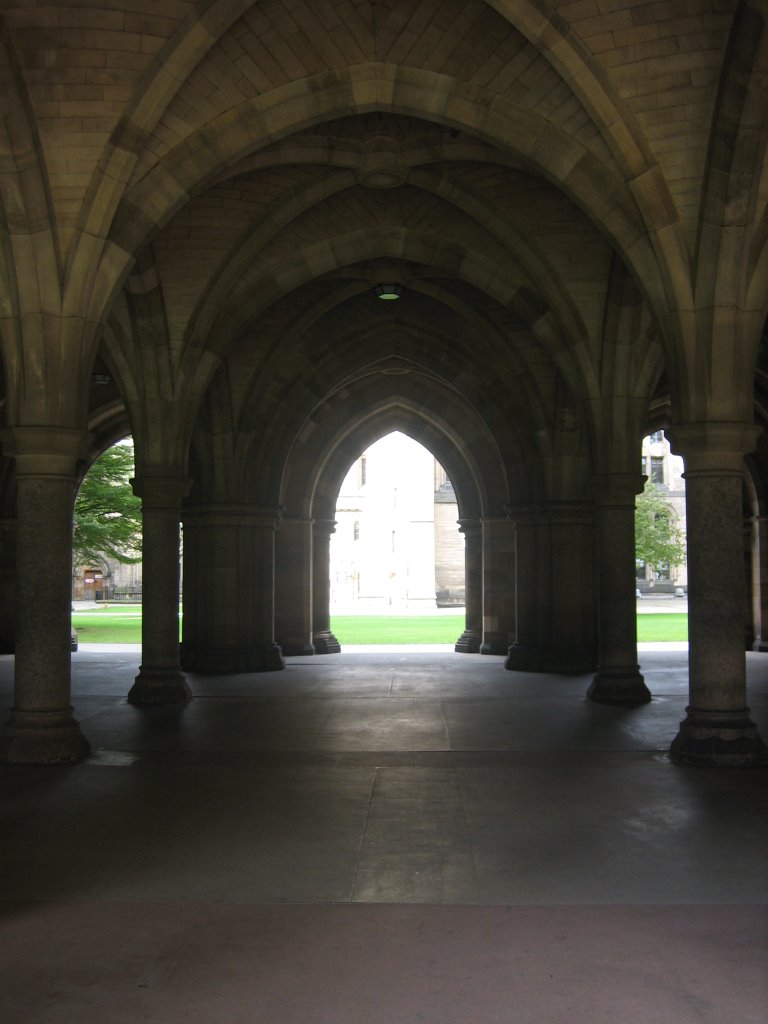
View looking through the vaults into the Eastern Quadrangle.

The Eastern Quad.

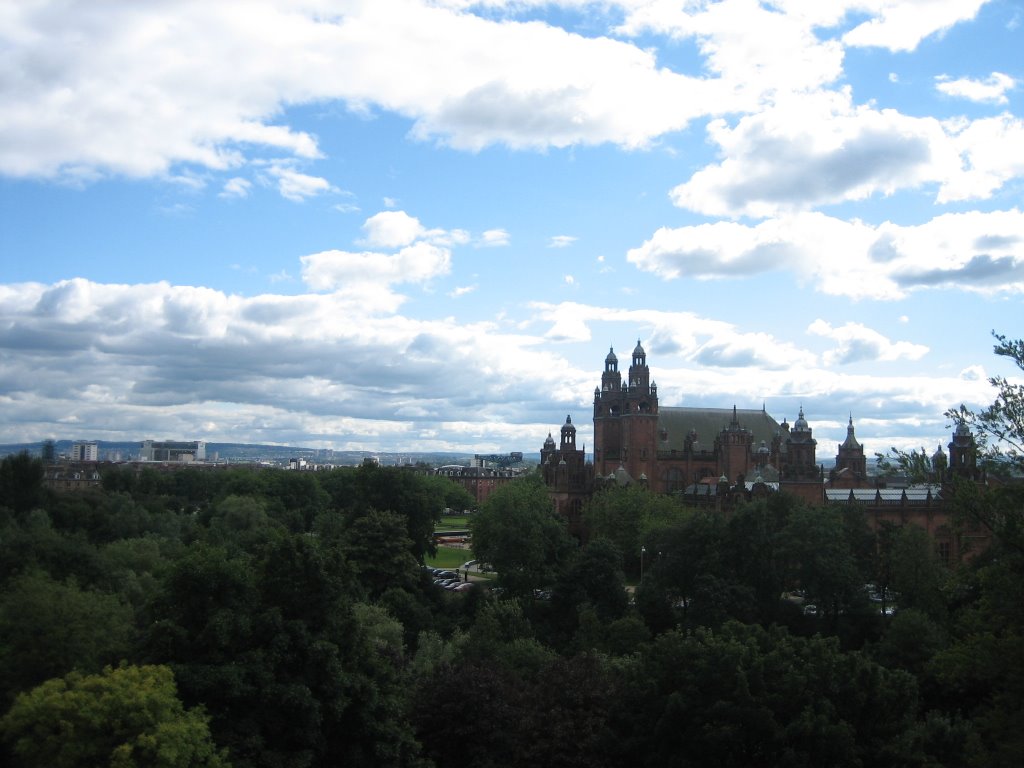
View of Argyll and Sauchiehall Streets from the southern face of the University. The red sandstone building to the right is the Kelvingrove Art Gallery and Museum, one of the most fabulous museums I've had the good fortune to tour. It has recently reopened after a three-year, £35 million renovation. (Lucky for you fine people, it'll be the subject of a later post.)

Thursday, September 14, 2006

A Cautionary Tale

Don't let your flatmates cook fishsticks after enjoying a few rounds at the local nightclub.

Why not?
The smoke detector will sound at 1 AM.

And?
The building will be evacuated, and not one, but two firetrucks will be called to the residence hall.

Anything else?
The fire marshal will lecture you sternly on the importance of cooking with proper ventilation.

There's more?
You will make an inane post on your travelblog.

Do go on.
You will feel like an idiot for quite some time.

Oof. What a night.

Wednesday, September 13, 2006

The Morning Commute

I'm launching a new series of sorts, detailing where I live, work, and play through a succession of photo-montages and mostly unsuccessful attempts at witty banter. (Yeah, it's more of the same.) The working title of this evolving, multi-phase project is Living in Glasgow; or, Why My Life is Better Than Yours. Joking. Kind of.

We'll be kicking off the festivities with the most dreaded part of anyone's workday: the morning commute.

If you're anything like my father, your daily commute to work is pretty standard: navigating the concrete jungle of the average American urban center. Of course, one needn't work in the city to experience the glory of the early morning sun reflecting off cold, dew-streaked cement. When I was in the States, studying in one of Alabama's quasi-metropoleis, my daily commute to school offered me breathtaking views of the congested lanes of Tuscaloosa's Hwy. 82 (though it's a bit of a stretch to call my two-minute jaunt to school a commute). However, no such views exist in Glasgow's vibrant West End, where parks and historic, Georgian-style tenements seem to outnumber humans three to one.

The scenery isn't all that's changed. I no longer travel in my zippy little Corolla, but rather on shank's mare, a steady and usually reliable form of transportation, depending on how fun1 the previous night was. While hoofing it everywhere in this day and age might seem so--oh, I don't know--pedestrian, it's really the only way to experience the sights and sounds of Glasgow as she rubs the sleep from her eyes. Honestly, I couldn't ask for a better route. Go ahead, see for yourself. (Again, click the photo for the high-res.)


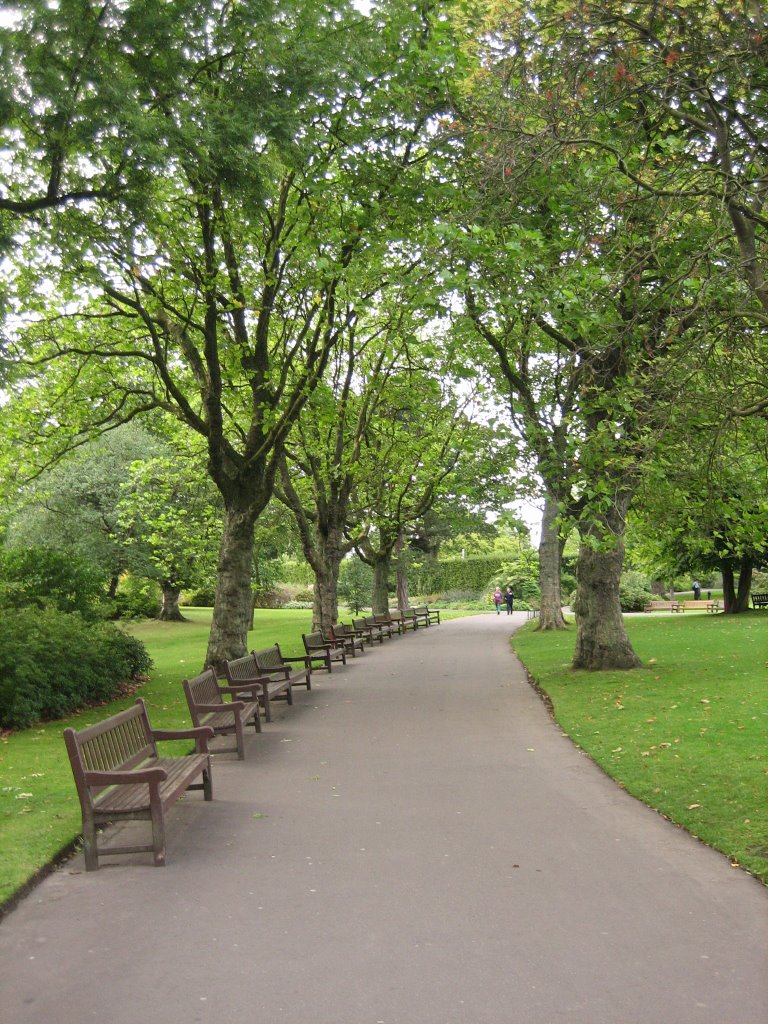
Every morning, I begin my half-hour commute to school at the back gates of the Glasgow Botanic Gardens, which are flanked by recently remodeled flats, their sandstone edifices sparkling in the ascending sun. Of course, being the amateur story-teller I am, I have failed to include a picture of said flats. (If you're dissatisfied with the service offered here at La Vacilanda, please see Management for a full refund, no questions asked. Heeeeey, wait a minute...)

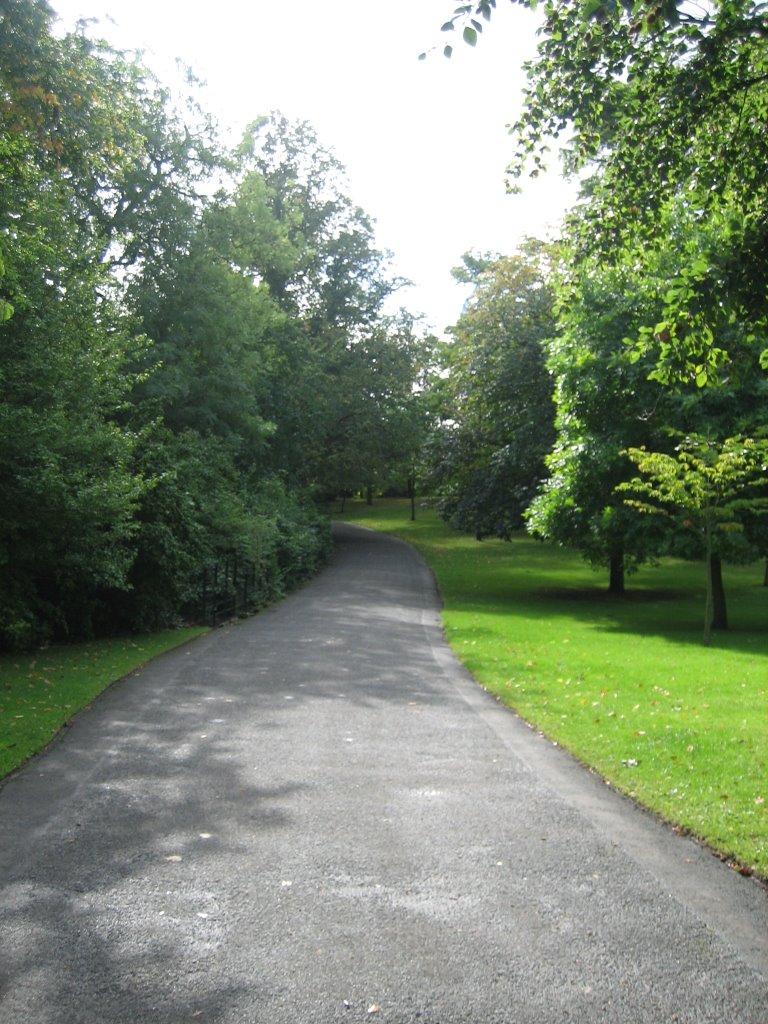
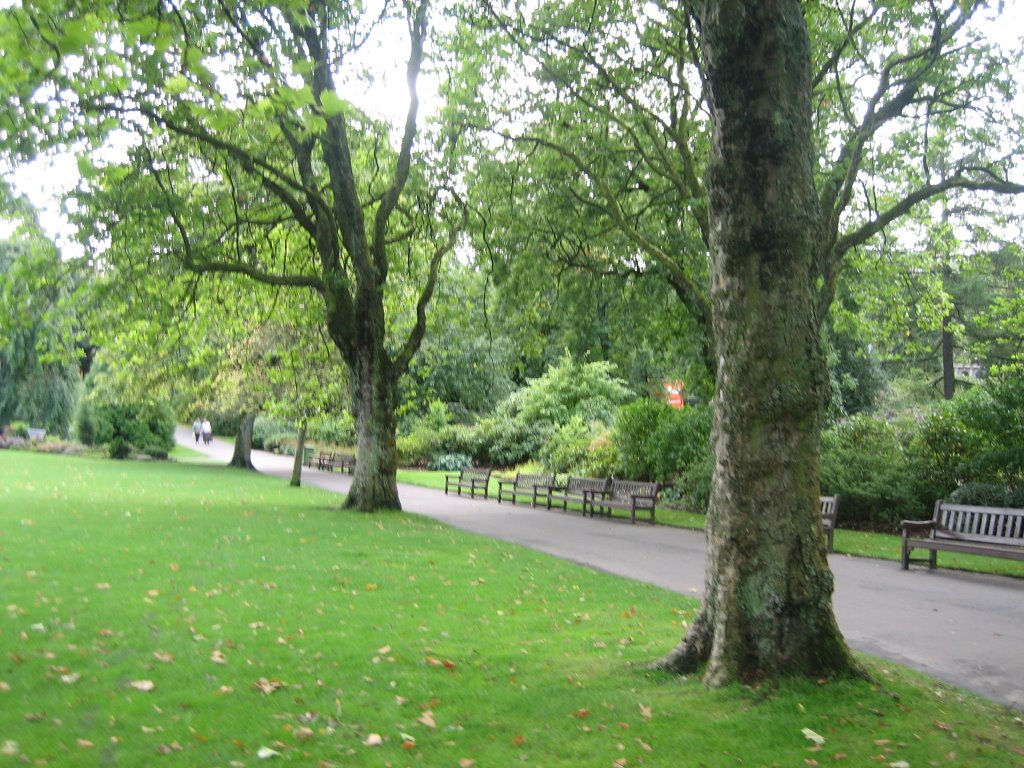
I continue my way through the winding paths that mirror the movement of the River Kelvin, named after the British physicist and engineer who lent his name to the temperature scale. He is but one of the many illustrious students/lecturers who have graced the hallowed halls of the University of Glasgow. (Of course, I count myself among their ranks.)

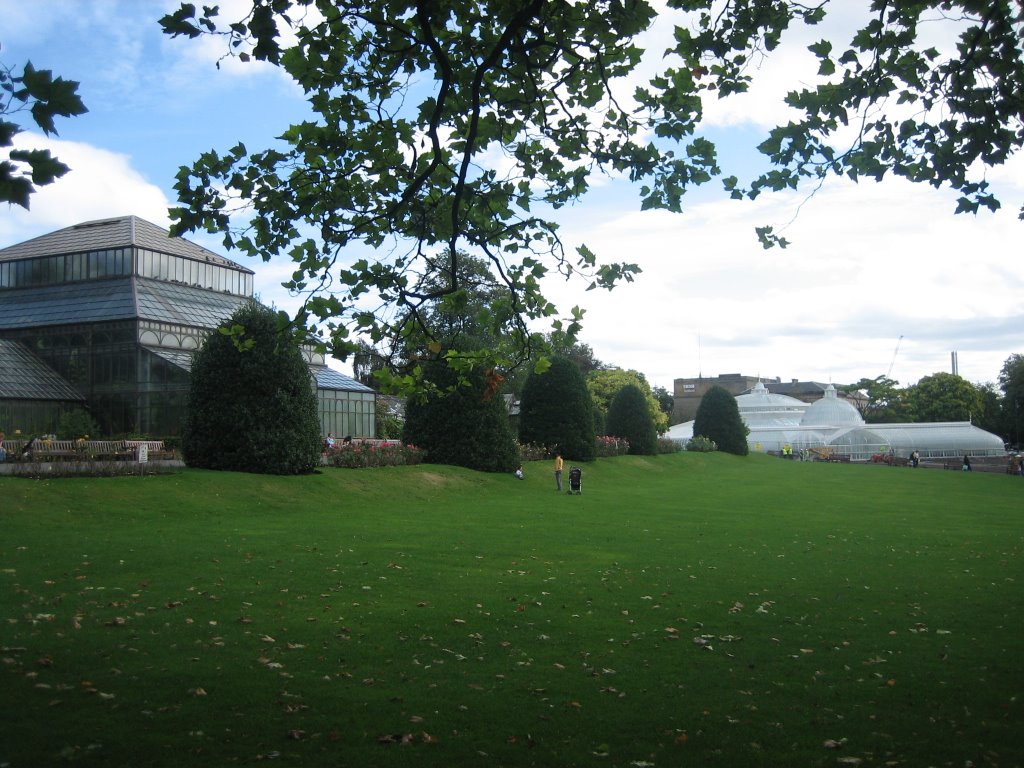
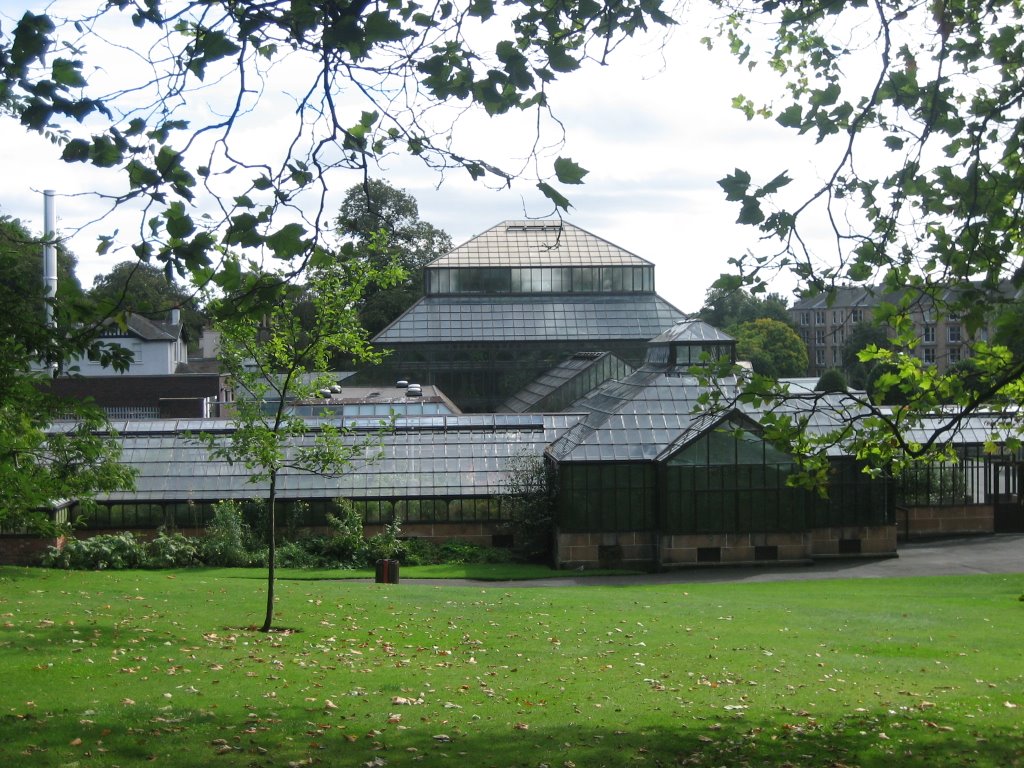
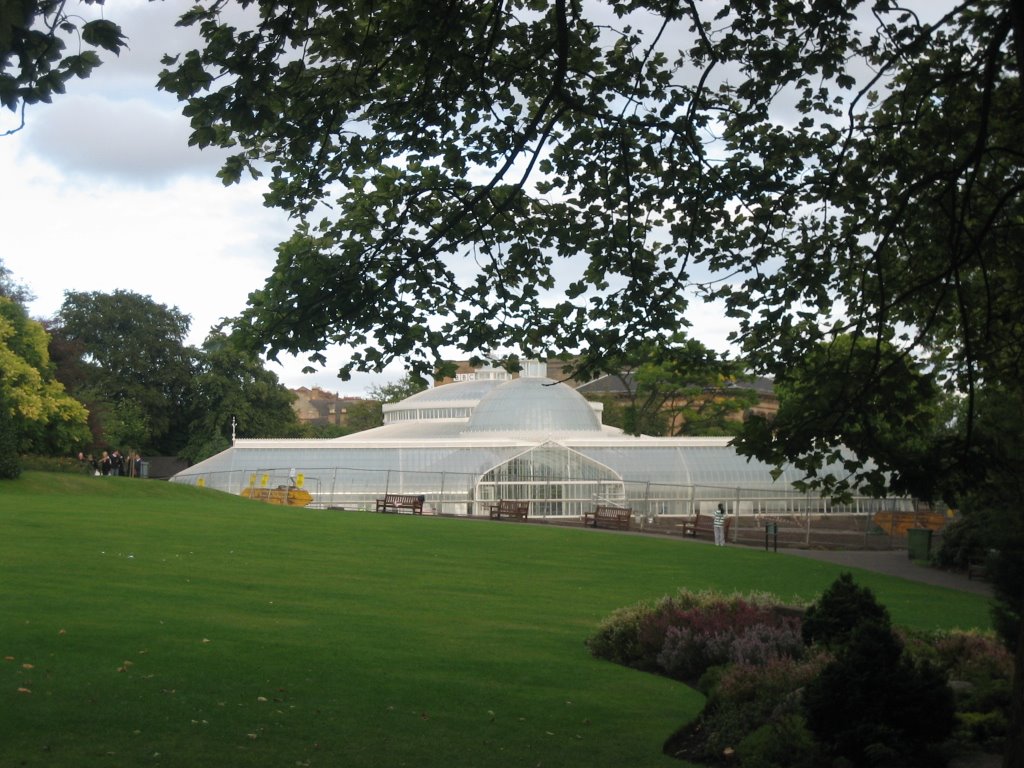
These shots are of the greenhouses near the front of the gardens. Don't be fooled by the ostensibly flat footpaths; these photos of the gently sloping knolls belie the area's true topography, which is hilly as the day is long. The upside: I will have a nice tuckus by the end of my stay here.

Continuing along the for about a half mile brings us to the front gates of the garden, with its view of a charming theater/eatery called Oran Mor, which advertises "a play, a pie, and a pint." I love that half of the old churches in the area have been converted into pubs, flats, or nightclubs.

Another half-mile of boutiques, fruit stands, and pubs, and you'll find yourself here:

More on this later in the entry entitled Getting an Education; or, Why My School is Better Than Yours. (Notice a trend?)

___________________________________________________

1 For those keeping track, the mathematical definition of fun is a conjunction:

f μ ac & f μ 1/s

wherein f = fun, ac = amount of alcohol consumed, and s = incidence of sickness. [For the mathematically disinclined, the preceding gobbledygook translates as such: "Fun is directly proportional to the amount of alcohol consumed and inversely proportional to the incidence of sickness."]

Wednesday, September 06, 2006

Scottish Studies, Lesson #1

After wrapping up my first week in Scotland, I'd like to share with you a few things that I have learned about this fair country and her people thus far. It would be in your best interests to take notes.

1.) Past the lips and on the hips

Fish and chips--second only to curry in popularity--is not a meal to be consumed during daylight hours. Rather, it should be reserved solely for occasions of extreme inebriation, as the grease-laden, batter-covered scrod and potatoes act as a counterweight inside the diner's stomach, thus providing sufficient stability to allow the drunk to walk home safely. Consumption at any other time will likely cause "griping bowels," as the Scots say. A roommate and I discovered these little nuggets of wisdom one night in Edinburgh and they have served us well since.

2.) "We're not so different, you and I."

For all his patriotism and nationalistic chest-thumping, the average young Scot's knowledge of his country's history is woefully inadequate. Oddly enough, I find this otherwise disconcerting fact rather comforting. I think it's because it reminds me of back home in the States.

3.) Beetroot juice cures cancer.

Right now, I'm sure you're feeling much like this:

(Believe me, my flatmates and I were equally confused.)

In every orientation session I've attended over the past week, the Scots have been painted as a warm, talkative people. And in my brief time here, I have certainly found this to be true. People stop on the street to ask from whence you hail and why you chose to visit their country; they engage you in conversation very easily and seem genuinely interested in making you feel welcome. They even freely dispense friendly advice, regardless of whether or not it's solicited.

Allow me to set the scene: Saturday night, a group of us set out for a good time at the local pub. At last call, we found the weather conditions severe enough to warrant calling a cab for the brief trip to our residences. Arriving home tired, wet, and a little tipsy, the three of us wanted nothing more than to scurry up to our flat, crank up the radiator, and snuggle into our respective twin beds. However, the cabbie had a different idea. (Mom, stop freaking out, you haven't even heard the story yet.)

Having inquired about our studies and learning that we were all science majors of one sort or another, our cabbie decides to give us the lowdown on traditional medicine versus homeopathic remedies. It seems a football mate of his was diagnosed with terminal cancer three years ago. Rather than go through some experimental chemotherapeutic procedure in a vain effort to buy a few more months, his friend went to an alternative medicine spa in Denmark where he was told that beetroot juice was the cure to what ailed him.

"And do ye ken how he's doin' today?" our cabbie asked.

"No, sir," we replied.

"Weel, he's back to playin' football wi' me four times a week! Not everything has to be so complicated as those science classes, lassies. The Chinese ha' been treatin' heidaches and fevers with herbs fer centuries, ye ken?"

I ken, indeed. Now, if you'll excuse me, I need to hurry to the market. I'm feeling a little peaked and need to pick up some rhino horn before the store closes.

4.) The Man, the Myth, the Legend

Contrary to popular opinion, not all Scots are hulking, brooding redheads wrapped in tartan, mending stone fences on desolate moors. (Pity, I know.) Rather, they're more likely to be slender, city-dwelling, slightly balding smokers who wear skinny jeans and sport multiple piercings. (Again, pity, I know.) Thankfully, there is a substantial minority of unbelievably attractive men, especially in Glasgow, who could level you with their eyes. These men are the reasons that coffeehouses with outdoor seating exist. [Note to the tall, dark, and handsome lad I spied on Byres Road from my perch at the Tinderbox Cafe: Yeah, I gave you the once-over. Want to make something of it? (Pretty please?)]

5.) When in Glasgow, say "pish."

A few nights ago, while walking home from a pub (no, really, we do things other than drink), my flatmates and I passed a horribly dank Underground (i.e., subway) entrance, from which waves of warm, wet air--smelling quite strongly of urine--wafted into the city streets. Being a New Orleanian and thus having limited experience with subways, I decided to don my Captain Obvious cape (one of the many embarrassing side effects of a pint of Caledonian lager):

"Ew, the Underground smells like pee," I said, to the giggles of my slightly more sober walking partners.

Now, another side effect that I often experience when imbibing is a hypersensitivity to what I say within earshot of strangers, as I have a booming voice even without the aid of liquid courage. In rapid-fire succession, a series of apologies and qualifications fly out of my mouth: "Oh my God, I hope they don't think I said Glasgow smells like pee. Because it doesn't smell like pee. Actually, it smells like curry. Edinburgh smells like pee, but Glasgow doesn't. New Orleans smells like pee, but that's only because tourists are stupid," and so on and so forth, until I was interrupted by a distinctively male voice with a thick, Scottish burr.

"Yer in Glasgow, so say 'pish'," he commanded. Flustered, I looked to my left to find two men in their mid- to late-twenties walking alongside our party. Gary, the one who spoke, repeated himself, then asked us why, of all the places we could have studied in Europe, we chose Scotland. We gave various answers, mine alluding to the rich history of the country. He looked at me blankly. (See, #2 in action.)

In any case, the moral of this roundabout story is this: When in Rome, do as the Romans, and say "pish."

Okay, class, you're dismissed for recess. Future lessons to come.

Saturday, September 02, 2006

Exploits in Auld Reekie

According to my wee site meter, activity has picked up quite a bit around here. As such, allow me to apologize for being delinquent in my duties as blogmaster (or whatever the appropriate title is) these past few weeks. Hopefully this entry will steer us back on course.

On August 27, I left the Big Sleazy for the Garden State's Newark International, making a bit of a scene at Louis Armstrong International in the process. (Mom, Dad, Jen: I really miss you guys.) I spent about thirty minutes of my seven-hour layover in Newark stumbling around the sprawling Terminal C, looking rather pitiable with my airport map, trying desperately to make my way to the international concourse. Upon arrival, I bumped into a few fellow IFSA-Butler travelers, and we made quick work of the obligatory awkward introductions. Seven hours in a cramped Virgin Atlantic airbus later, we touched down in London Heathrow, then hopped a virtually empty plane to Edinburgh.

So far, everything sounds peachy keen, eh? However, those who know me and are familiar with my perceived lot in life know that things are rarely that easy for me. At baggage claim, I found that only one of my bags had made the journey from New Orleans with me (both of us, not surprisingly, looking a little worse for wear). My other bag--you know, the one containing all the essential items, i.e. my cellphone, iPod, hiking boots, etc.--was "lost in transit," according to the British Midlands baggage officer. For THREE DAYS, it was lost in transit. For THREE DAYS, I was freaking out in my bright orange, suede Reeboks (naturally, the only shoes that made it to Edinburgh with me). Did I mention it was THREE DAYS? However, there is a happy ending to this little drama. My final day in Edinburgh, my bag was deposited in my room, its appearance eliciting from me a jubilant squeak and impromptu shimmy on my bed.

Baggage troubles aside, the first week of my trip has been amazing. So, I'll stop flapping my gums for a bit and share with you the sights of Edinburgh as seen through my camera lens. Enjoy! (Remember, click on the image for a larger view.)

This is my first official view of Scotland, as seen from the coach ride on our way into the city. It all seemed very surreal to me (and, honestly, it still does) that I was finally driving past the countryside I had come to know and love through Fodor's and Lonely Planet guides.

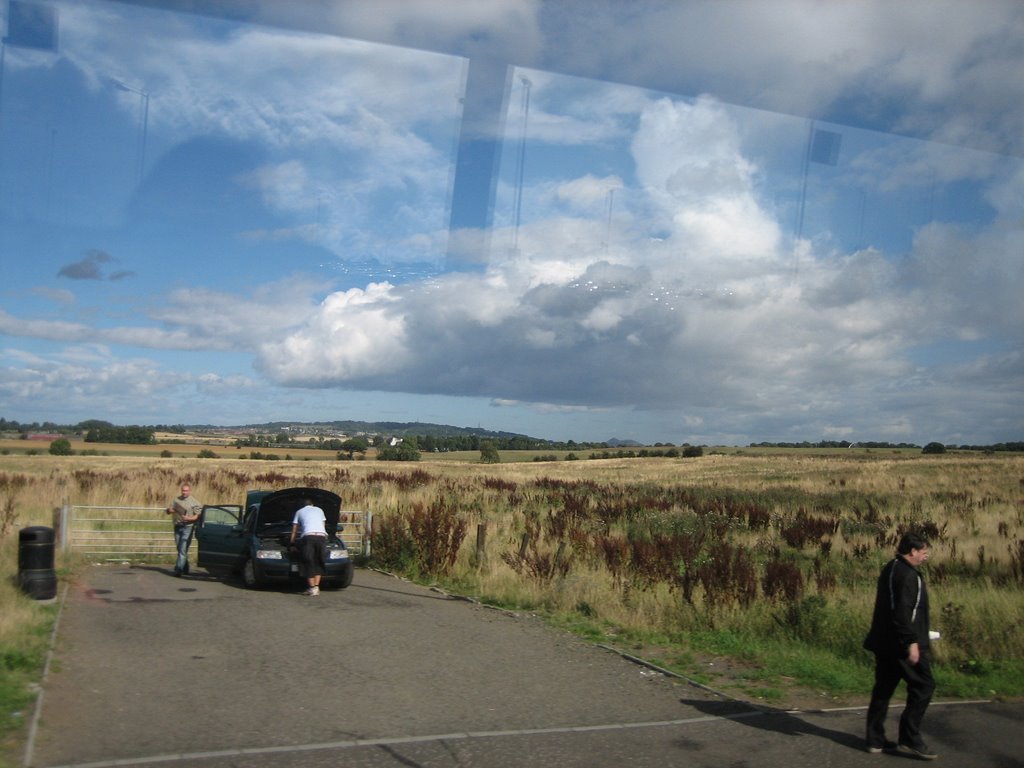
Again, the view from the coach. I honestly didn't mean to include the stranded motorists; they just happened to make a cameo appearance in a shot of that gorgeous sky.

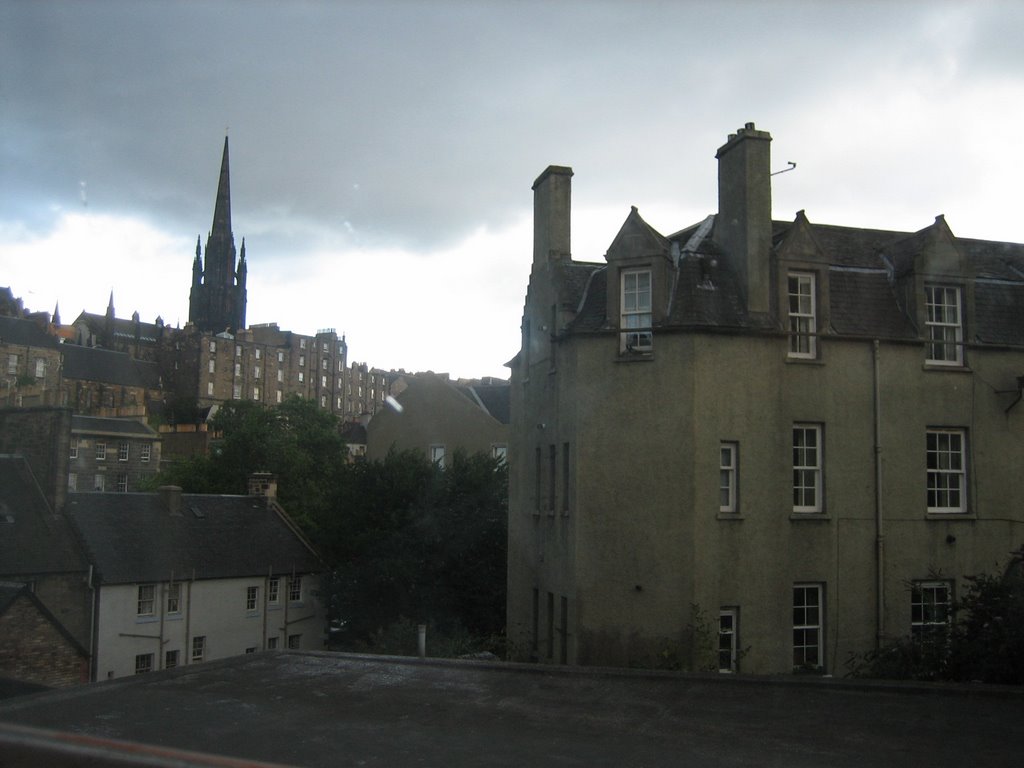
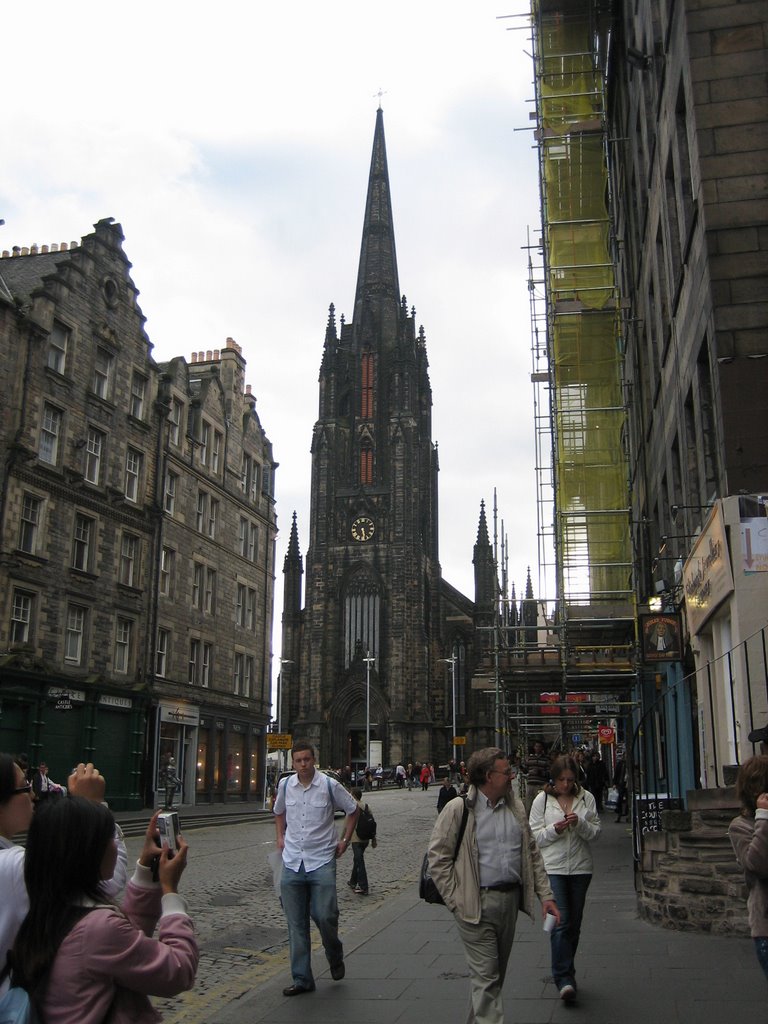
This here is the view from my room at the Apex International Hotel. That spire you see to the left belongs to the Highland Tolbooth Kirk, a former cathedral, which now serves as the Edinburgh Festival City Centre. It's situated at the top of the Royal Mile, just at the foot of Castle Rock, where you can also find...

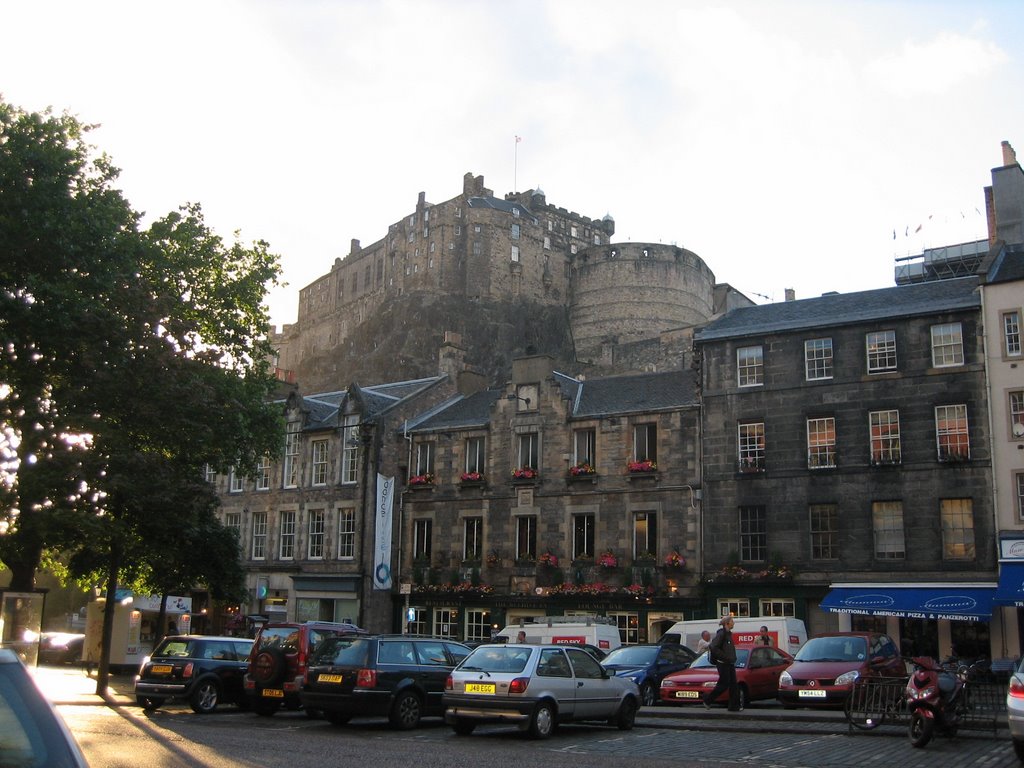
...this magnificent structure, Edinburgh Castle (as seen from the front of my hotel on Grassmarket St.). This castle sits at the top of the Royal Mile, a stretch of road that terminates in Holyrood House, the Scottish royal palace. Though much of the structure was added in the 15th and 16th centuries, Edinburgh Rock--the extinct volcano on which the castle sits--has been used as a fortification since the 7th century.

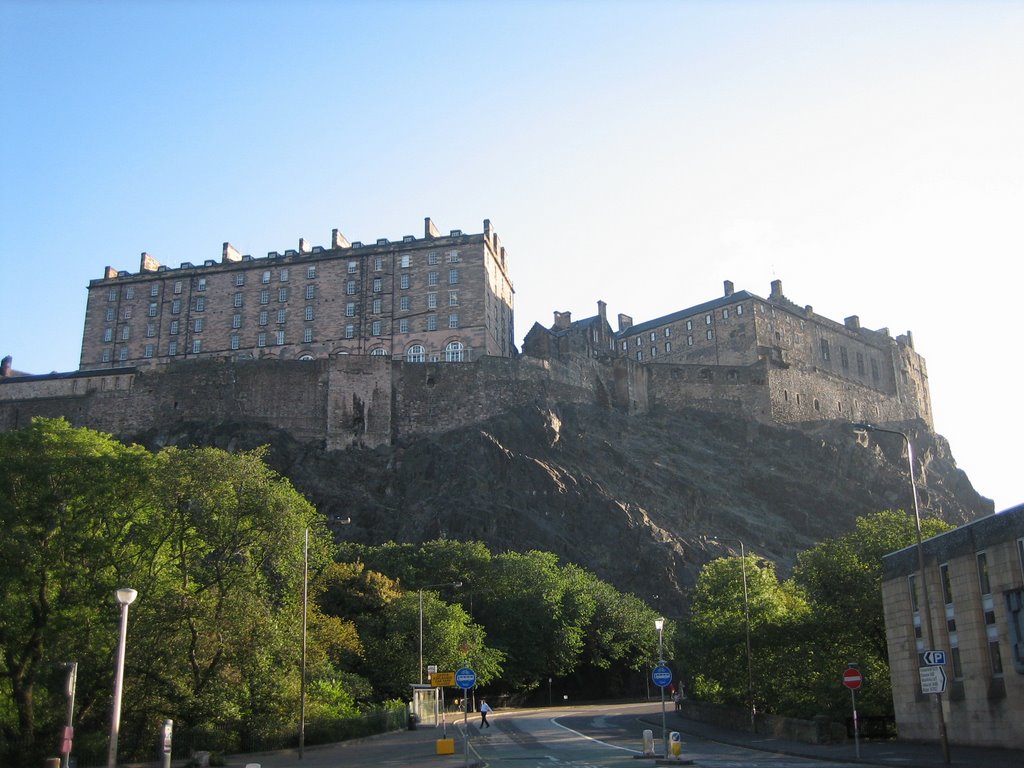
The back of the castle, taken on an early morning walk through the city.

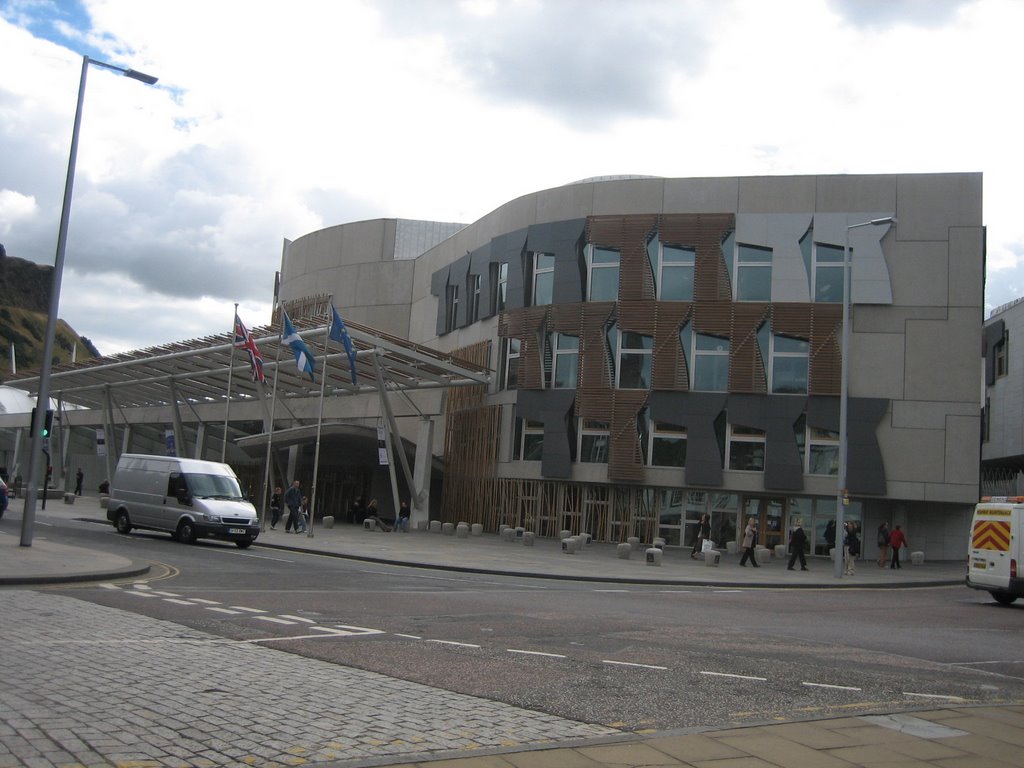
This monstrosity is the front facade of the new Scottish Parliament. Initial projections placed the building's cost at £40 million; by its completion, total expenditures exceeded £430 million. Needless to say, the Scots were displeased. (It's even fuglier in person.)

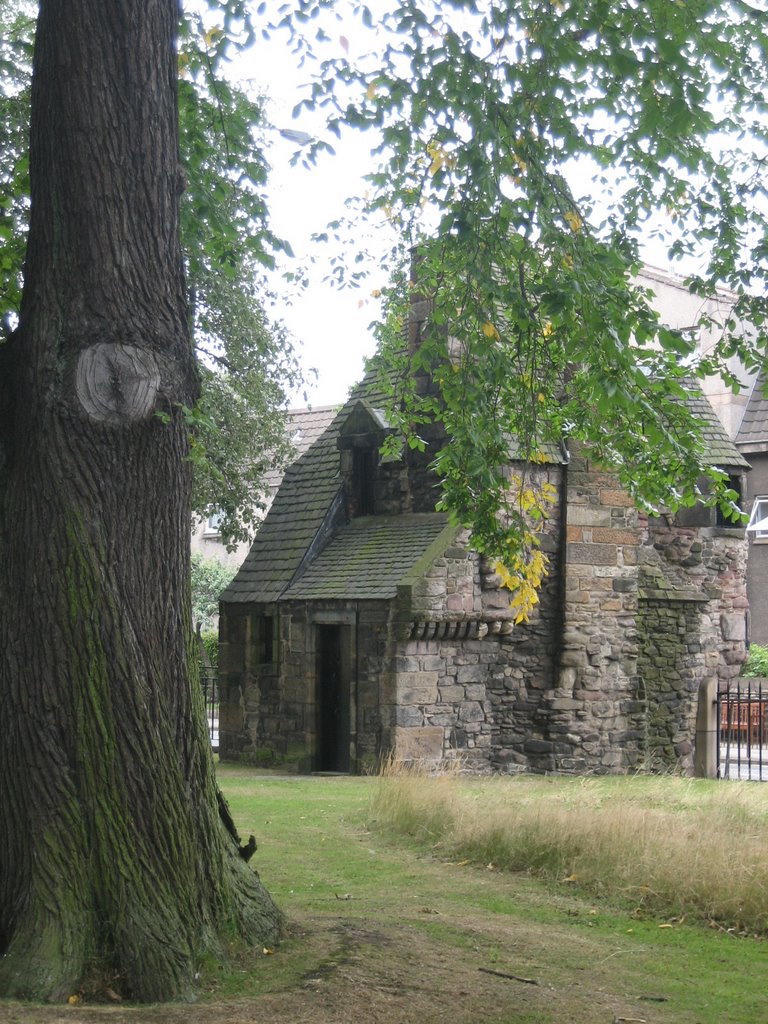
This charming structure is advertised as Mary Queen of Scots' bathhouse. When she would take her yearly bath, Mary would come here and soak in a tub filled with champagne, milk, and honey. Rumor has it that her bathwater concoction was then sold to the nobility. Just goes to show money can't buy taste.

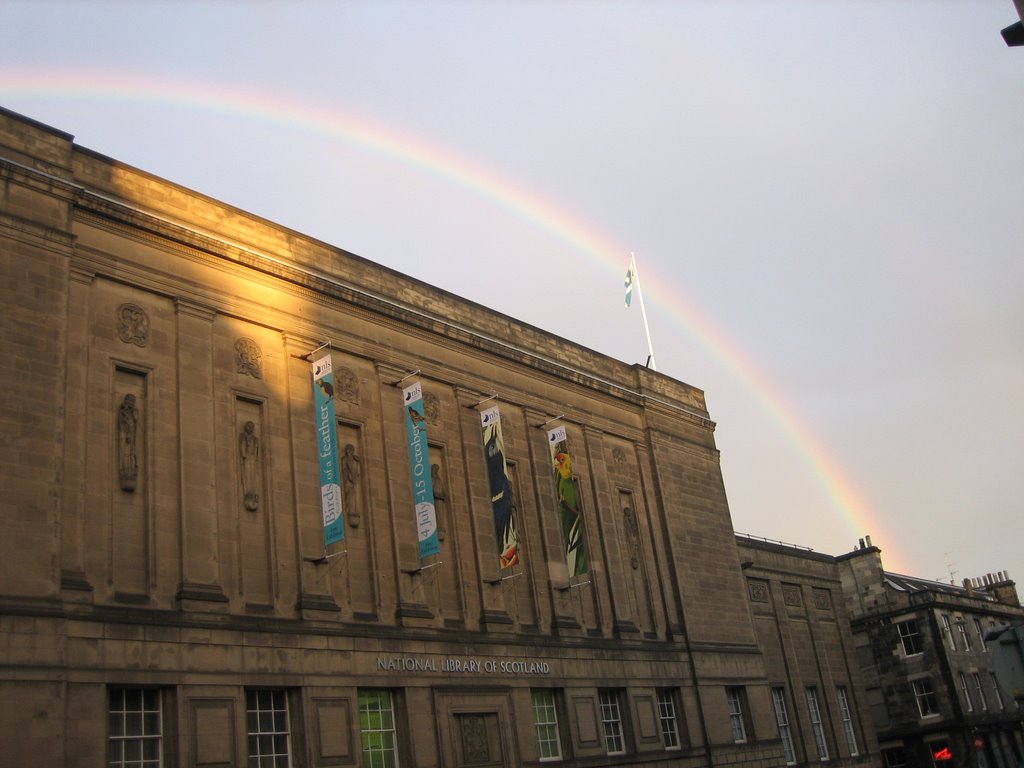
I'll likely be pelted with tomatoes for this crack, but I simply cannot resist. Here is the National Library of Scotland under a glorious rainbow that appeared after a brief sprinkle. (Wait for it...) I guess you could call this a "Reading Rainbow." Wokka, wokka, wokka. (Please note: if this reference is lost on you, you are likely not a child of the 80s, and are thus unfamiliar with the Levar Burton PBS series of the same name.)

The front of the Highland Tolbooth Kirk, as seen walking up the Royal Mile toward Edinburgh Castle.

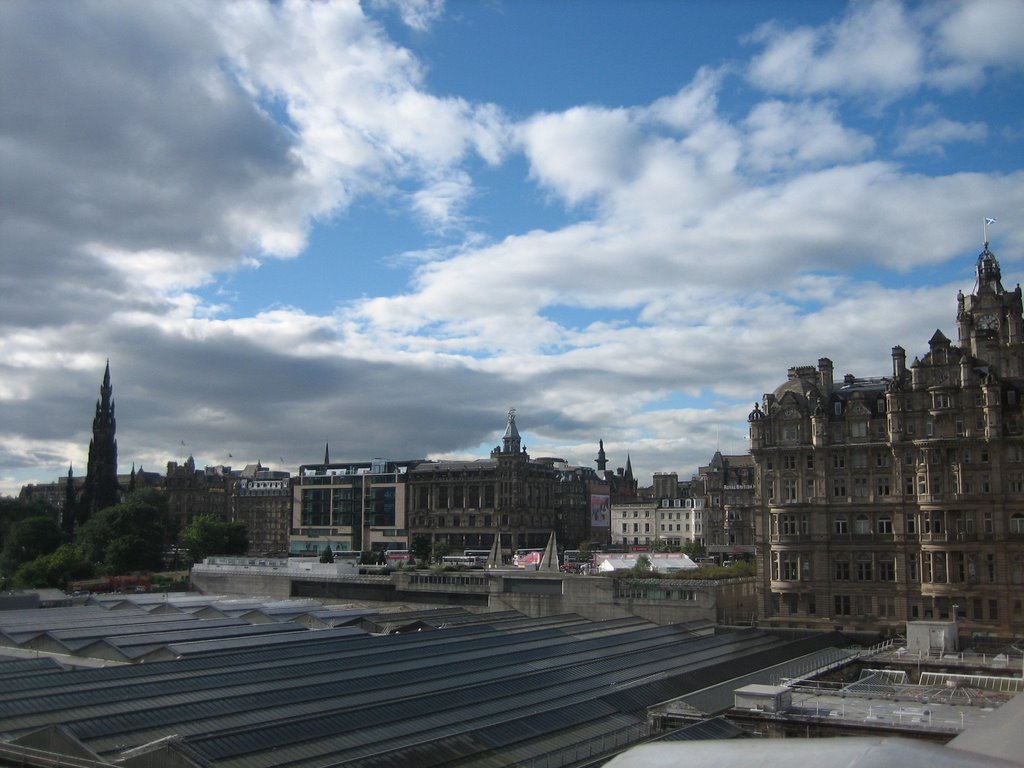
The city-wide view from a bridge on Princes St. The weather in Scotland has been absolutely gorgeous these past few days.

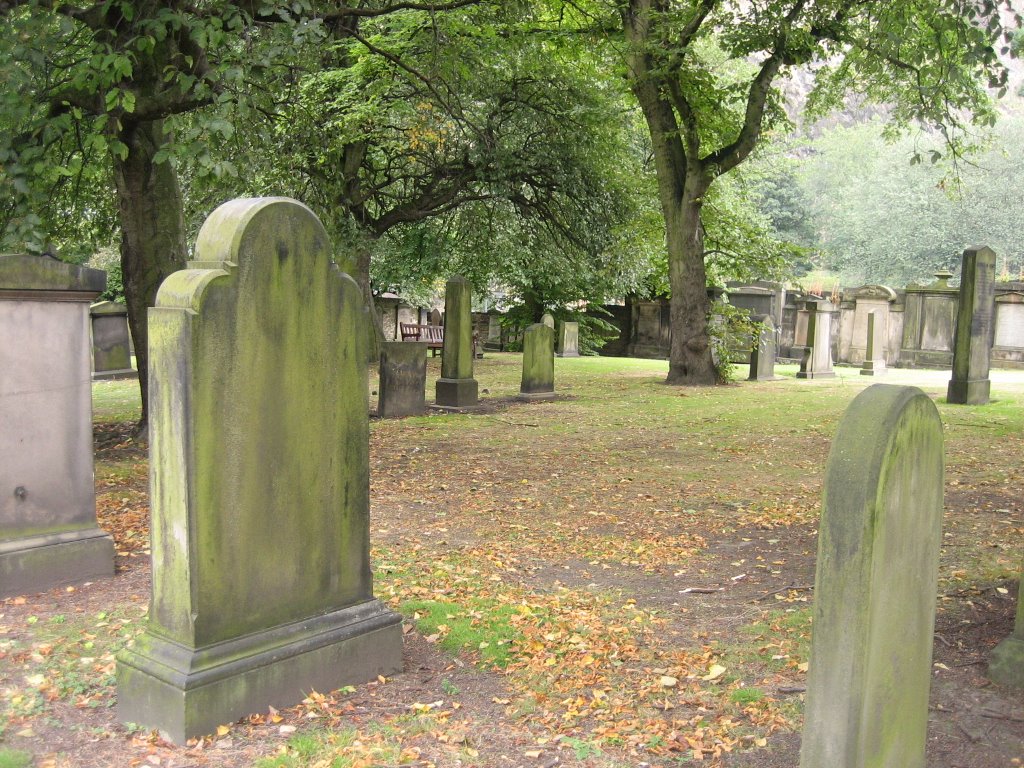
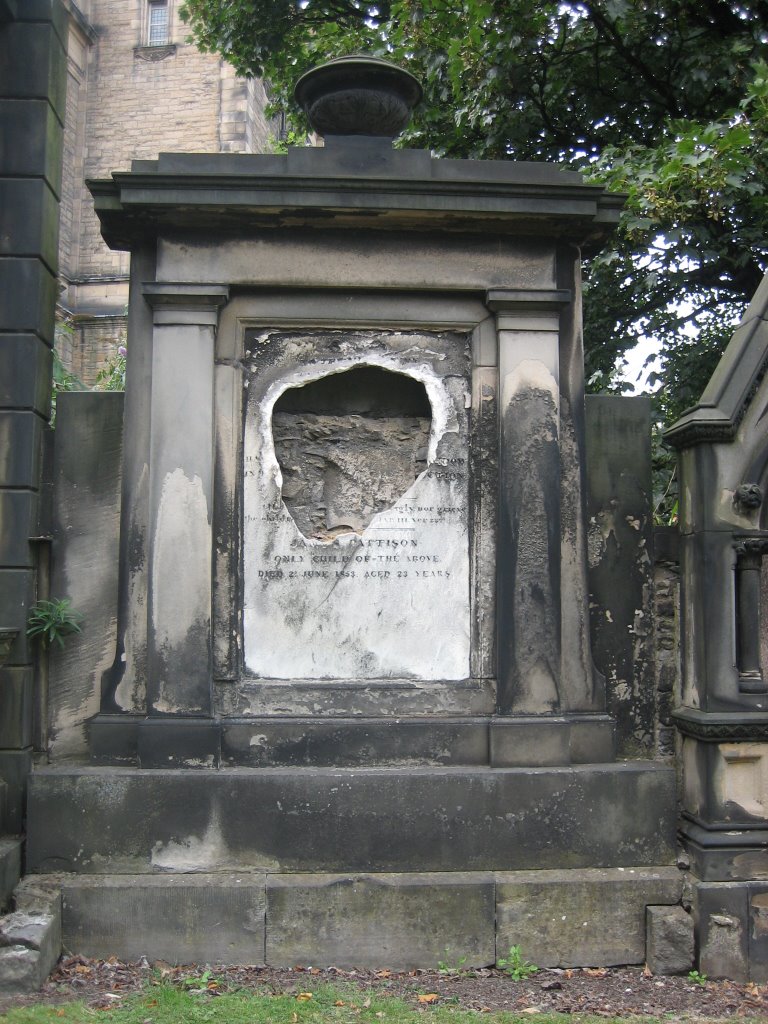
Gravestones in the kirkyard of St. Cuthbert's. Christian worship has been celebrated at the site for the past thirteen centuries. While walking through the graveyard, my group and I stumbled upon a worrisome sight...
Ahhhhhhhh! Scottish zombies!

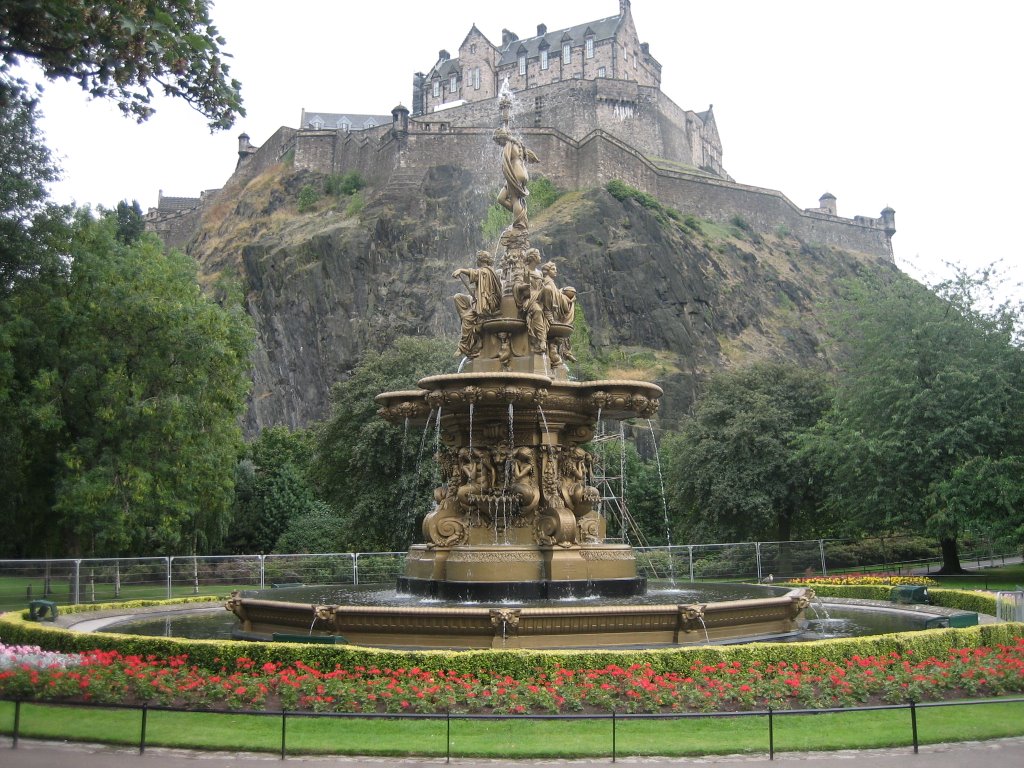
Leaving St. Cuthbert's, we entered a large park near the shopping center of the city. Here we found this amazing view of the castle.

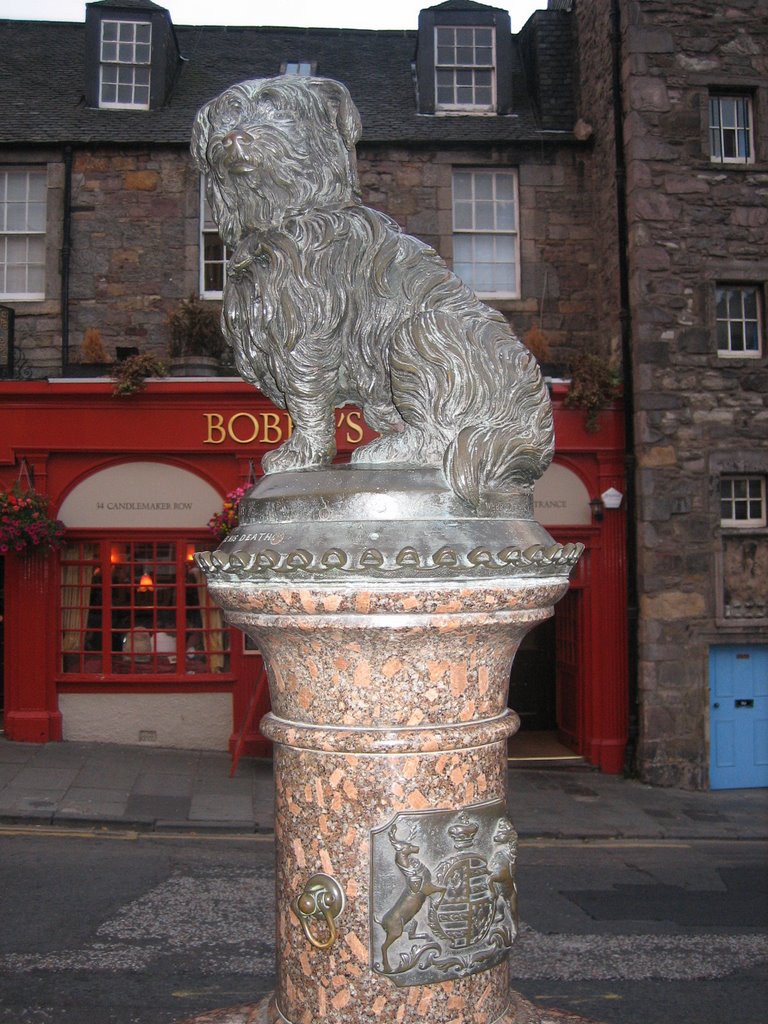
After our long walk and the scare with Caledonian zombies, we decided to drop by Bobby's Tavern for a wee pint...or three. Anywho, Bobby's is named for Greyfriar's Bobby, a loyal terrier who sat at his master's graveside every day for 14 years. He is now buried next to his master and immortalized in this memorial in front of the bar.

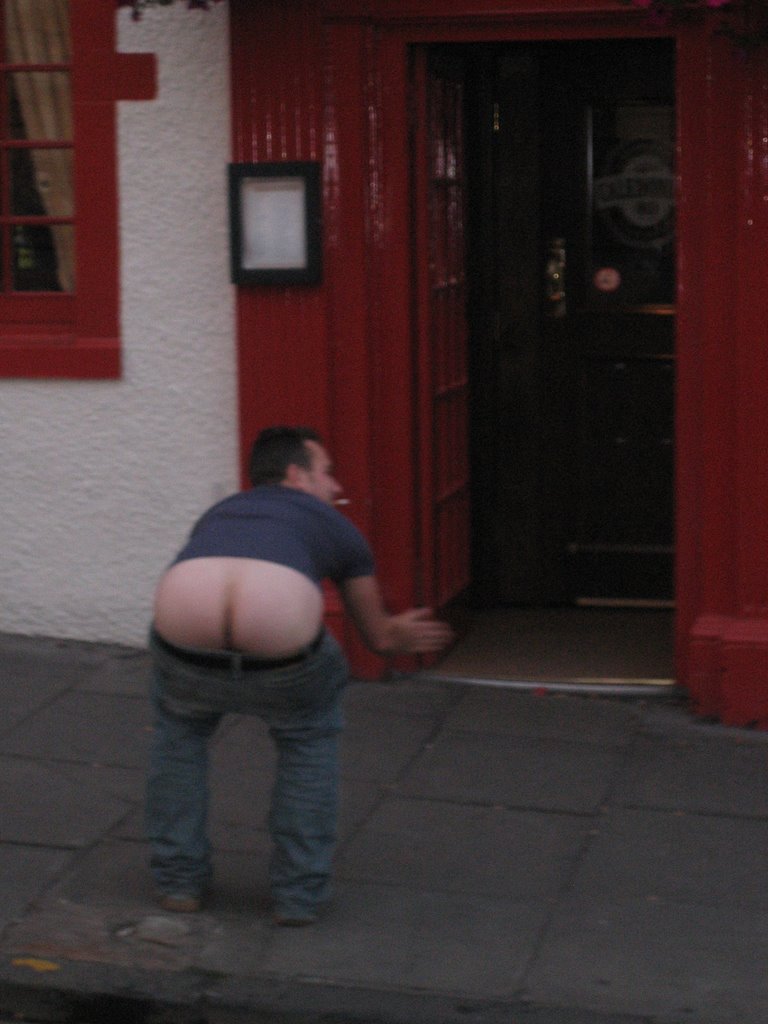
Now, before coming to Scotland, I had been told that the Scots were a friendly, fun-loving people. I was also made aware that they love their drink (after all, who doesn't?). Shortly after this picture was taken, our group was heckled by a rather inebriated young Scot who wanted to make his way into our memory books. Boy did he ever. Allow me to introduce to you...

...ASS MAN! Right-o, enough said about that one. (Though, I must admit, I was pretty stoked about my first international mooning.)

And that, rather fittingly, is the end for now, dear readers. This is but the first of likely many visits to Auld Reekie (Edinburgh, for those not in the know). Soon I'll begin work on the starts of my Glasgow experience, and trips to the Isle of Skye, Inverness, and England's Lake District are in the near future.